Description
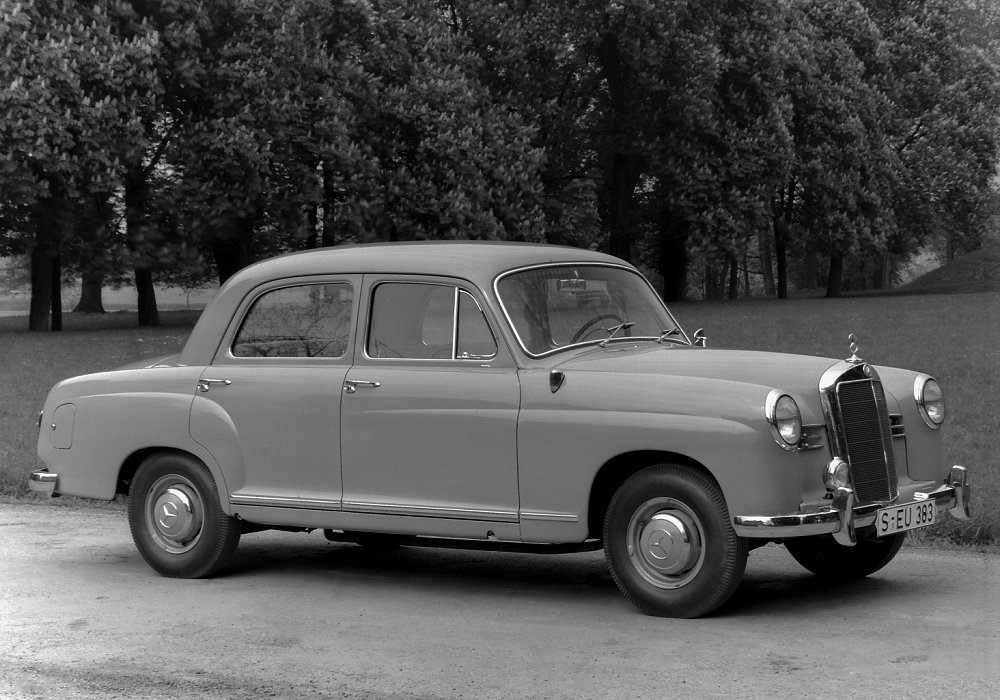
The Mercedes-Benz 180 D was a diesel-powered variant of the pioneering W120 “Ponton” series and played a key role in establishing diesel engines as a practical and desirable option in passenger cars. Introduced in the mid-1950s, the 180 D combined the modern unitary body construction of the 180 with Mercedes-Benz’s growing expertise in diesel technology, offering exceptional fuel economy, durability and long-distance capability at a time when running costs were a major concern for many buyers.
Power came from a 1.8-litre inline four-cylinder diesel engine producing approximately 40 horsepower. While modest in output, the engine was engineered for longevity and efficiency rather than performance. It delivered strong low-speed torque and could operate reliably for extended periods, making it particularly attractive to taxi operators, professionals and high-mileage users. A four-speed manual gearbox transmitted power to the rear wheels, with ratios chosen to suit the diesel engine’s narrow but usable operating range.
Structurally, the 180 D shared the same unitary body construction as the petrol-powered 180, marking a significant departure from earlier Mercedes-Benz models with separate ladder frames. This monocoque design improved rigidity, reduced weight and enhanced interior space, while also contributing to better handling and safety. Independent front suspension with double wishbones and coil springs provided stable road manners, while the rear swing-axle suspension offered a comfortable ride for the period. Hydraulic drum brakes on all four wheels delivered dependable stopping power consistent with the car’s performance envelope.
Externally, the Mercedes-Benz 180 D was visually almost identical to its petrol counterpart. The clean ponton styling featured fully integrated wings, a restrained upright grille and minimal chrome embellishment. This understated appearance suited the car’s role as a practical and professional vehicle rather than a status symbol. Subtle badging distinguished diesel models, but otherwise the emphasis was on continuity and conservative design.
Inside, the cabin of the 180 D was functional and well constructed. Seating was upright and comfortable, trimmed in durable materials chosen for long service life. The dashboard layout was simple and logical, with clear instrumentation focused on essential information. Compared with petrol models, the diesel version produced more vibration and noise, particularly at idle and under acceleration, but this was generally accepted by buyers in exchange for significantly lower fuel consumption and exceptional reliability.
In everyday use, the Mercedes-Benz 180 D excelled as a high-mileage vehicle. Fuel economy was far superior to petrol-powered saloons of similar size, and the diesel engine’s tolerance for continuous operation made it ideal for professional use. Acceleration was slow and top speed limited, but the car’s predictable handling, stable ride and mechanical robustness made it a dependable companion on both urban streets and long-distance routes.
The 180 D was instrumental in reinforcing Mercedes-Benz’s reputation as the leading manufacturer of diesel passenger cars. At a time when diesel engines were still largely associated with commercial vehicles, Mercedes-Benz demonstrated that they could be successfully integrated into modern saloons without compromising basic comfort or usability. This philosophy would become a defining characteristic of the brand in the decades that followed.
Today, the Mercedes-Benz 180 D is valued for its historical importance rather than performance or luxury. Surviving examples are appreciated by enthusiasts for their engineering integrity, longevity and role in the early adoption of diesel technology in passenger cars. As part of the first Ponton generation, the 180 D stands as a milestone in Mercedes-Benz history, combining modern body construction with the efficiency and durability that would come to define the marque’s diesel legacy.