
Description
The Mercedes-Benz 190 was the entry-level model of the first Ponton generation and played a crucial role in expanding Mercedes-Benz’s post-war passenger car range. Introduced in 1956 under the internal designation W121, the 190 built on the foundations laid by the earlier 180 and 180 D but offered improved performance and refinement. It was designed to appeal to buyers who wanted the modern construction and understated prestige of the Ponton cars with a little more power and flexibility for everyday driving.
Power came from a 1.9-litre inline four-cylinder petrol engine producing approximately 75 horsepower. This represented a noticeable increase over the 1.8-litre engine used in the 180 and gave the 190 more confident acceleration and higher cruising speeds. The engine was smooth and robust, tuned for reliability and longevity rather than sportiness. A four-speed manual gearbox drove the rear wheels, and the drivetrain was well matched to the car’s relaxed touring character.
Like other Ponton models, the Mercedes-Benz 190 used a self-supporting unitary body, marking a clear break from the separate chassis construction of earlier Mercedes-Benz cars. This monocoque structure improved rigidity, reduced overall weight and enhanced passenger safety. Independent front suspension with double wishbones and coil springs provided stable and predictable handling, while the rear swing-axle suspension with coil springs delivered a comfortable ride by the standards of the time. Hydraulic drum brakes on all four wheels offered reliable stopping power suitable for the car’s performance.
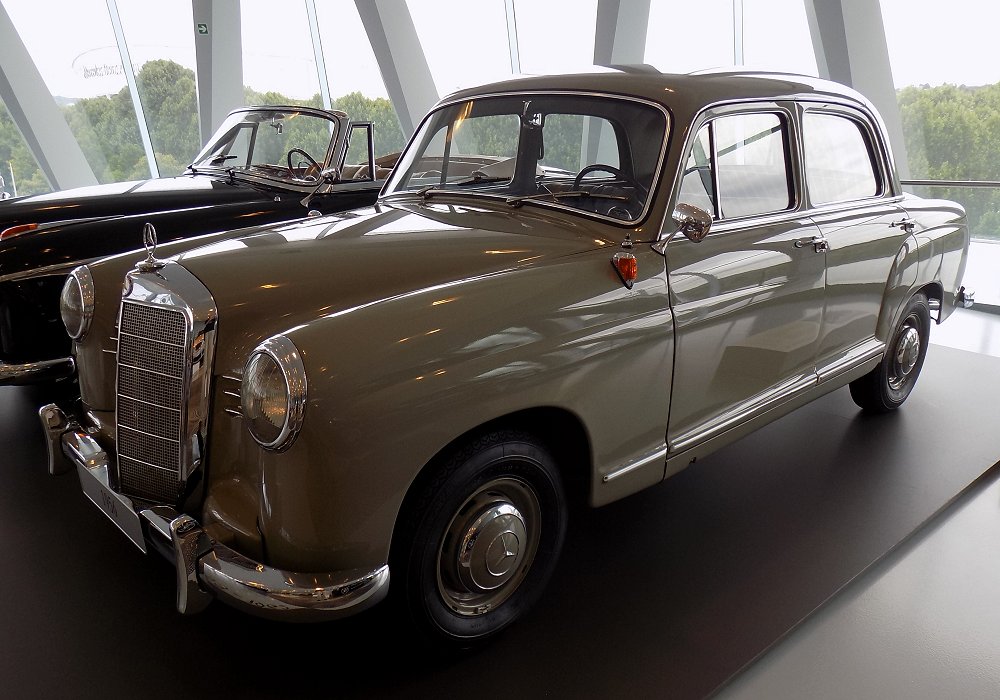
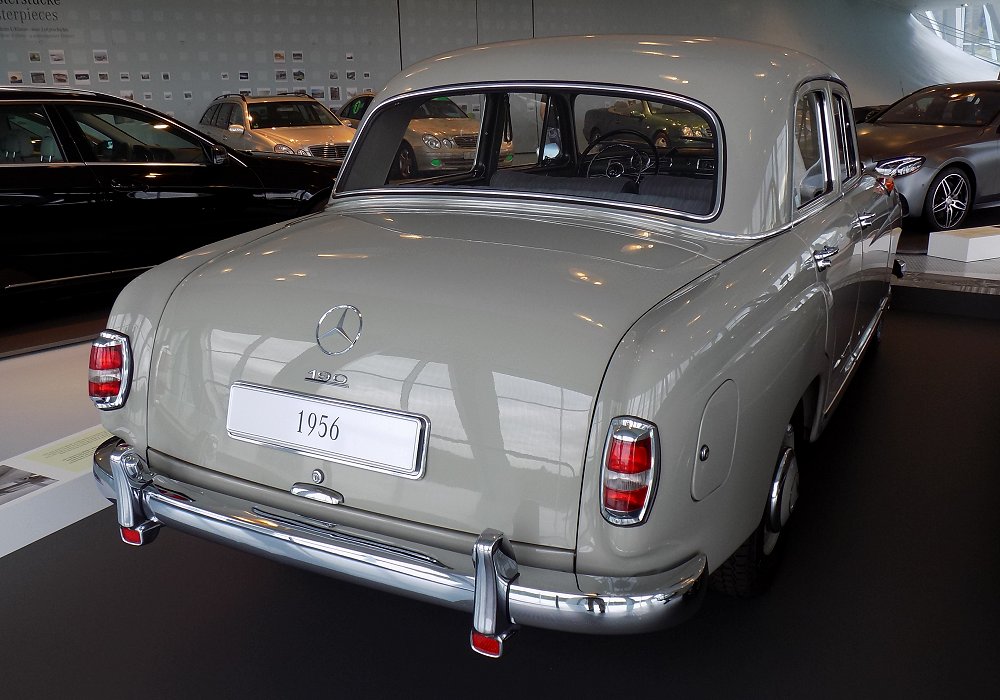
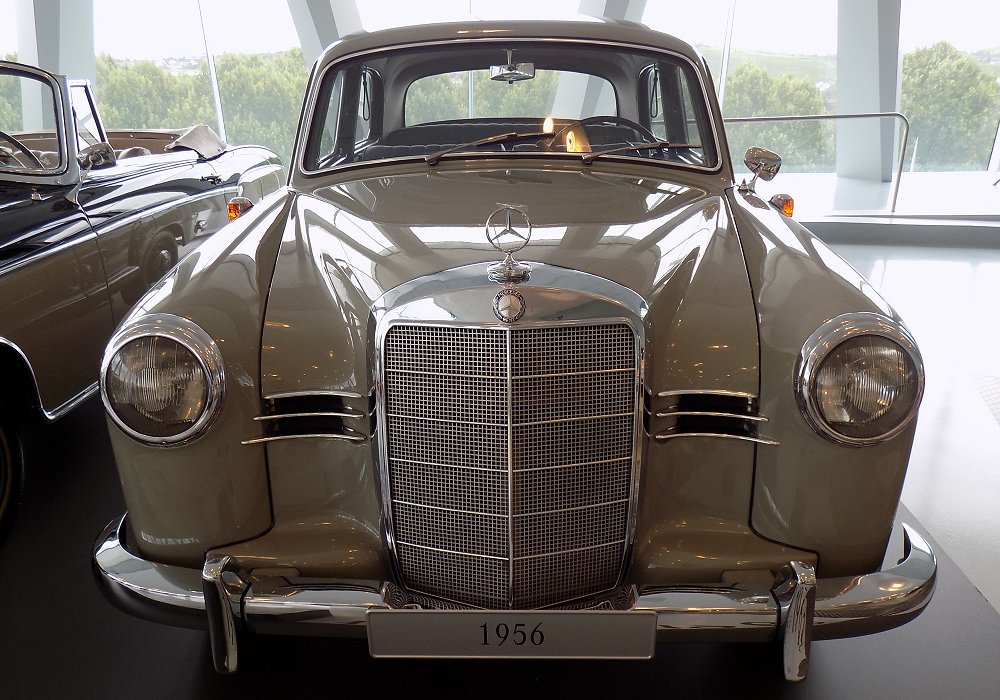
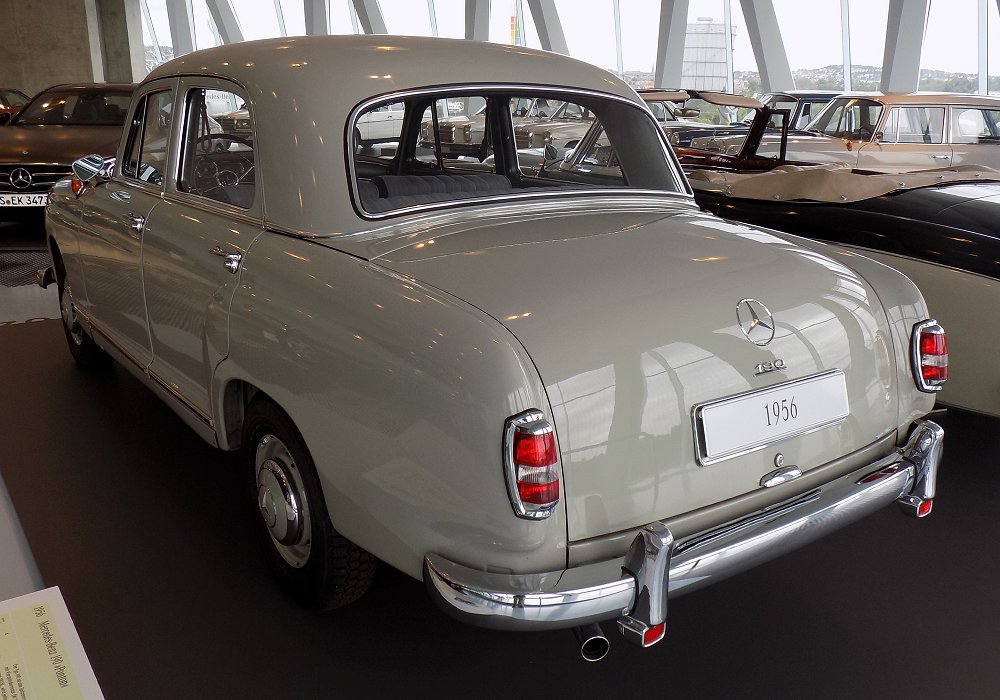
Styling followed the clean, integrated Ponton design language that defined Mercedes-Benz throughout the 1950s. Separate wings were eliminated in favour of smooth, slab-sided bodywork with a unified appearance. The upright grille and restrained chrome detailing preserved a strong Mercedes-Benz identity while presenting a thoroughly modern look. The 190 appeared solid and purposeful rather than flashy, reinforcing the brand’s reputation for conservative, engineering-led design.
Inside, the Mercedes-Benz 190 offered a practical and well-finished cabin. Seating was upright and comfortable, with improved upholstery options compared with earlier models. The dashboard was simple and clearly laid out, with easy-to-read instruments and logically arranged controls. Interior materials emphasised durability and quality rather than luxury, reflecting the car’s position as a dependable family and business saloon.
In everyday use, the 190 was appreciated for its balance of performance, comfort and reliability. The more powerful engine made it better suited to motorway and long-distance driving than the 180, while still maintaining reasonable fuel consumption. Handling was predictable and forgiving, and the car coped well with the mixed road conditions common in 1950s Europe. These qualities made it popular with professionals, families and fleet operators who wanted dependable transport with understated prestige.
The Mercedes-Benz 190 also formed the basis for several important derivatives, including later updates within the W121 series that would further refine performance and comfort. Its success helped establish the Ponton range as a cornerstone of Mercedes-Benz’s lineup and reinforced the company’s recovery and growth during the post-war economic boom.
Today, the Mercedes-Benz 190 is regarded as a solid and historically important model rather than a collector showpiece. Surviving examples are valued for their engineering integrity, usability and role in the evolution of modern Mercedes-Benz saloons. As a more powerful companion to the earlier 180, the 190 represents the steady, methodical development that characterised Mercedes-Benz during the 1950s and helped define the brand’s reputation for durable, well-engineered cars.