Description
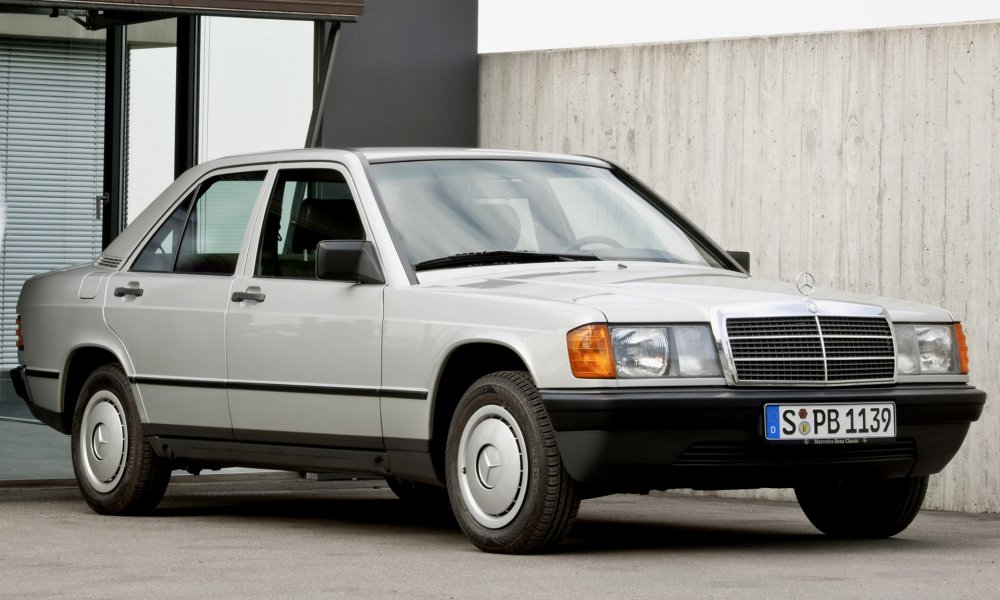
The Mercedes-Benz 190, introduced in 1982 under the internal designation W201, marked one of the most important turning points in Mercedes-Benz history. It was the company’s first modern compact executive saloon and represented a deliberate move into a smaller, more competitive market segment without abandoning traditional Mercedes-Benz values of engineering quality, durability and safety. Often referred to as the “Baby Benz,” the 190 redefined what a compact premium car could be and laid the foundation for the modern C-Class.
Powertrain options at launch were deliberately conservative, reflecting Mercedes-Benz’s emphasis on longevity and refinement rather than outright performance. Petrol engines ranged from four-cylinder units of 2.0 and 2.3 litres, while diesel variants included the 2.0 and 2.2-litre models. Power outputs were modest, but engines were engineered for smooth operation, fuel efficiency and exceptional durability. A four-speed manual gearbox was standard, with automatic transmission available as an option, reinforcing the car’s role as a refined executive saloon rather than a sporting sedan.
One of the most significant technical achievements of the Mercedes-Benz 190 was its chassis design. The W201 introduced a revolutionary five-link independent rear suspension, a system that dramatically improved ride quality, stability and handling. This rear suspension design set new standards in the segment and was later adopted across much of the Mercedes-Benz range. Combined with MacPherson strut front suspension and a rigid passenger cell, the 190 delivered predictable, confidence-inspiring road manners while maintaining excellent comfort.
The body structure of the 190 was engineered with safety as a core principle. Extensive use of high-strength steel, carefully designed crumple zones and a rigid safety cell reflected Mercedes-Benz’s industry-leading approach to occupant protection. Despite its compact dimensions, the car felt solid and reassuring, reinforcing the brand’s reputation at a time when smaller cars were often perceived as less robust.
Styling of the Mercedes-Benz 190 was clean, angular and purposeful, in keeping with early 1980s design trends. The upright grille, strong shoulder line and restrained proportions gave the car a distinctly Mercedes-Benz identity while differentiating it from larger models like the W123. The design emphasised functionality and clarity rather than ornamentation, projecting seriousness and engineering integrity.
Inside, the 190 offered an interior that was austere but exceptionally well built. Materials were chosen for durability rather than visual luxury, with excellent ergonomics and clear instrumentation. Seating was firm and supportive, designed for long-distance comfort, and the driving position reflected Mercedes-Benz’s traditional focus on control and visibility. Even base models conveyed a sense of quality that exceeded most competitors in the compact segment.
In everyday driving, the Mercedes-Benz 190 delivered a composed and mature experience. Performance was adequate rather than brisk, but the car excelled in ride comfort, stability and refinement. Steering was precise, braking performance was strong, and the chassis encouraged confidence in all conditions. Diesel variants, in particular, gained a reputation for extraordinary longevity, often covering very high mileages with minimal mechanical issues.
The introduction of the 190 also had strategic importance for Mercedes-Benz. It broadened the brand’s appeal, attracting younger buyers and professionals who previously may not have considered a Mercedes. Despite initial concerns about brand dilution, the W201 ultimately strengthened Mercedes-Benz’s market position and proved that premium engineering could be successfully applied to a smaller platform.
Today, the Mercedes-Benz 190 is regarded as a landmark model. It represents the beginning of Mercedes-Benz’s modern compact executive lineage and introduced technologies that would influence the company’s designs for decades. Well-preserved examples are increasingly appreciated for their build quality, understated design and historical significance. As the car that reshaped Mercedes-Benz’s future, the 190 stands as one of the most important saloons the company has ever produced.