Description
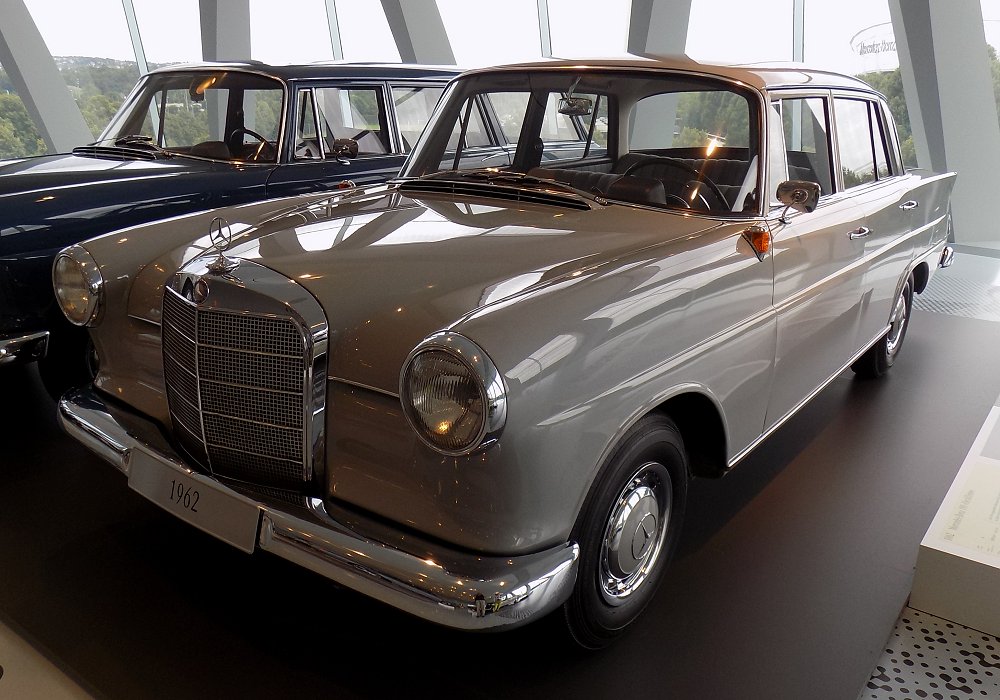
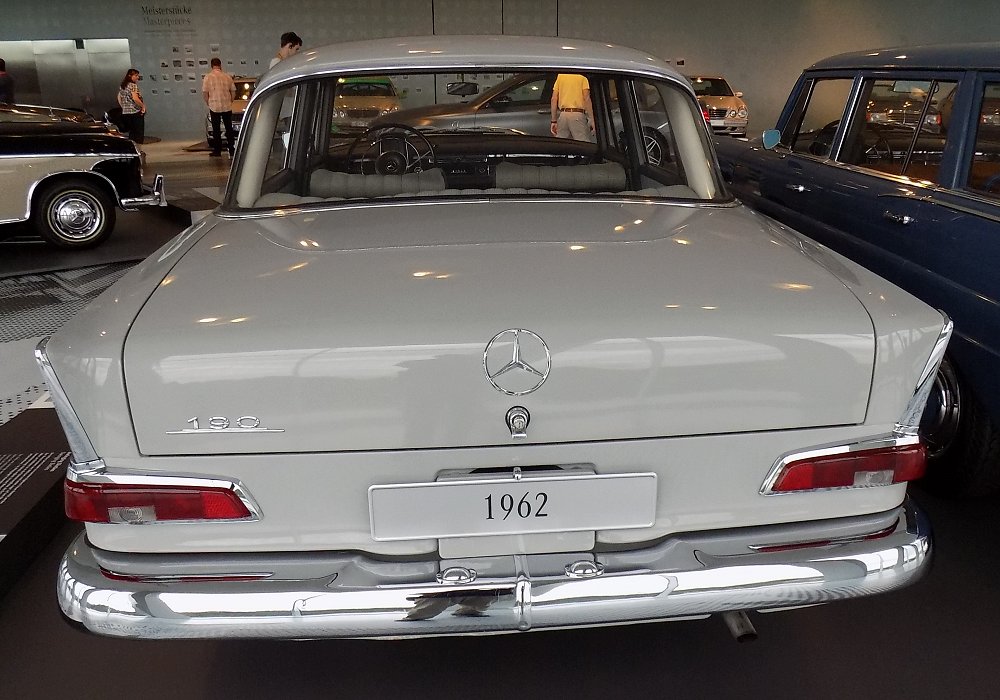
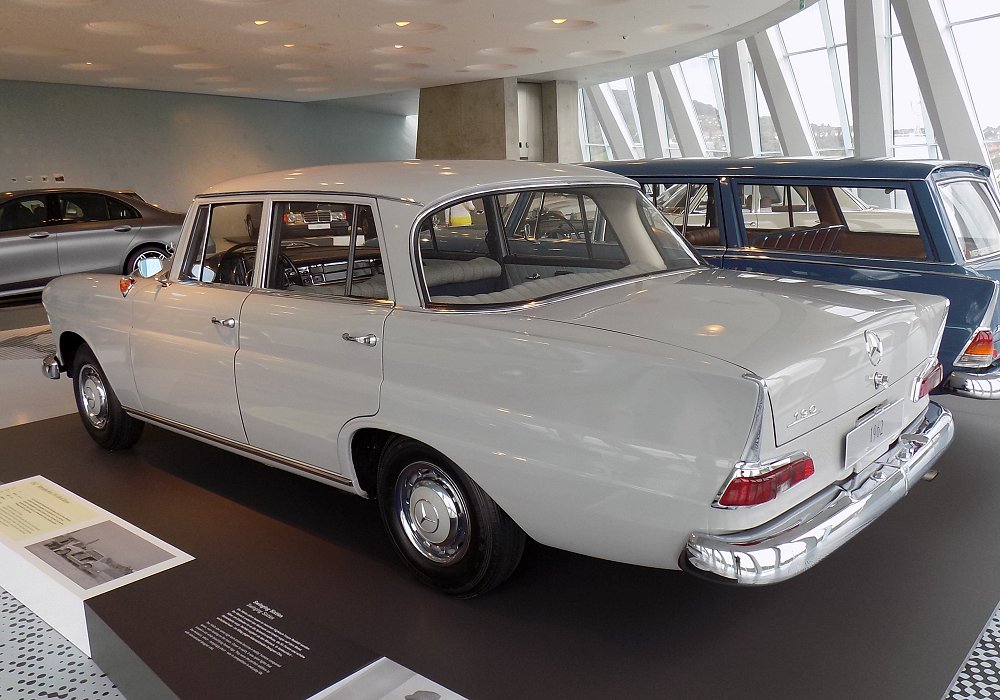
The Mercedes-Benz 190 was part of the W110 series and represented Mercedes-Benz’s continued development of the compact executive saloon during the early 1960s. Often referred to as the “Fintail” 190 due to its subtle rear tailfins, the model sat below the six-cylinder 220 and 230 variants and was designed to offer dependable, high-quality motoring in a relatively compact and efficient package. It reflected Mercedes-Benz’s philosophy of incremental engineering improvement rather than radical change.
By 1962, the Mercedes-Benz 190 was powered by a 1.9-litre inline four-cylinder petrol engine producing approximately 80 horsepower. This engine was an evolution of earlier four-cylinder units and was valued for its smoothness, durability and predictable performance. While not fast, it provided adequate acceleration and comfortable cruising for the road conditions of the time. Power was delivered to the rear wheels through a four-speed manual gearbox, with gearing selected to balance economy and relaxed long-distance driving.
The W110 chassis was based on a robust monocoque construction with a strong emphasis on occupant safety, an area in which Mercedes-Benz was becoming an industry leader. The car featured a rigid passenger cell combined with front and rear crumple zones, reflecting early safety engineering principles that would later become standard across the industry. Independent front suspension with double wishbones and coil springs delivered stable handling, while the rear swing-axle suspension was refined compared with earlier designs to improve road manners and reduce oversteer tendencies.
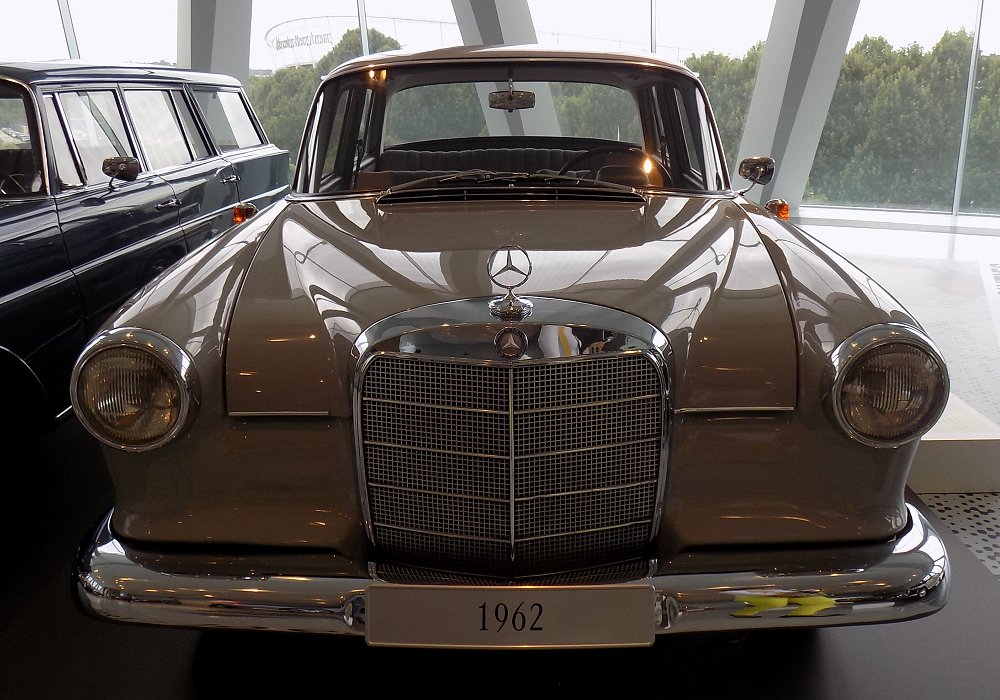
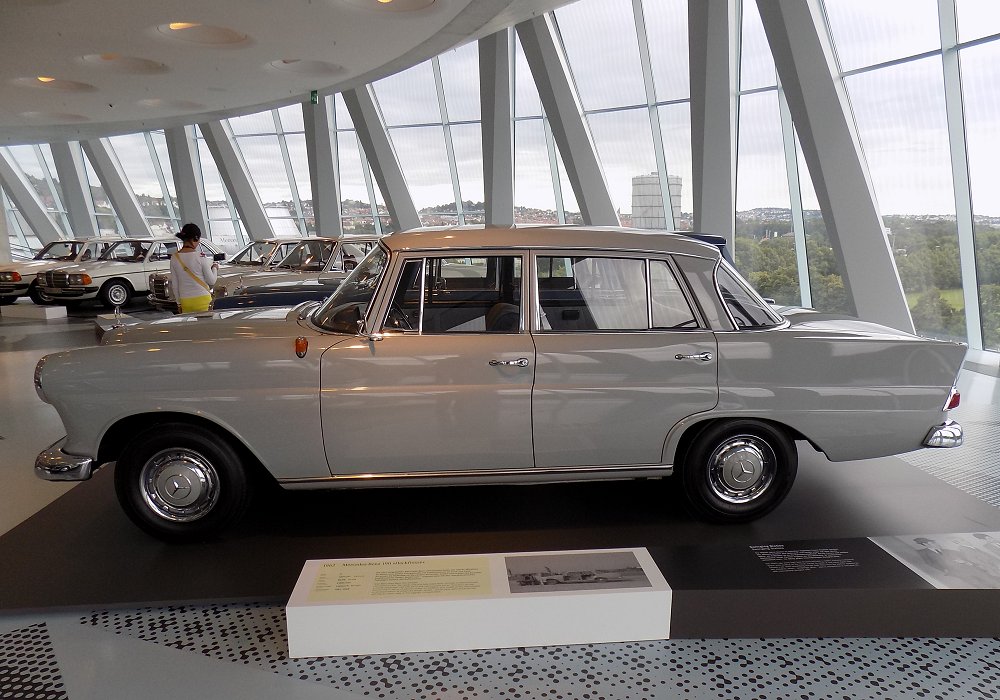
Styling of the Mercedes-Benz 190 followed the restrained “Fintail” design language. The tailfins were modest and functional rather than decorative, aiding visibility and helping drivers judge the car’s rear extremities when parking. The upright grille, clean body lines and restrained chrome detailing gave the car a formal but modern appearance. Compared with earlier Ponton models, the W110 looked more contemporary while still retaining a clear Mercedes-Benz identity.
Inside, the 190 offered a well-constructed and practical cabin. Seating was upright and supportive, designed for long-term comfort rather than softness. Materials were chosen for durability, with high-quality fabrics and solid fittings throughout. The dashboard layout was clear and functional, with large, easy-to-read instruments and logically placed controls. Although not luxurious, the interior conveyed a sense of solidity and precision that distinguished Mercedes-Benz from many competitors.
In everyday driving, the Mercedes-Benz 190 was appreciated for its calm and predictable character. The suspension absorbed poor road surfaces effectively, and the steering provided good feedback for the era. Performance was sufficient for motorway and rural driving, and the car excelled as a long-distance cruiser rather than a sporting saloon. Owners valued its reliability, strong build quality and ability to cover high mileages with minimal mechanical issues.
The 190 was also available in diesel form as the 190 D, which further reinforced Mercedes-Benz’s reputation for diesel passenger cars, particularly among taxi operators and professional users. Together, the petrol and diesel variants formed the backbone of the W110 range and were widely used across Europe and export markets.
Today, the Mercedes-Benz 190 (W110) is regarded as a solid and historically important classic rather than a rare collector showpiece. Surviving examples are valued for their engineering integrity, understated styling and association with Mercedes-Benz’s early safety innovations. As a product of the early 1960s, it represents a period when the marque was refining its core values of durability, safety and conservative design, laying the groundwork for the models that would define Mercedes-Benz for decades to come.