Description
The Mercedes-Benz 190 D was the diesel-powered variant of the W110 “Fintail” series and represented Mercedes-Benz’s continued leadership in passenger-car diesel engineering during the early 1960s. Positioned as an economical and exceptionally durable compact executive saloon, the 190 D was widely regarded as a benchmark for reliability and efficiency at a time when diesel engines were still uncommon in private cars outside professional use.
Power came from a 2.0-litre inline four-cylinder diesel engine, producing approximately 55 horsepower. While modest in outright output, the engine was designed for longevity, fuel efficiency and steady torque delivery rather than performance. Acceleration was slow by modern standards, but the engine’s ability to operate continuously under load made it ideal for long-distance driving. A four-speed manual gearbox transmitted power to the rear wheels, with gearing selected to support relaxed cruising and economical operation.
The W110 body used a self-supporting monocoque construction with a strong emphasis on safety, an area in which Mercedes-Benz was becoming increasingly influential. The structure incorporated a rigid passenger cell combined with front and rear crumple zones, reflecting early crash-safety thinking that would later become industry standard. Independent front suspension with double wishbones and coil springs provided predictable handling, while the rear swing-axle suspension was refined compared with earlier designs to improve stability and reduce abrupt oversteer.
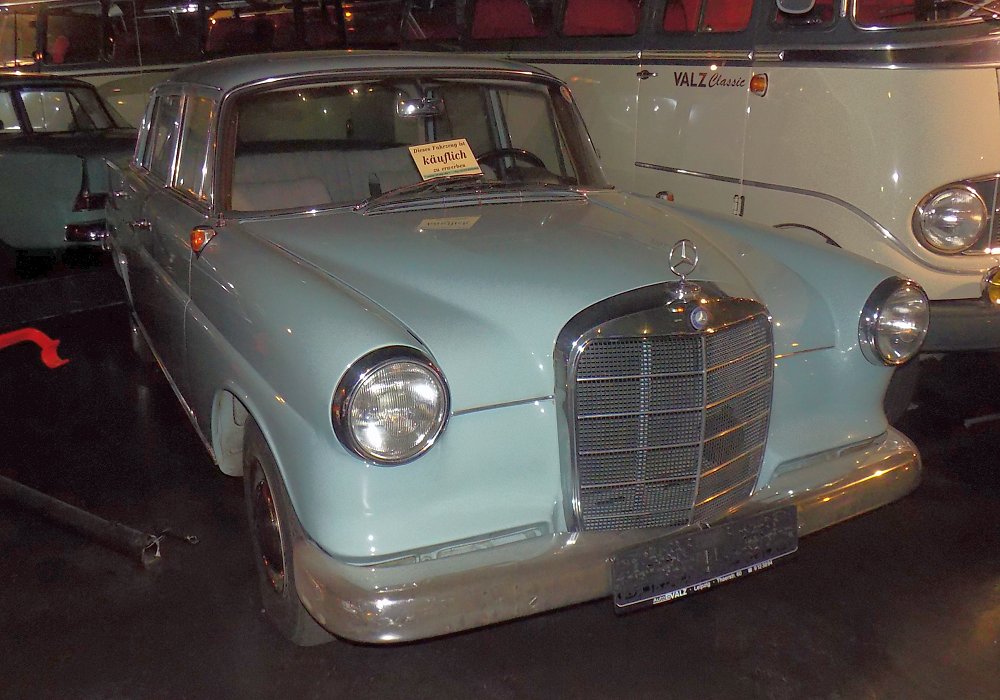
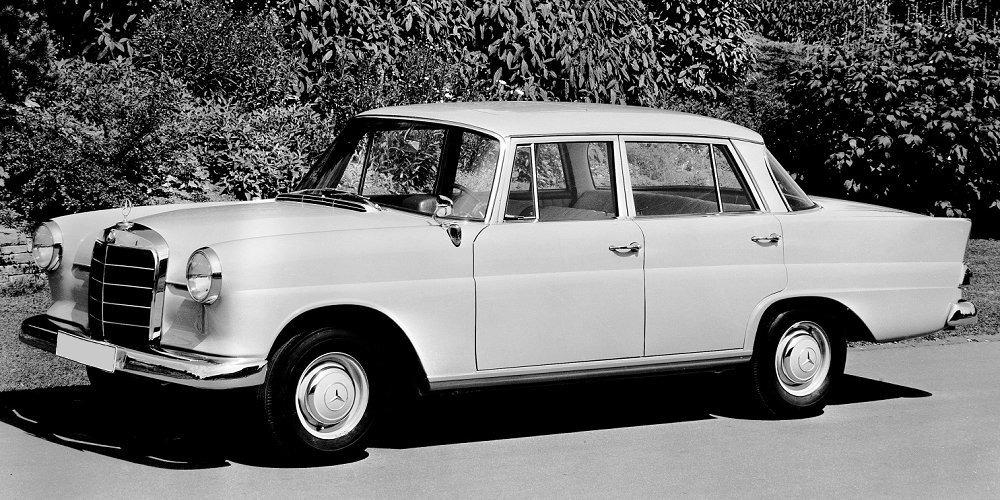
Styling followed the restrained Fintail design language. The tailfins were subtle and functional, intended to help drivers judge the rear corners of the car when manoeuvring rather than to make a stylistic statement. The upright grille, clean body sides and restrained chrome detailing gave the 190 D a formal, professional appearance well suited to its role as a working saloon. The design projected seriousness and durability rather than fashion.
Inside, the Mercedes-Benz 190 D offered a solid and practical cabin. Seating was upright and supportive, trimmed in durable materials chosen for long service life. The dashboard was clear and functional, with large instruments and logically arranged controls. Compared with petrol versions, noise and vibration levels were higher, particularly at idle, but this was widely accepted by owners in exchange for the car’s exceptional economy and reliability.
In everyday use, the 190 D excelled as a high-mileage vehicle. Fuel consumption was significantly lower than petrol equivalents, and the diesel engine was renowned for its ability to cover several hundred thousand kilometres with minimal internal wear when properly maintained. These qualities made the car especially popular with taxi operators, doctors, government services and business users across Europe and export markets. In many cities, the 190 D became a familiar sight in taxi fleets, reinforcing Mercedes-Benz’s reputation for indestructible diesel saloons.
Performance was never the focus of the 190 D. Top speed was limited, and overtaking required planning, but the car compensated with stability, predictable handling and mechanical dependability. It was particularly well suited to steady cruising on main roads and motorways, where its relaxed operating character came into its own.
Today, the Mercedes-Benz 190 D is remembered as one of the defining diesel saloons of its era. Surviving examples are valued for their engineering integrity, historical importance and association with Mercedes-Benz’s early safety and diesel leadership. As a product of Mercedes-Benz at a time of rapid technical development, the 190 D stands as a symbol of durability, efficiency and conservative engineering that helped shape the brand’s global reputation for decades to follow.