Description
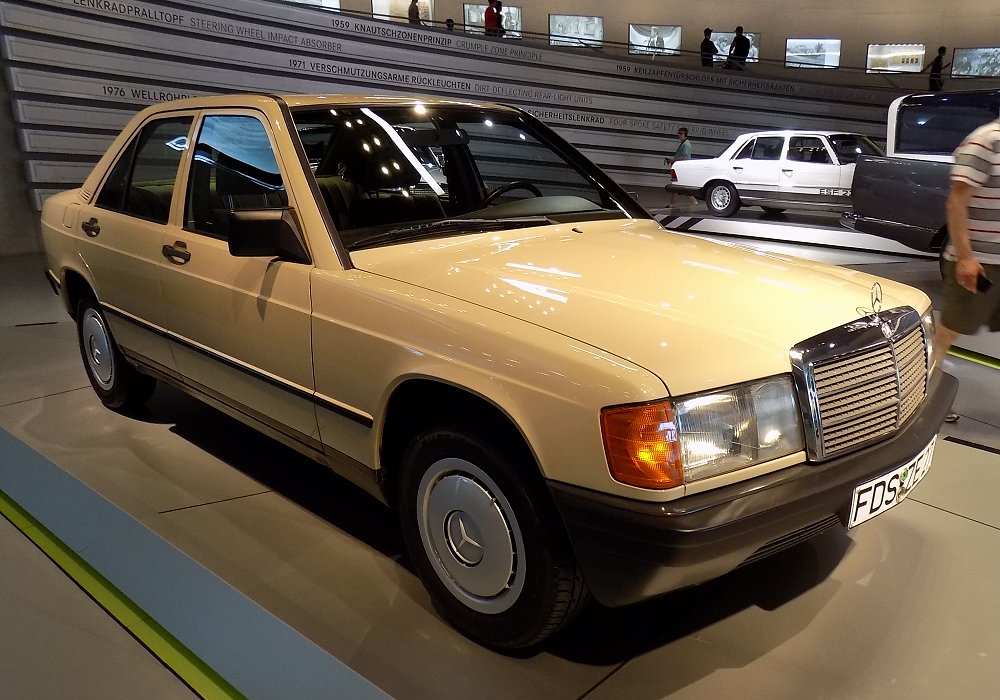
The Mercedes-Benz 190 E was the fuel-injected petrol variant of the W201 series and represented the refined, executive side of the “Baby Benz” concept. Introduced shortly after the launch of the Mercedes-Benz 190 in the early 1980s, the 190 E combined compact dimensions with advanced engineering, high build quality and a level of ride comfort and durability that was unprecedented in its class. It played a central role in establishing Mercedes-Benz as a serious competitor in the compact executive market.
Power for the early Mercedes-Benz 190 E came from a 2.0-litre inline four-cylinder petrol engine equipped with Bosch KE-Jetronic mechanical fuel injection. Output was around 122 horsepower, a clear improvement over the carburetted 190 models and enough to give the car confident performance for its time. Later versions expanded the range to include 2.3-litre and 2.6-litre engines, further enhancing refinement and cruising ability. Power delivery was smooth and progressive, with an emphasis on drivability and longevity rather than outright speed. A five-speed manual gearbox was commonly fitted, with automatic transmission available for buyers prioritising comfort.
One of the defining characteristics of the 190 E was its chassis engineering. The W201 platform introduced a sophisticated five-link independent rear suspension, a design that dramatically improved handling stability, ride comfort and tyre control. This system allowed the 190 E to combine excellent road manners with predictable, safe handling, even at higher speeds. At the front, MacPherson struts with coil springs provided a balance of comfort and precision. Braking performance was strong and reassuring, reflecting Mercedes-Benz’s traditional emphasis on safety.
The body structure of the 190 E was engineered to Mercedes-Benz’s exacting standards. Extensive use of high-strength steel, carefully designed crumple zones and a rigid passenger safety cell gave the car a solidity that set it apart from many competitors. Despite its compact size, the 190 E felt robust and substantial, reinforcing the perception that it was a true Mercedes-Benz rather than a cost-cutting exercise.
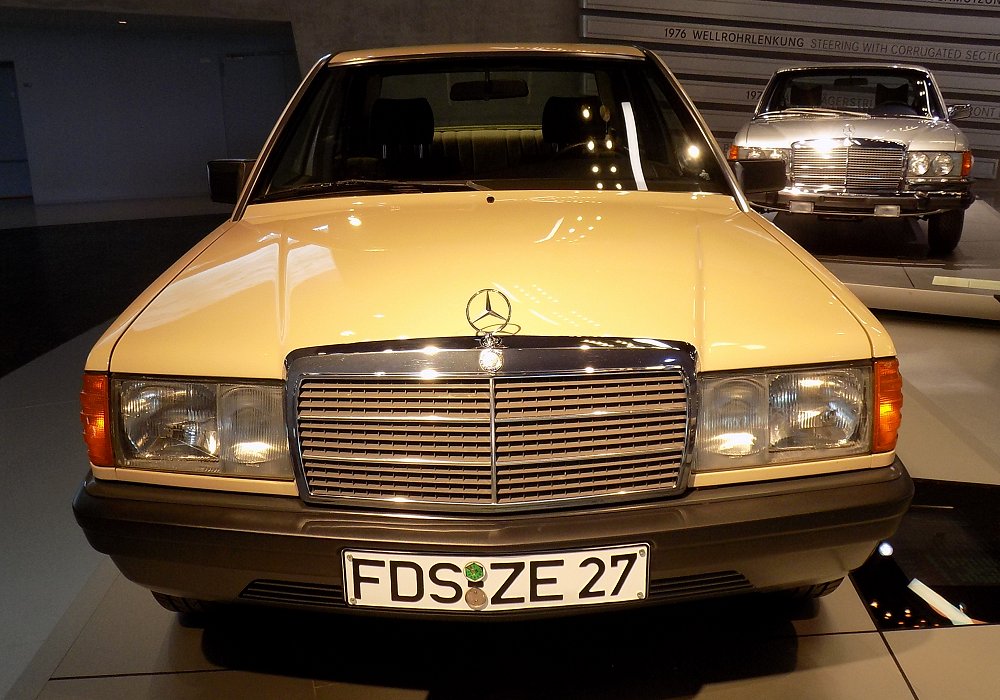
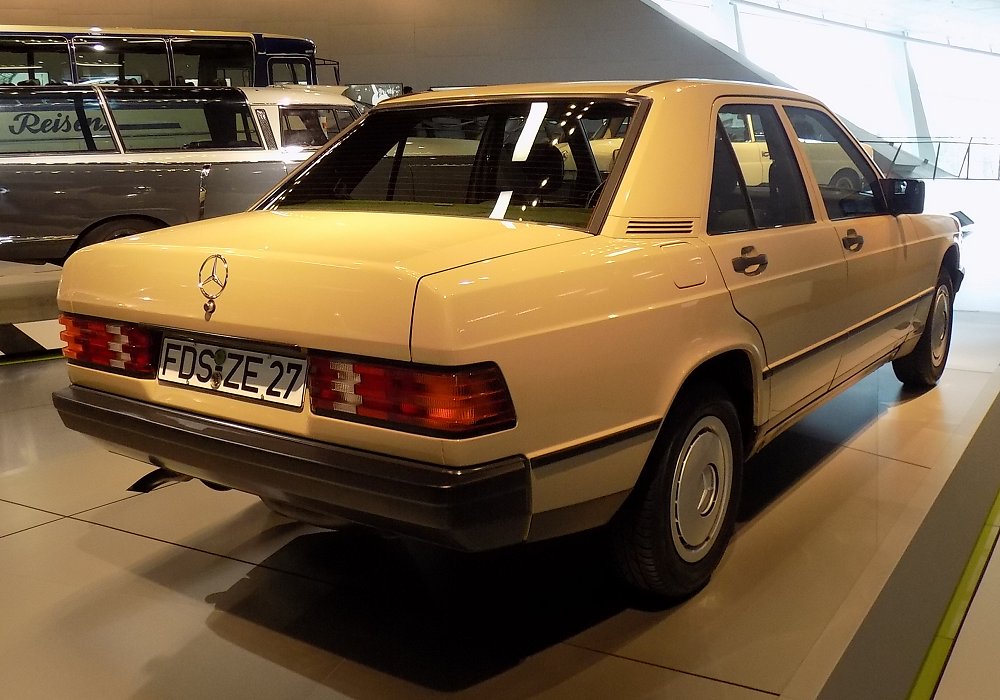
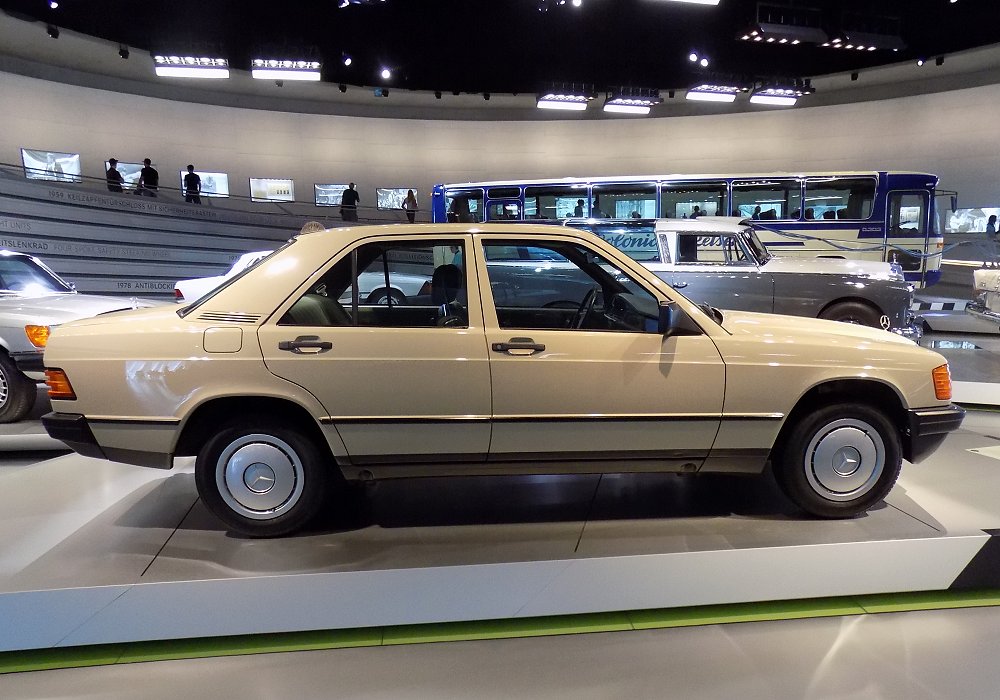
Styling of the 190 E was clean, angular and purposeful, reflecting early-1980s design trends while maintaining a clear Mercedes-Benz identity. The upright grille, crisp body lines and restrained proportions gave the car a serious, professional appearance. Aerodynamic efficiency was also a focus, contributing to reduced wind noise and improved fuel economy at motorway speeds.
Inside, the Mercedes-Benz 190 E offered an interior that prioritised ergonomics, durability and long-distance comfort. Materials were chosen for their longevity rather than luxury appeal, but build quality was exceptional. Seating was firm and supportive, instrumentation was clear and logically arranged, and the driving position was designed to provide excellent visibility and control. Even higher-mileage examples often retained a solid, well-assembled feel, underlining the car’s reputation for longevity.
On the road, the 190 E delivered a composed and mature driving experience. Acceleration was brisk enough for confident overtaking, while high-speed cruising was relaxed and stable. The advanced rear suspension gave the car a level of handling sophistication that surprised many contemporary reviewers, particularly in poor weather or on uneven surfaces. It was a car that encouraged smooth, controlled driving rather than aggressive inputs.
The Mercedes-Benz 190 E also formed the foundation for some of the most famous performance saloons of the era, including the Cosworth-developed 190 E 2.3-16 and 2.5-16 models. These high-performance variants demonstrated the underlying strength of the W201 platform and further enhanced the 190 E’s reputation, particularly in motorsport and enthusiast circles.
Today, the Mercedes-Benz 190 E is widely regarded as one of the most important compact executive cars ever produced. It helped redefine expectations in its class, proving that a smaller car could still deliver Mercedes-Benz levels of engineering integrity, comfort and durability. Well-maintained examples are increasingly appreciated for their build quality, timeless design and historical significance. As a cornerstone of Mercedes-Benz’s modern compact saloon lineage, the 190 E remains a benchmark for understated, engineering-led automotive design.