Description
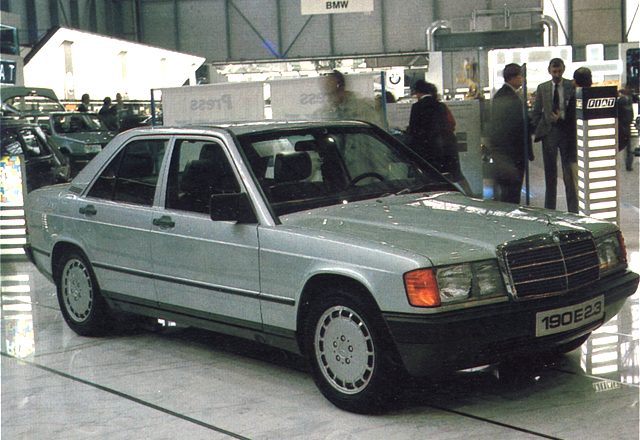
The Mercedes-Benz 190 E 2.3 was a key variant in the W201 range and represented a well-judged balance between performance, refinement and durability within the early “Baby Benz” lineup. Introduced in the mid-1980s, it sat above the 2.0-litre 190 E and below the specialist 16-valve Cosworth models, offering noticeably stronger performance while retaining the restrained character and long-term robustness for which Mercedes-Benz was known.
Power came from a 2.3-litre inline four-cylinder petrol engine equipped with Bosch KE-Jetronic fuel injection. Output was around 136 horsepower, a significant increase over the 2.0-litre version and enough to give the 190 E 2.3 confident acceleration and relaxed motorway cruising. The engine was tuned for smoothness and mid-range torque rather than high-revving sportiness, making it particularly suitable for everyday driving and long-distance use. A five-speed manual gearbox was commonly specified, with automatic transmission available for buyers prioritising comfort.
The chassis was one of the defining strengths of the 190 E 2.3. Like all W201 models, it featured the advanced five-link independent rear suspension that set new standards for ride quality and handling stability in the compact executive class. Combined with MacPherson strut front suspension, this setup gave the car excellent balance, predictable responses and a level of composure that many larger cars struggled to match. Braking performance was strong and reassuring, in keeping with Mercedes-Benz’s emphasis on safety.
Structurally, the 190 E 2.3 benefited from a rigid body shell engineered with extensive use of high-strength steel and carefully designed crumple zones. Despite its compact size, the car felt solid and substantial, reinforcing the impression that it was built to a higher standard than most competitors. This sense of durability became a defining trait of the model and contributed to its reputation for longevity.
Styling followed the clean, angular design language of the W201 range. The upright grille, crisp body lines and restrained proportions gave the 190 E 2.3 a serious, professional appearance. It was visually conservative, but this understatement appealed strongly to buyers who valued discretion and timeless design over fashion-led styling.
Inside, the cabin prioritised ergonomics, clarity and durability. Materials were chosen for long service life rather than visual luxury, but build quality was exceptionally high. Seating was firm and supportive, well suited to long journeys, and the driving position offered excellent visibility and control. Instrumentation was clear and logically arranged, reinforcing the car’s functional, engineering-led character.
On the road, the Mercedes-Benz 190 E 2.3 delivered a mature and composed driving experience. Performance was brisk enough to feel genuinely capable in modern traffic, while the refined chassis encouraged confidence in all conditions. The car excelled at sustained high-speed cruising, where its stability, low noise levels and mechanical smoothness set it apart from many rivals.
Within the W201 lineup, the 190 E 2.3 occupied an important middle ground. It offered much of the performance appeal of the range-topping models without the higher running costs or specialist nature of the Cosworth-developed 16-valve variants. As a result, it became one of the most well-rounded and desirable everyday versions of the 190 E.
Today, the Mercedes-Benz 190 E 2.3 is appreciated as a classic example of Mercedes-Benz’s disciplined approach to engineering in the 1980s. It is valued for its balance of performance, comfort and durability rather than outright collectability. Well-maintained examples continue to demonstrate why the W201 earned its reputation as one of the most robust and well-engineered compact executive cars of its era, and why the 190 E 2.3 remains a quietly respected part of that legacy.