
Description
The Mercedes-Benz 190 E 2.3-16 Cat was a later evolution of the high-performance W201 Cosworth model, introduced to meet increasingly strict emissions regulations in the late 1980s. The addition of a catalytic converter marked an important transition period in performance car development, as manufacturers were required to balance environmental compliance with power and drivability. While closely related to the original 190 E 2.3-16, the Cat version reflected the realities of a changing regulatory landscape.
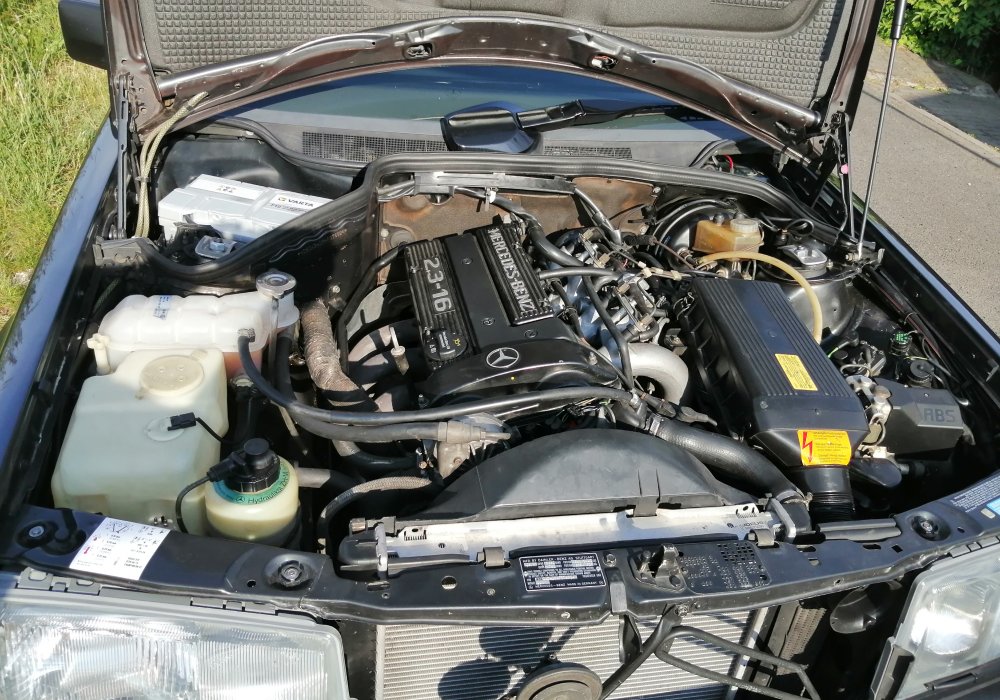
Power continued to come from the Cosworth-developed 2.3-litre inline four-cylinder engine with a 16-valve, double overhead camshaft cylinder head. In catalytic-converter form, output was reduced from the original 185 horsepower to approximately 170 horsepower. This reduction was the result of revised engine management, exhaust configuration and emissions control equipment rather than fundamental mechanical changes. Despite the lower peak power, the engine retained its high-revving character and mechanical sophistication, continuing to reward drivers who were willing to explore the upper reaches of the rev range.
The drivetrain layout remained unchanged. A close-ratio five-speed manual gearbox with a dogleg first gear was standard, reinforcing the car’s motorsport-inspired character. Power was delivered to the rear wheels through a limited-slip differential, ensuring good traction and stability under hard acceleration. While outright performance figures were slightly reduced compared with the non-cat version, the car still offered strong real-world pace and excellent high-speed cruising ability.
Chassis and suspension specification mirrored that of the original 2.3-16. The advanced five-link rear suspension of the W201 platform remained a key strength, providing excellent wheel control, stability and predictable handling. Firmer springs and dampers, along with a lower ride height, gave the car a more focused feel than standard 190 models, while maintaining Mercedes-Benz levels of composure and ride quality. Braking performance was unchanged, with larger discs and calipers well matched to the car’s capabilities.
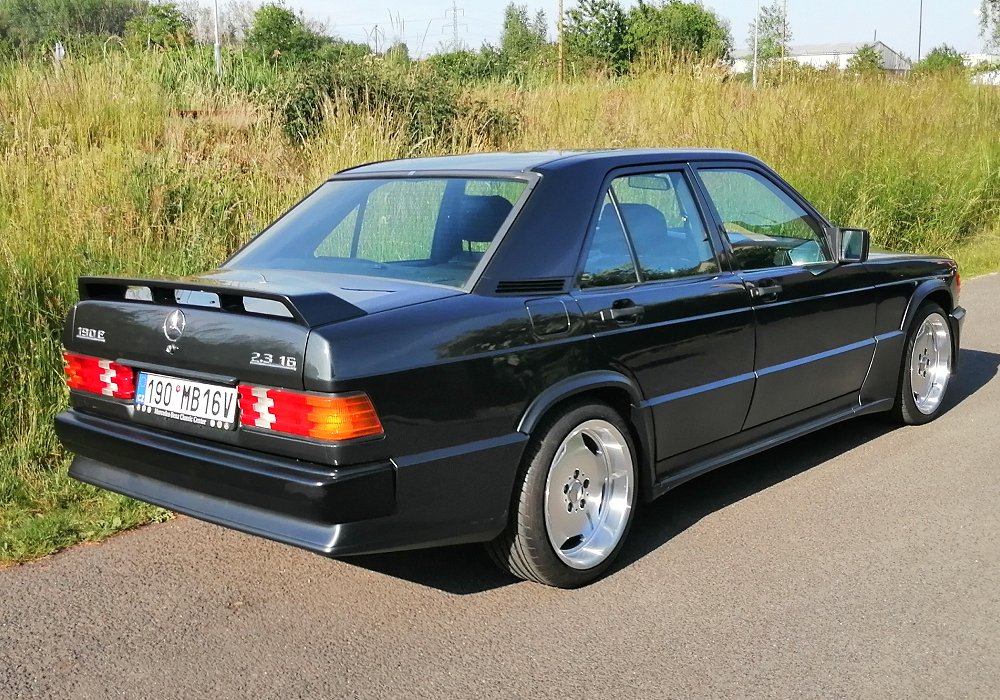
Visually, the Mercedes-Benz 190 E 2.3-16 Cat was almost indistinguishable from earlier versions. The functional aerodynamic package, including the deeper front spoiler, side skirts and raised rear spoiler, was retained and continued to provide high-speed stability. Alloy wheels and discreet badging completed the purposeful but restrained appearance, ensuring the car remained recognisably Mercedes-Benz rather than overtly aggressive.
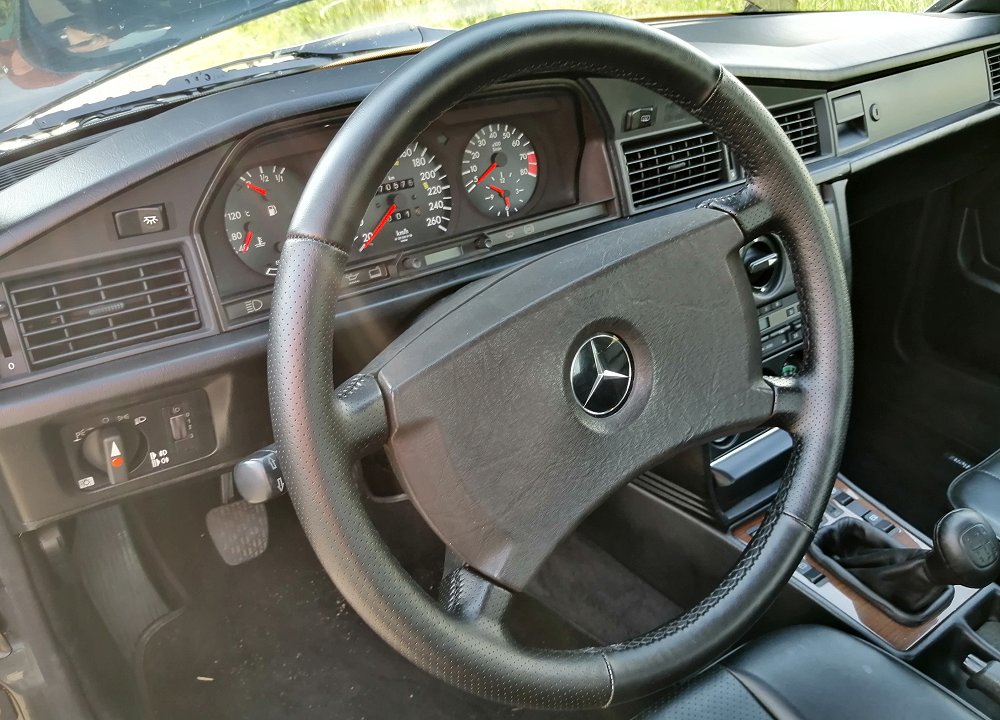
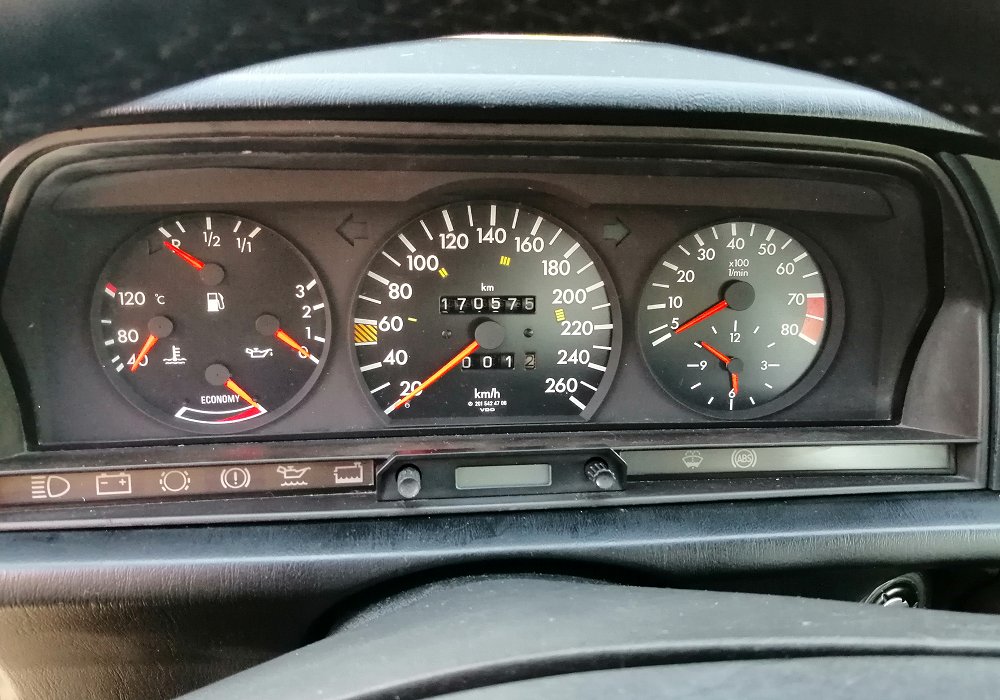
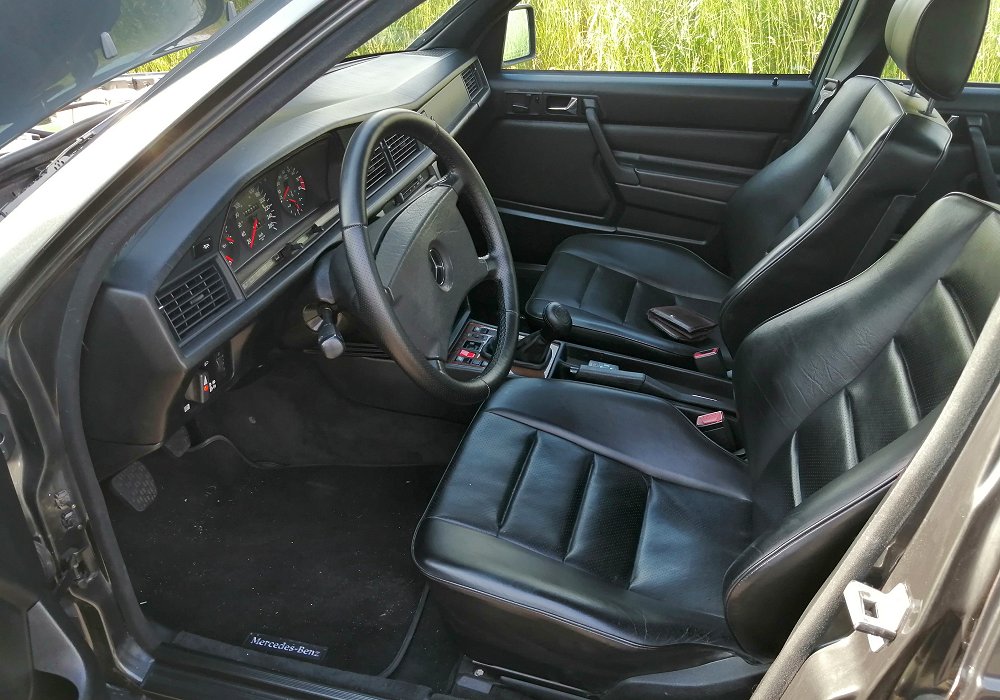
Inside, the cabin layout and equipment were carried over largely unchanged. Deeply bolstered sports seats, a smaller steering wheel and additional instrumentation reinforced the car’s performance credentials, while the overall interior design remained robust, ergonomic and suitable for daily use. As with other W201 models, build quality and durability were standout features, contributing to the car’s reputation for longevity.
On the road, the 190 E 2.3-16 Cat delivered a slightly softer performance edge compared with the original non-catalyst version, but the difference was less dramatic than the headline power figures suggested. The engine remained flexible and responsive at higher revs, and the car’s excellent chassis balance meant that it could still be driven quickly and confidently. In many markets, the Cat version also benefited from smoother low-speed behaviour and improved drivability in everyday conditions.
The introduction of the catalytic converter foreshadowed the broader evolution of the 190 E 16-valve lineage. Mercedes-Benz would soon replace the 2.3-litre engine with the larger 2.5-litre 16-valve unit, restoring lost power while meeting emissions requirements more effectively. In this sense, the 2.3-16 Cat represents a transitional model between two eras of performance engineering.
Today, the Mercedes-Benz 190 E 2.3-16 Cat is appreciated as an important and often overlooked chapter in the Cosworth story. While purists may favour the earlier non-cat version, the Cat model reflects the challenges manufacturers faced as environmental regulations tightened. Well-preserved examples remain highly regarded for their engineering, balance and historical significance, standing as a reminder that the evolution of performance cars is shaped as much by regulation as by ambition.