


Description
The Mercedes-Benz 190 E 2.3 AMG was a rare and highly desirable performance interpretation of the W201 series, created during the formative years of AMG before its formal integration into Mercedes-Benz. Based on the fuel-injected 190 E 2.3, the AMG-enhanced version combined the inherent balance and engineering sophistication of the “Baby Benz” with bespoke performance upgrades, visual enhancements and a more aggressive character. It represented one of the earliest expressions of AMG’s philosophy applied to a compact executive saloon.
At its core, the 190 E 2.3 AMG retained the 2.3-litre inline four-cylinder petrol engine with Bosch KE-Jetronic fuel injection. In standard form this engine produced around 136 horsepower, but AMG modifications could raise output significantly depending on specification. Typical upgrades included a reworked cylinder head, higher-lift camshafts, revised intake and exhaust systems and, in some cases, increased displacement. These changes sharpened throttle response, improved top-end power and gave the engine a more urgent, sporting character while retaining Mercedes-Benz durability.
Power was transmitted through either a close-ratio manual gearbox or an automatic transmission modified to suit the increased performance. AMG often revised final-drive ratios to improve acceleration, making the car feel notably quicker than the standard 190 E 2.3. The result was a compact saloon capable of genuinely rapid real-world performance, particularly impressive given the conservative nature of most early-1980s executive cars.
Chassis and suspension modifications were a key part of the AMG transformation. Lowered and stiffened suspension setups were commonly fitted, using uprated springs and dampers to reduce body roll and improve turn-in. These changes worked in harmony with the W201’s advanced five-link rear suspension, giving the 190 E 2.3 AMG excellent balance, stability and confidence at speed. Wider wheels and performance tyres further enhanced grip, while upgraded braking components were often specified to cope with the increased performance.
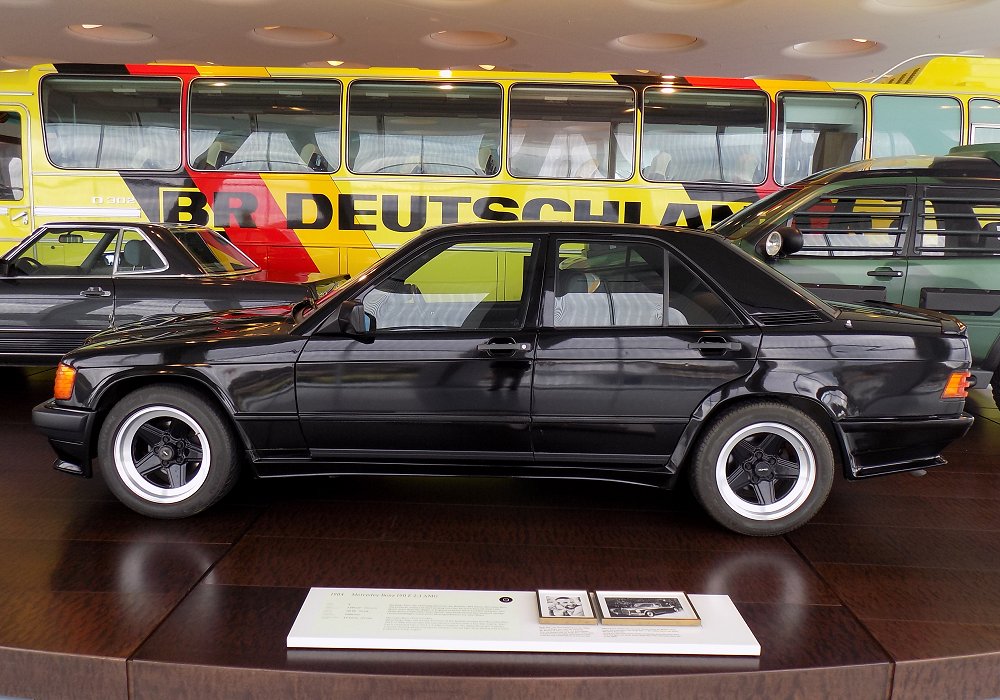
Visually, the Mercedes-Benz 190 E 2.3 AMG was far more assertive than the standard model. AMG body kits typically included deeper front air dams, side skirts and a more pronounced rear spoiler, improving both aesthetics and high-speed stability. Distinctive AMG alloy wheels, often wider and larger than standard, filled the arches and gave the car a purposeful stance. Badging was restrained but unmistakable, signalling that this was a special car built for enthusiasts who understood AMG’s reputation.
Inside, AMG enhancements varied according to customer specification. Many cars featured AMG sports seats, smaller-diameter steering wheels, auxiliary gauges and bespoke trim details. Interiors generally retained the solid, functional Mercedes-Benz layout but were given a more sporting atmosphere. Despite the performance focus, build quality and ergonomics remained high, preserving the 190 E’s suitability for everyday use.
On the road, the 190 E 2.3 AMG delivered a markedly different experience from the standard car. Acceleration was stronger, engine response sharper and handling more engaging, while the refined chassis ensured the car remained composed and confidence-inspiring. Unlike many contemporaries, it combined genuine performance with ride quality and stability, making it as capable on long motorway journeys as it was on fast, winding roads.
Production of the Mercedes-Benz 190 E 2.3 AMG was extremely limited, as cars were built to order rather than mass produced. Each example reflected individual customer preferences, resulting in significant variation between cars. This rarity, combined with the model’s position in AMG’s early history, makes surviving examples particularly valuable today.
In retrospect, the 190 E 2.3 AMG occupies a special place in Mercedes-Benz and AMG history. It represents the moment when AMG began transforming compact Mercedes saloons into serious performance machines, paving the way for later icons such as the 190 E 2.3-16 and the high-performance C-Class models that followed. As an early AMG creation, it stands as a compelling blend of understated design, engineering sophistication and bespoke performance, capturing the spirit of an era when AMG’s reputation was built car by car.