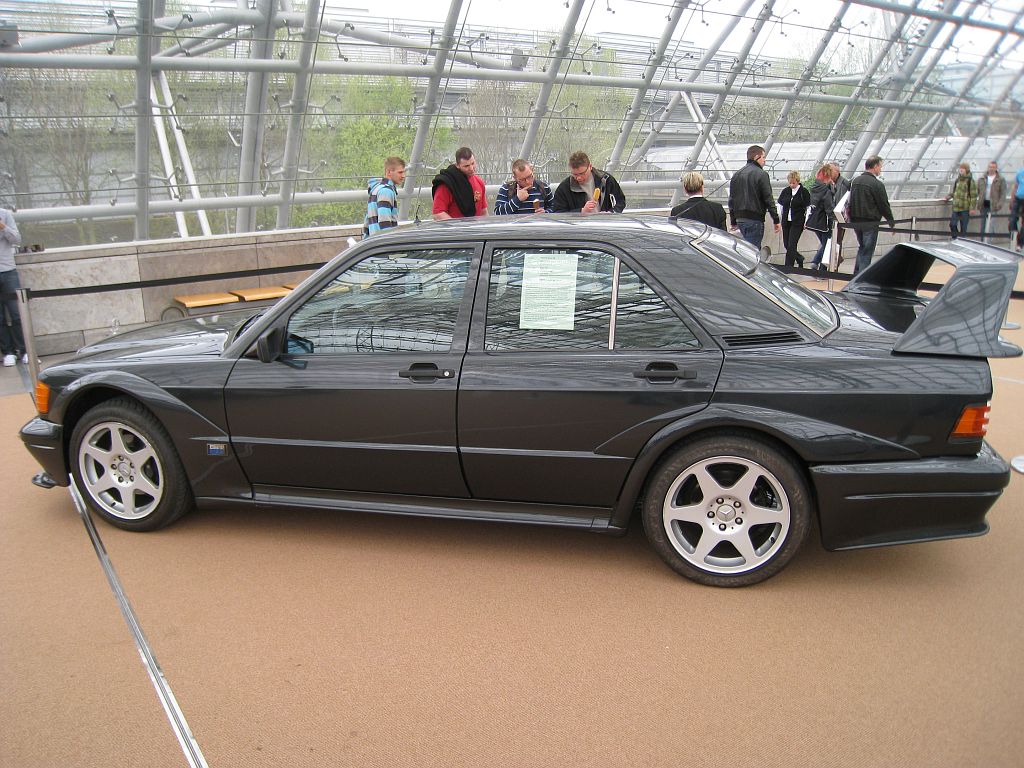
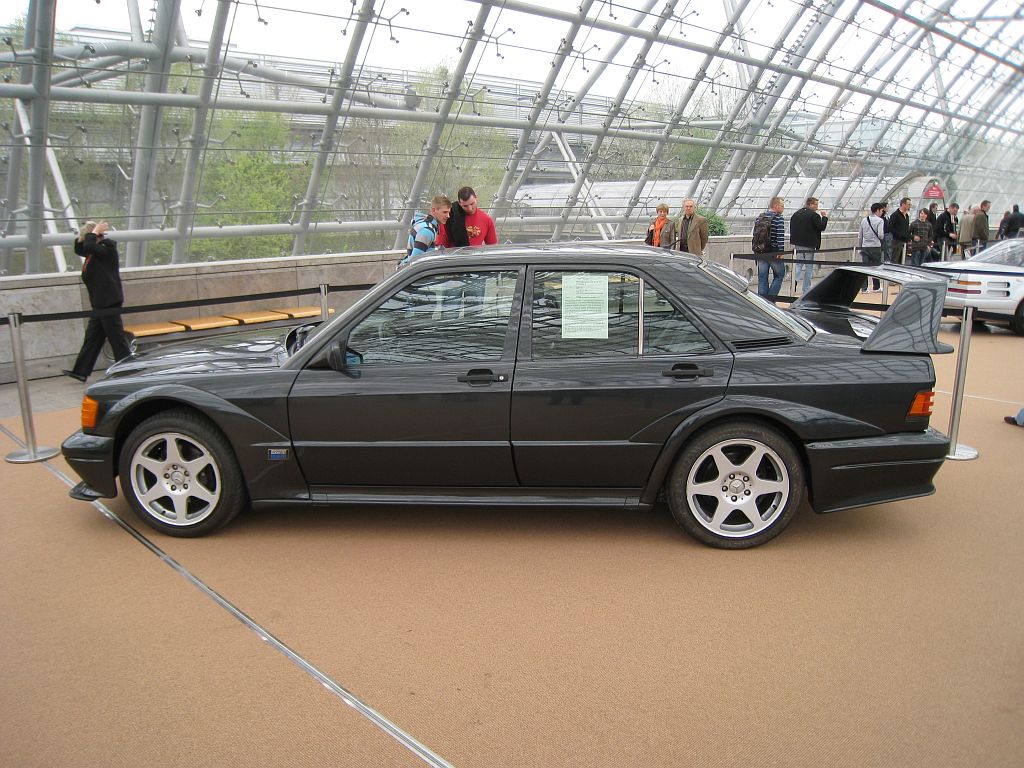
Description
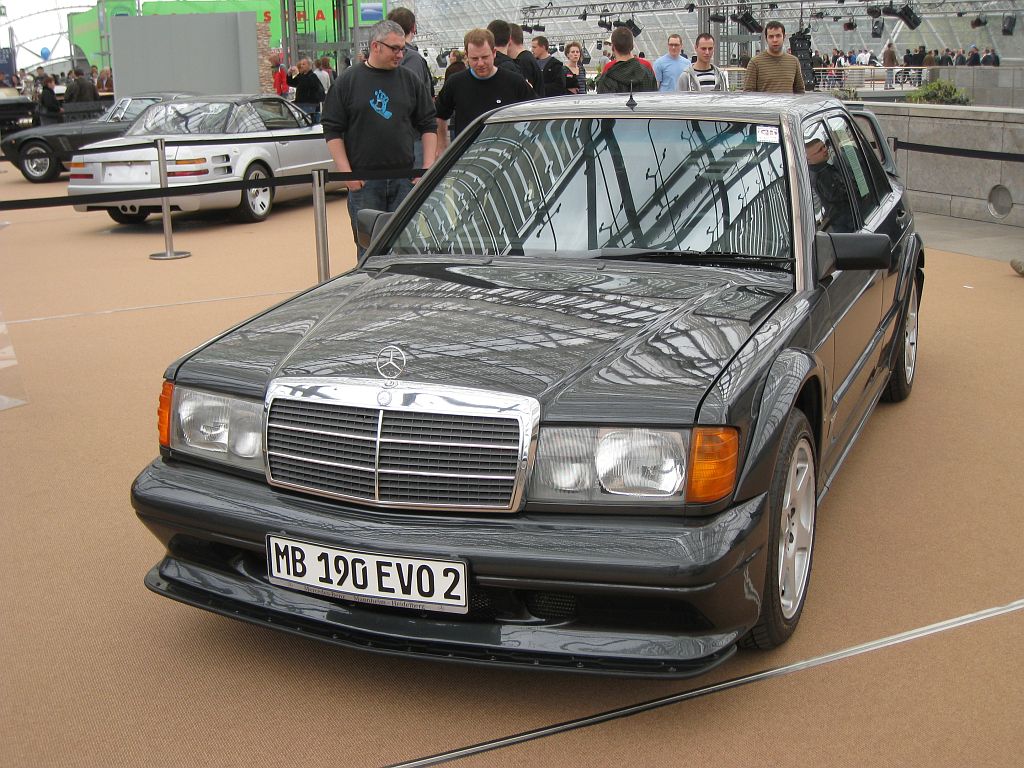
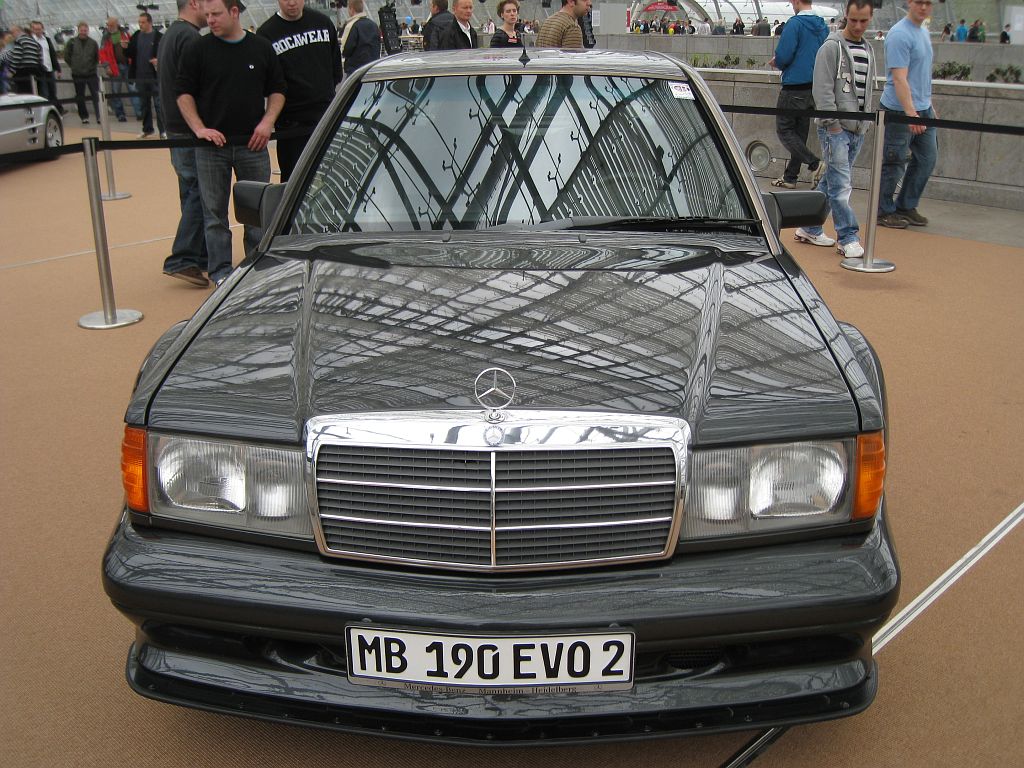
The Mercedes-Benz 190 E 2.5-16V Evolution II was the ultimate and most extreme road-going expression of the W201 platform, created as a homologation special to secure competitive dominance in Deutsche Tourenwagen Meisterschaft competition. Introduced in 1990, the Evolution II represented the final development of the Cosworth-engined 190 E and stood as a statement of intent from Mercedes-Benz, combining motorsport-driven engineering with road legality in a way that was rare for the period.
Power came from a heavily developed version of the 2.5-litre inline four-cylinder Cosworth engine. While displacement remained unchanged from the Evolution I, extensive internal revisions, revised engine management and improved breathing raised output to approximately 235 horsepower. The engine retained its naturally aspirated character and high-revving nature, with peak power delivered at high engine speeds, reflecting its racing origins. Throttle response was sharp, and the engine was designed to withstand sustained high-speed running, mirroring the demands of touring car competition.
A close-ratio five-speed manual gearbox with the distinctive dogleg first gear was standard, optimised for rapid shifts between second, third and fourth gears during aggressive driving. Power was transmitted to the rear wheels through a limited-slip differential, ensuring effective traction and stability when accelerating out of corners. The drivetrain gave the Evolution II a focused, uncompromising character that clearly separated it from standard 190 E variants.
Chassis and suspension were extensively revised. Ride height was adjustable via a hydraulic self-levelling system, allowing the car to be set lower for track use or raised slightly for road driving. Suspension geometry was further refined, and spring and damper rates were significantly stiffer than on earlier 16-valve models. These changes worked in harmony with the W201’s advanced five-link rear suspension to deliver exceptional stability, precise turn-in and high-speed composure. Braking performance was uprated accordingly, with larger discs and improved cooling to cope with sustained hard use.
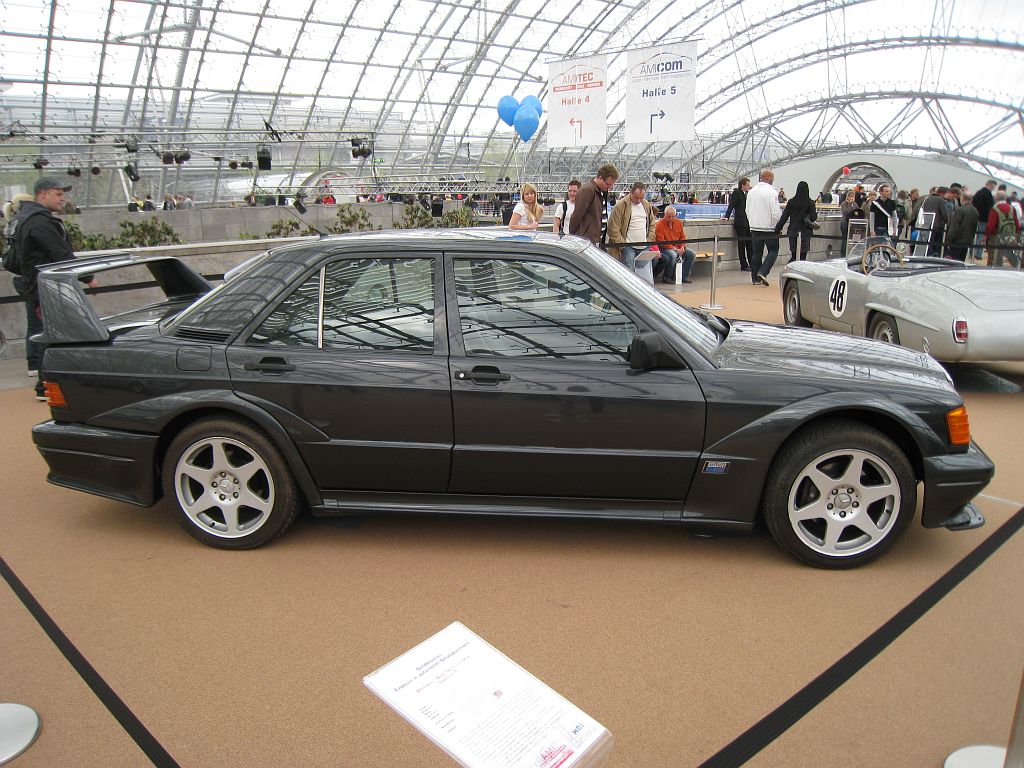
The most striking aspect of the Mercedes-Benz 190 E 2.5-16V Evolution II was its aerodynamic package. Unlike the restrained styling of earlier models, the Evolution II featured an aggressive wide-body kit, flared wheel arches and a towering rear wing that became its defining visual signature. These elements were not cosmetic; they were developed in the wind tunnel to generate downforce, reduce lift and improve stability at racing speeds. The result was a road car whose appearance openly reflected its motorsport purpose.
Inside, the Evolution II retained the functional Mercedes-Benz cabin layout but with a distinctly sporting focus. Deeply bolstered Recaro seats provided excellent support, instrumentation emphasised engine speed and performance monitoring, and trim was pared back to essentials. Despite its track-oriented nature, build quality remained high, and the car retained basic comfort features, allowing it to be driven on the road without feeling crude or unfinished.
On the road, the Evolution II delivered an uncompromising driving experience. Performance was dramatic for a naturally aspirated four-cylinder saloon of the era, with strong acceleration at higher revs and outstanding high-speed stability. Steering was direct and communicative, and the chassis rewarded skilled, committed driving. Ride quality was firm, particularly at lower speeds, but this was an accepted trade-off for the car’s exceptional control and precision.
Production of the Mercedes-Benz 190 E 2.5-16V Evolution II was strictly limited to 502 examples, the minimum required for homologation. Each car was individually numbered, underscoring its exclusivity and purpose-built nature. These cars served as the foundation for Mercedes-Benz’s DTM campaign, where the Evolution II achieved significant success and ultimately helped secure championship victories against fierce competition.
Today, the Mercedes-Benz 190 E 2.5-16V Evolution II is regarded as one of the most iconic performance saloons ever produced. It represents the peak of the Cosworth-powered W201 programme and a rare moment when racing necessity shaped a road car without compromise. Highly prized by collectors, it stands as a symbol of late-1980s and early-1990s touring car rivalry and as a defining chapter in Mercedes-Benz performance history.