Description
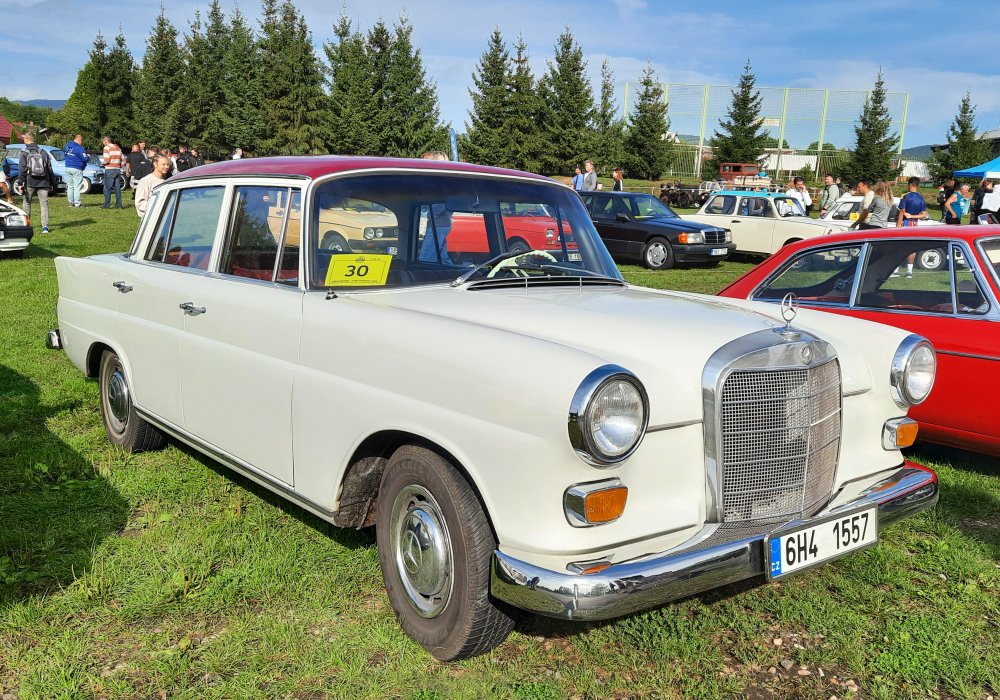
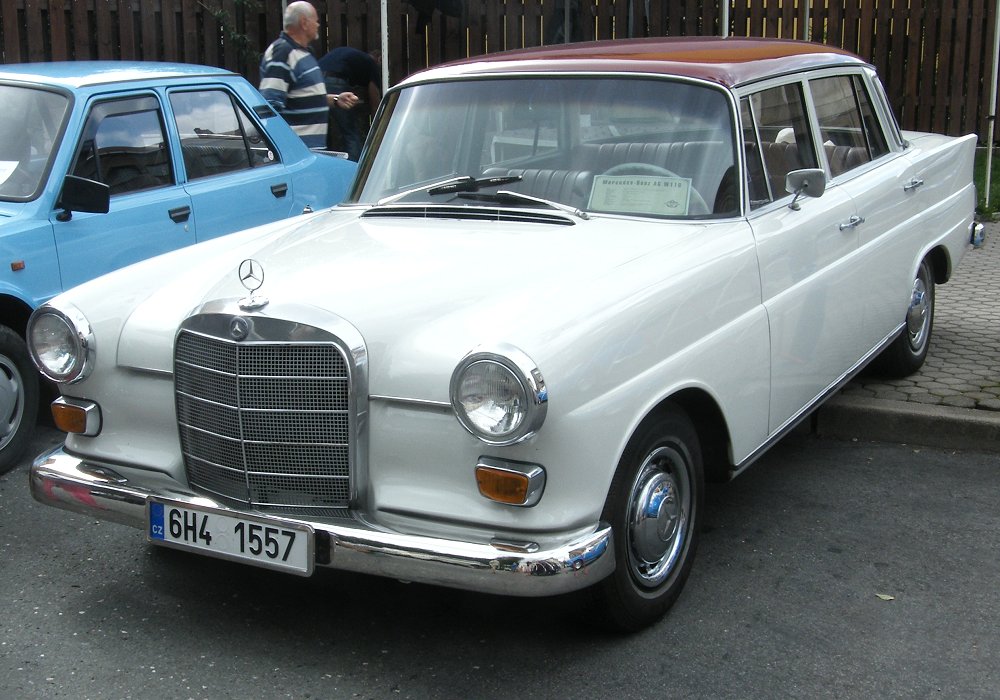
The Mercedes-Benz 200 was part of the W110 “Fintail” series and represented a significant refinement of Mercedes-Benz’s mid-size saloon range during the 1960s. It replaced the earlier 190 and 190 c models and was designed to offer improved performance, greater comfort and enhanced safety while retaining the conservative engineering philosophy for which Mercedes-Benz was known. By the mid-1960s, the tailfin styling cues that had defined the W110 were becoming more restrained, and the 200 emerged as a mature and well-balanced executive car suited to both private and professional use.
Power came from a newly developed 2.0-litre inline four-cylinder petrol engine. Producing approximately 95 horsepower, it offered a noticeable improvement over the earlier 1.9-litre units and gave the 200 more confident acceleration and improved cruising ability. The engine was smooth, robust and tuned for longevity rather than outright performance. A four-speed manual gearbox was standard, with an automatic transmission available in some markets, making the car particularly attractive to buyers seeking relaxed, effortless driving.
The chassis of the Mercedes-Benz 200 was based on a unitary body construction, a design that Mercedes-Benz had already perfected by this point. Suspension featured double wishbones and coil springs at the front, with a low-pivot swing axle and coil springs at the rear. This rear suspension design was an important safety improvement over earlier swing-axle layouts, significantly reducing sudden oversteer and improving stability. Disc brakes were fitted at the front, with drums at the rear, providing reliable and predictable stopping performance.
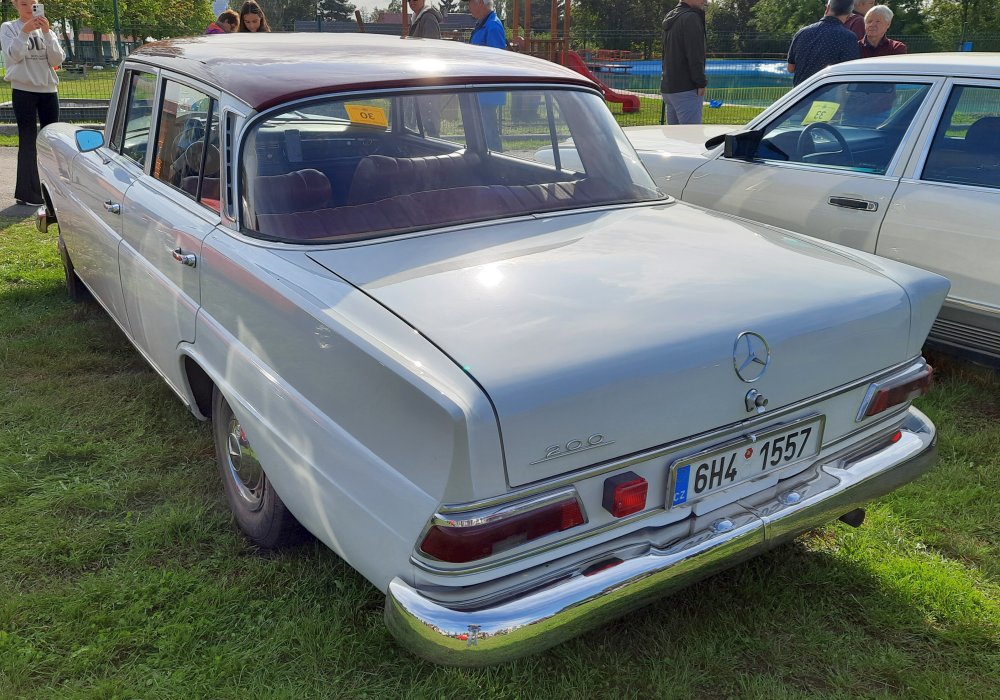
Styling of the 1965 Mercedes-Benz 200 reflected the final evolution of the fintail design. The small tailfins were now subtle and functional rather than decorative, aiding rear visibility while giving the car a distinctive but restrained appearance. Clean body lines, an upright grille and restrained chrome detailing contributed to a dignified and professional look. Compared with later models, the design was conservative, but it conveyed solidity and seriousness, qualities that appealed strongly to Mercedes-Benz buyers of the era.
Inside, the Mercedes-Benz 200 offered a spacious and thoughtfully designed cabin. Seating was upright and supportive, trimmed in durable materials designed for long-term use. The dashboard was simple and logical, with clear instrumentation and excellent visibility. Safety was a growing priority, and the W110 series incorporated features such as padded interior surfaces, improved door latches and a strong passenger cell, reflecting Mercedes-Benz’s leadership in automotive safety engineering during the 1960s.
On the road, the 200 delivered a calm and composed driving experience. The improved engine provided adequate performance for motorway and main-road use, while the refined suspension gave the car stable handling and a comfortable ride, even on poor road surfaces. Steering was precise though relatively heavy at low speeds, and the car rewarded smooth, unhurried driving. It was not designed to be sporty, but rather to provide dependable and dignified transport over long distances.
The Mercedes-Benz 200 quickly became popular with professionals, civil servants and families who valued reliability and understated prestige. It was widely used as a private car, company vehicle and taxi, particularly in Europe, where its durability and ease of maintenance made it a practical long-term investment. Its reputation for mechanical strength and safety helped reinforce Mercedes-Benz’s standing during a period of rapid growth for the brand.
Today, the Mercedes-Benz 200 is regarded as a representative example of Mercedes-Benz engineering during the transition from traditional 1950s designs to the more modern saloons of the late 1960s. Surviving examples are valued for their solid construction, mechanical simplicity and historical significance. As one of the final and most refined fintail models, the Mercedes-Benz 200 stands as a symbol of an era when comfort, safety and durability defined the brand’s identity.