Description
The Mercedes-Benz 200 D introduced in 1973 was part of the W115 series and represented a further refinement of Mercedes-Benz’s already well-established diesel saloon philosophy. By this point, the 200 D had become synonymous with reliability, economy and endurance, and the early-1970s version benefited from incremental mechanical and safety improvements that reflected Mercedes-Benz’s methodical approach to development rather than radical change.
Power came from a 2.0-litre inline four-cylinder diesel engine, producing approximately 55 horsepower. By 1973 this engine was a thoroughly proven unit, designed for longevity rather than performance. Acceleration was slow, particularly by petrol-car standards, but the engine delivered strong low-speed torque and exceptional fuel economy. It was capable of sustained long-distance operation with minimal mechanical stress, a key reason for its popularity among taxi operators and high-mileage users. A four-speed manual gearbox drove the rear wheels, with ratios selected to favour steady cruising and durability.
The W115 chassis featured a rigid unitary body with a strong passenger safety cell and engineered crumple zones, underscoring Mercedes-Benz’s emphasis on passive safety. Suspension consisted of double wishbones with coil springs at the front and a rear semi-trailing arm arrangement with coil springs, providing predictable handling and improved stability compared with earlier swing-axle designs. Front disc brakes and rear drum brakes delivered reliable and progressive stopping power, well matched to the car’s modest performance.
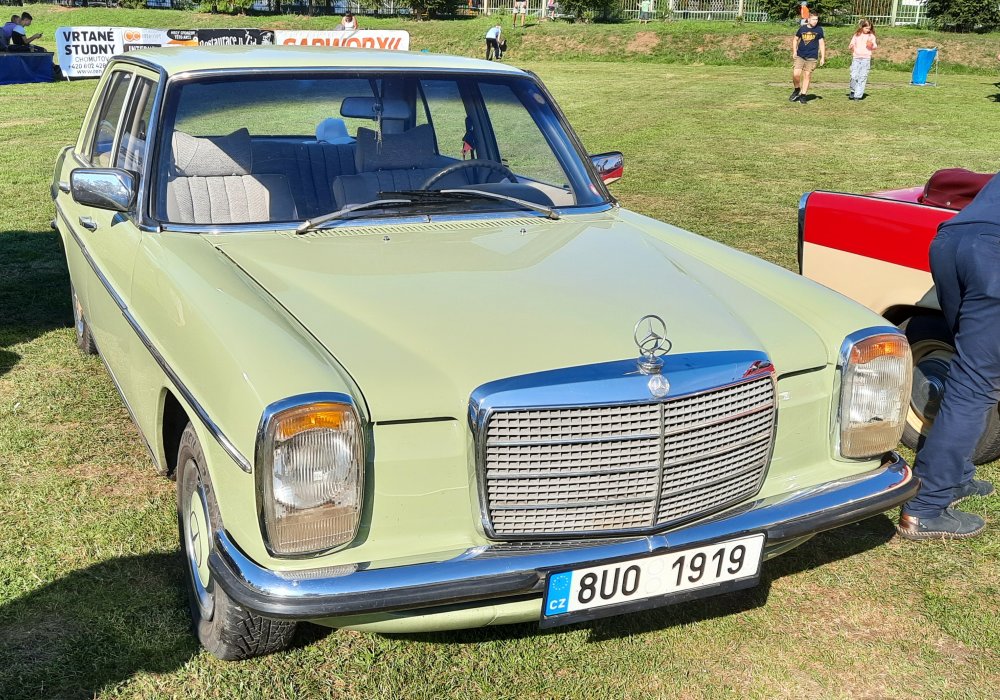
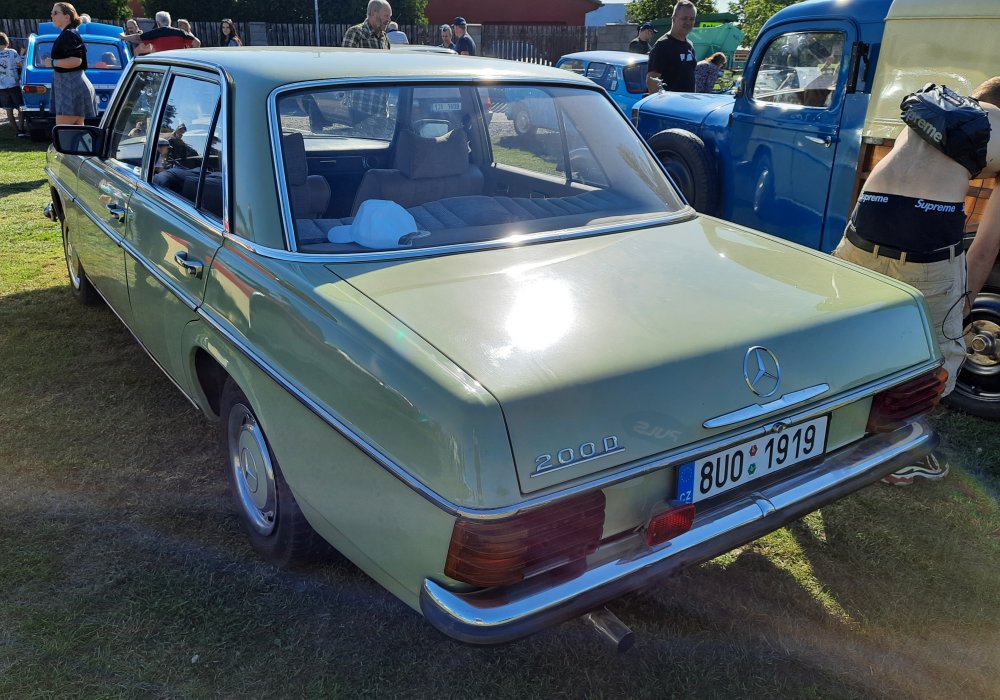
Styling of the 1973 Mercedes-Benz 200 D followed the clean, functional design language of the W114/W115 range. Straight body lines, a large glass area and an upright grille gave the car a professional, purposeful appearance. Chrome detailing was restrained, and the overall look prioritised clarity and durability over fashion. Compared with earlier fintail models, the W115 design appeared more modern and international, reflecting changing tastes in the early 1970s.
Inside, the cabin was spacious, practical and built for long-term use. Seating was upright and supportive, trimmed in hard-wearing materials designed to withstand years of heavy service. The dashboard layout was simple and logical, with clear instrumentation and excellent outward visibility. Noise and vibration levels were higher than in petrol models, especially at idle, but this was generally accepted as part of the diesel character and a reasonable trade-off for low running costs.
In everyday driving, the 200 D excelled at steady, unhurried motoring. It was not well suited to rapid acceleration or short, aggressive journeys, but it performed exceptionally well on long routes and in constant daily use. Its predictable handling, robust construction and low fuel consumption made it especially popular in urban and intercity taxi service across Europe, as well as in export markets where fuel quality and operating conditions could be challenging.
By 1973, the Mercedes-Benz 200 D had already helped define the brand’s diesel reputation. It demonstrated that diesel engines could be successfully integrated into comfortable, well-engineered saloons rather than being confined to commercial vehicles. This philosophy would continue with later models such as the W123, which built directly on the strengths established by the W115.
Today, the 1973 Mercedes-Benz 200 D is regarded as a classic example of Mercedes-Benz engineering discipline. It is valued not for speed or luxury, but for its mechanical honesty, durability and historical importance. Well-preserved examples stand as reminders of an era when cars were designed to serve reliably for decades, and when the Mercedes-Benz diesel saloon became a benchmark for longevity throughout the automotive world.