Description
The Mercedes-Benz 200 D introduced in 1976 was part of the W123 series and represented one of the most economical and durable diesel saloons available during the late 1970s. By this time, the W123 range had firmly established itself as a benchmark for build quality, safety and longevity, and the 200 D embodied these values in their most conservative and mechanically honest form. It was aimed squarely at high-mileage users who prioritised reliability and fuel efficiency over performance.
Power came from a 2.0-litre inline four-ylinder diesel engine producing approximately 55 horsepower. This engine was carried over in concept from earlier diesel models but benefited from refinements that improved smoothness and durability. Performance was modest, with slow acceleration and limited top speed, but the engine delivered strong low-end torque and exceptional fuel economy. It was designed to operate continuously under load, making it ideal for long-distance driving, taxi service and demanding daily use. A four-speed manual gearbox was standard, while an automatic transmission was available but relatively uncommon on the 200 D.
The W123 chassis provided a significant step forward in comfort and safety compared with its predecessors. The unitary body featured a rigid passenger safety cell with engineered crumple zones, reflecting Mercedes-Benz’s leadership in passive safety design. Suspension consisted of double wishbones with coil springs at the front and a rear semi-trailing arm layout with coil springs, delivering a stable, comfortable ride even on poor road surfaces. Disc brakes at the front and rear offered reliable stopping power, well matched to the car’s performance.
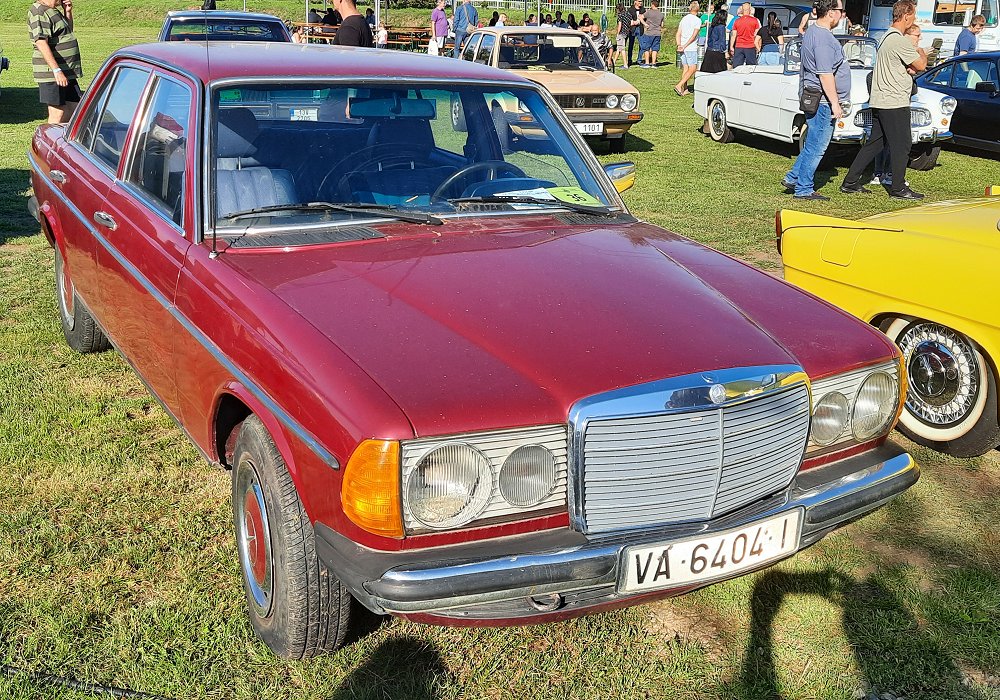
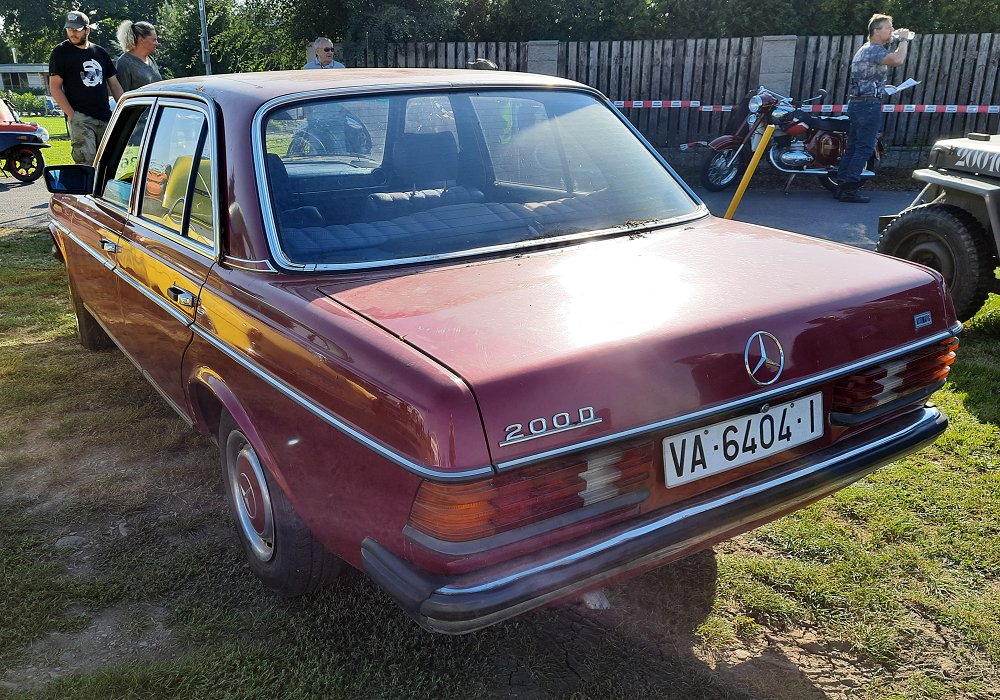
Styling of the 1977 Mercedes-Benz 200 D followed the clean, functional design language that defined the W123 range. Straight body lines, an upright grille and large glass areas gave the car a professional, no-nonsense appearance. Chrome detailing was restrained, reinforcing the impression of durability and purpose rather than luxury. The design aged exceptionally well and became closely associated with reliability and seriousness.
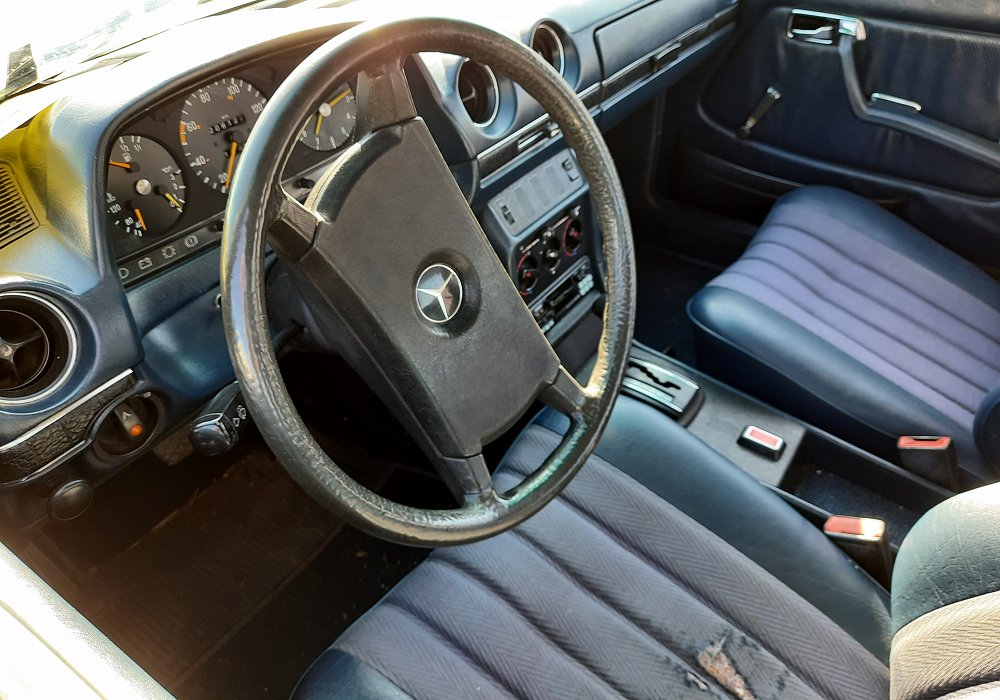
Inside, the cabin was spacious, practical and built for long-term use. Seats were firm and supportive, designed for extended periods behind the wheel. Interior materials were selected for durability rather than visual flair, with robust fabrics, solid plastics and dependable switchgear. The dashboard layout was clear and logical, with excellent visibility and easy-to-read instrumentation. Diesel noise and vibration were noticeable, particularly at idle, but were widely accepted as part of the car’s character.
In everyday use, the 200 D excelled at steady, unhurried motoring. It rewarded smooth driving and mechanical sympathy rather than aggressive inputs. While overtaking required planning, the car was exceptionally stable at cruising speeds and very economical to run. These qualities made it a favourite among taxi operators, fleet users and private owners who covered high annual mileages.
By 1977, the Mercedes-Benz 200 D had already become a cornerstone of the brand’s diesel reputation. It demonstrated that diesel engines could be successfully integrated into comfortable, well-engineered saloons capable of long service lives. Although later models such as the 240 D and 300 D would overshadow it in power and fame, the 200 D remained a vital part of the lineup.
Today, the 1977 Mercedes-Benz 200 D is appreciated as a classic example of Mercedes-Benz’s engineering philosophy during its most durability-focused era. Valued for its simplicity, economy and mechanical honesty, it stands as a reminder of a time when cars were built with the expectation of decades of continuous use rather than short ownership cycles.