Description
The Mercedes-Benz 200 D introduced in 1979 was part of the W123 series and represented one of the most conservative and durability-focused diesel saloons of its time. By the late 1970s, the W123 range had already earned a formidable reputation for build quality and longevity, and the 200 D sat at the entry point of the diesel lineup, appealing to buyers who valued economy, reliability and long-term ownership above all else.
Power came from a 2.0-litre inline four-cylinder diesel engine producing approximately 55 horsepower. This engine was deliberately understressed, prioritising mechanical longevity and fuel efficiency rather than performance. Acceleration was slow, particularly by petrol standards, but the engine delivered steady low-speed torque and was capable of running for long periods under load without complaint. A four-speed manual gearbox was standard, while an automatic transmission was available in small numbers, further reinforcing the car’s relaxed, unhurried character.
The W123 chassis provided a substantial improvement in comfort and safety compared with earlier Mercedes-Benz diesels. The body structure featured a rigid passenger safety cell with engineered crumple zones, reflecting Mercedes-Benz’s leadership in passive safety during this era. Suspension consisted of double wishbones with coil springs at the front and a rear semi-trailing arm layout with coil springs, giving the car a stable, predictable ride even on poor road surfaces. Disc brakes at all four wheels provided dependable and consistent stopping power.
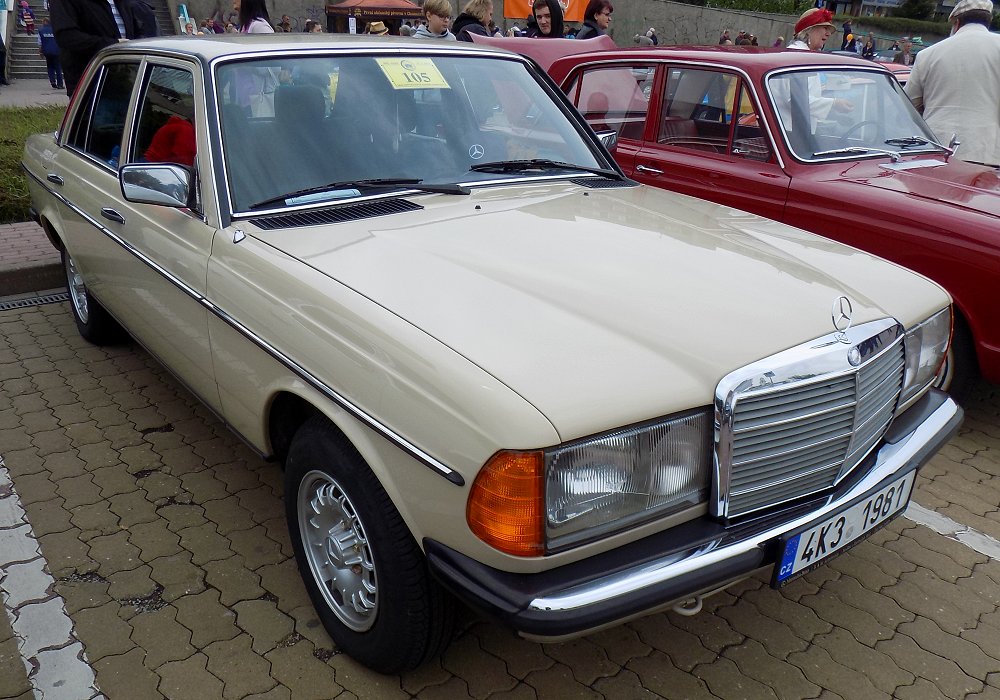
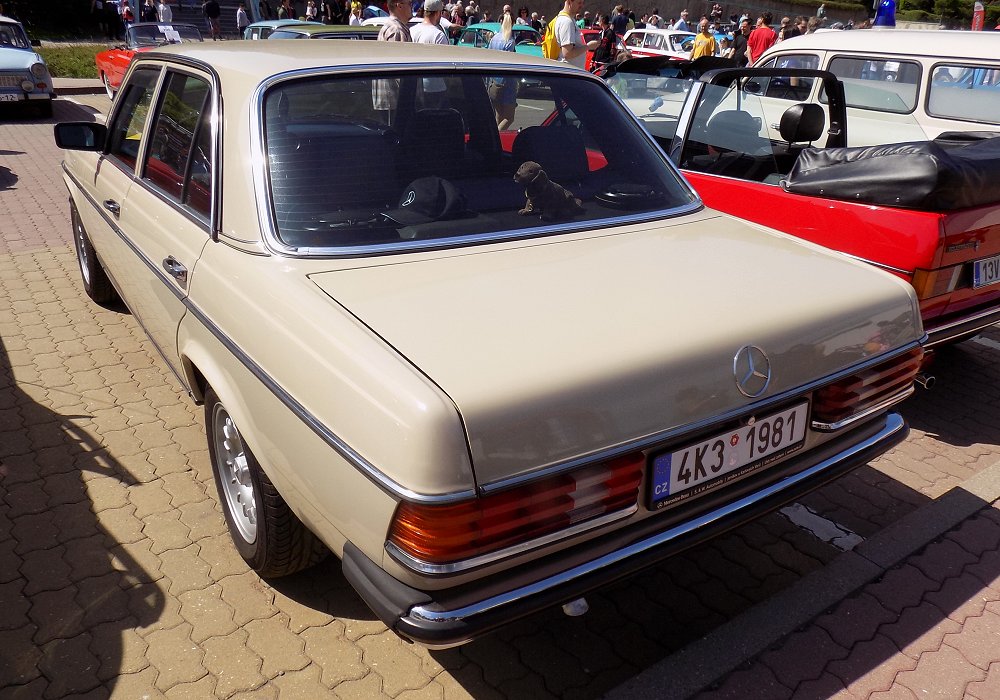
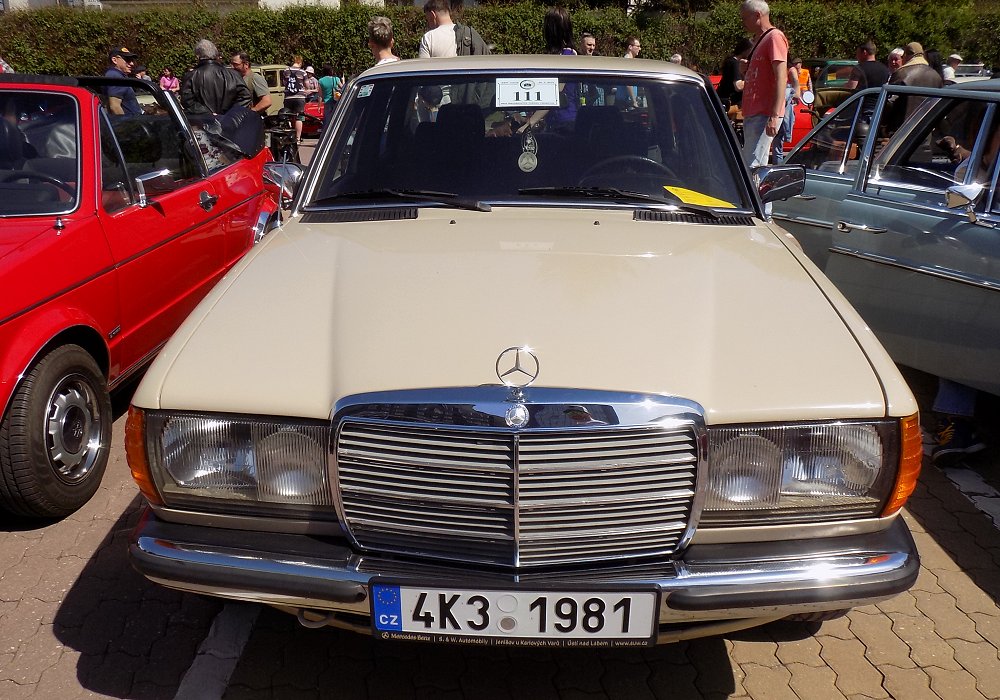
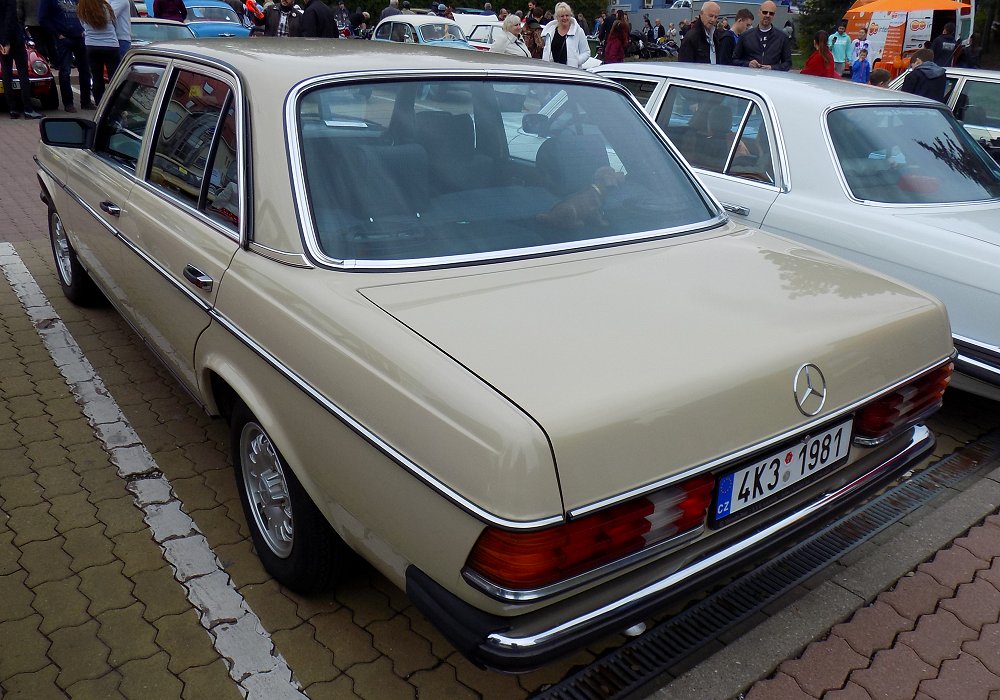
Styling of the 1979 Mercedes-Benz 200 D followed the clean, functional design language that defined the W123 range. Straight body lines, a tall glasshouse and an upright grille gave the car a professional and purposeful appearance. Chrome detailing was restrained, reinforcing the emphasis on durability rather than luxury. The design aged exceptionally well and became closely associated with reliability and seriousness in both private and professional use.
Inside, the cabin was spacious, practical and engineered for long service life. Seats were firm and supportive, designed to cope with extended periods of driving. Interior materials were chosen for durability, with hard-wearing fabrics, robust plastics and solid switchgear. The dashboard layout was logical and uncluttered, with clear instrumentation and excellent visibility. Diesel noise and vibration were present, particularly at idle, but were accepted as part of the car’s character and trade-off for outstanding economy.
In everyday use, the 200 D excelled at steady, methodical driving. It rewarded smooth inputs and mechanical sympathy rather than aggressive acceleration. While overtaking required planning, the car was extremely stable at cruising speeds and remarkably economical to run. These traits made it especially popular with taxi operators, fleet users and private owners covering high annual mileages.
By 1979, the Mercedes-Benz 200 D was already recognised as a cornerstone of the brand’s diesel identity. Although overshadowed in performance by the more powerful 240 D and 300 D, it remained an important model for buyers who prioritised simplicity and operating costs. Many examples accumulated very high mileages with routine maintenance, further strengthening the W123 legend.
Today, the 1979 Mercedes-Benz 200 D is appreciated as a pure expression of Mercedes-Benz’s durability-first philosophy. It is valued not for speed or luxury, but for its mechanical honesty, efficiency and historical significance. As part of the W123 lineage, it stands as a reminder of an era when Mercedes-Benz engineered diesel cars to serve reliably for decades, often under demanding conditions, with little concern for fashion or performance trends.