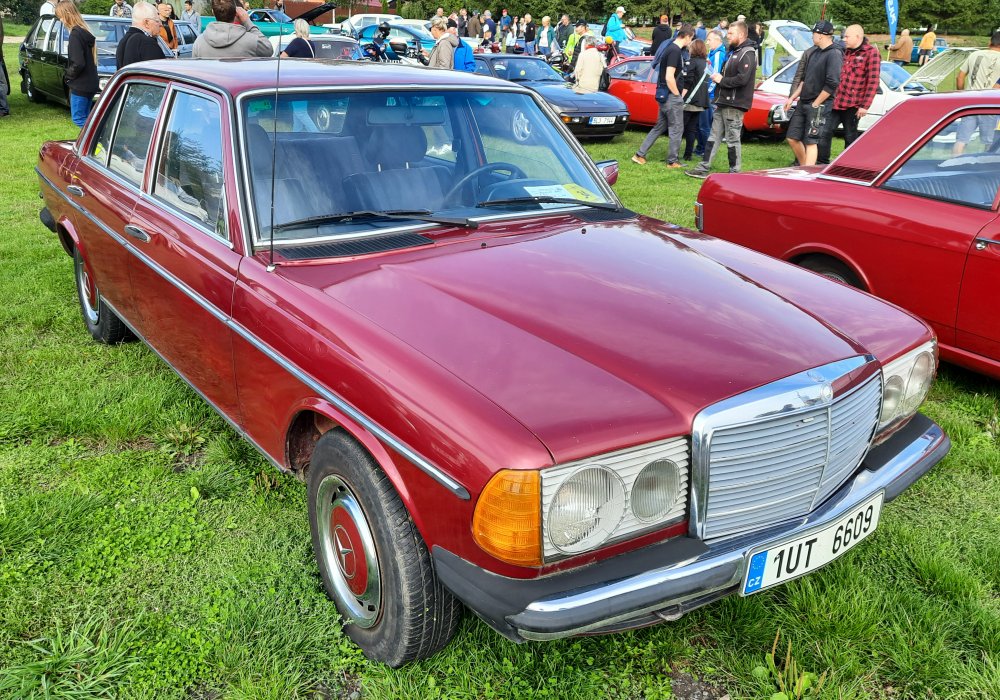


Description
The Mercedes-Benz 200 D Automatic was a comfort-oriented variant of Mercedes-Benz’s diesel saloons, combining the proven durability of the 2.0-litre diesel engine with the ease of an automatic transmission. Offered primarily within the W123 range and in very limited numbers compared with manual versions, it was aimed at buyers who prioritised relaxed driving and ease of use over performance, particularly in urban or long-distance cruising environments.
Power came from the familiar 2.0-litre inline four-cylinder diesel engine producing approximately 55 horsepower. This engine was engineered for longevity and fuel efficiency rather than speed, delivering strong low-end torque and the ability to operate continuously under load. When paired with the automatic transmission, performance was notably more leisurely than the manual version, but progress was smooth and predictable. The automatic gearbox, typically a three-speed unit, was designed for robustness and reliability, shifting gently and complementing the diesel engine’s torque characteristics.
The W123 chassis provided an excellent foundation for this combination. A rigid unitary body with a strong passenger safety cell and engineered crumple zones reflected Mercedes-Benz’s emphasis on occupant protection. Suspension consisted of double wishbones with coil springs at the front and a rear semi-trailing arm layout with coil springs, delivering a comfortable and stable ride. Disc brakes at the front and rear provided dependable stopping power, appropriate to the car’s modest performance.
Styling of the Mercedes-Benz 200 D Automatic was identical to other W123 saloons. Clean body lines, an upright grille and restrained chrome detailing gave the car a professional and understated appearance. There was little external indication of the automatic transmission, reinforcing Mercedes-Benz’s philosophy that mechanical sophistication did not require visual emphasis.
Inside, the cabin was spacious, practical and built to withstand years of use. Seating was firm and supportive, ideal for long periods behind the wheel, and interior materials were chosen for durability rather than luxury. The automatic transmission significantly reduced driver effort in traffic and stop-start conditions, making the car particularly appealing to older buyers, professional drivers and those using the car extensively in urban environments.
In everyday driving, the 200 D Automatic rewarded smooth, patient operation. Acceleration was slow and overtaking required careful planning, but the car excelled in steady cruising and relaxed progress. Fuel consumption was slightly higher than the manual version due to the automatic gearbox, but remained very economical by the standards of the time. The combination of diesel economy and automatic comfort made it a niche but appealing option.
The Mercedes-Benz 200 D Automatic was never produced in large numbers, as most diesel buyers preferred the efficiency and performance advantages of the manual gearbox. As a result, it remained a relatively rare sight even when new. Those that were sold were often used intensively and for long periods, contributing to the scarcity of surviving examples today.
Today, the Mercedes-Benz 200 D Automatic is regarded as an unusual and interesting variation within the W123 lineup. It represents Mercedes-Benz’s willingness to offer comfort and convenience even in its most utilitarian diesel models. Valued for its smooth, unhurried character and legendary durability, it stands as a reminder of an era when Mercedes-Benz engineered cars to prioritise longevity, ease of use and mechanical honesty above all else.