Description
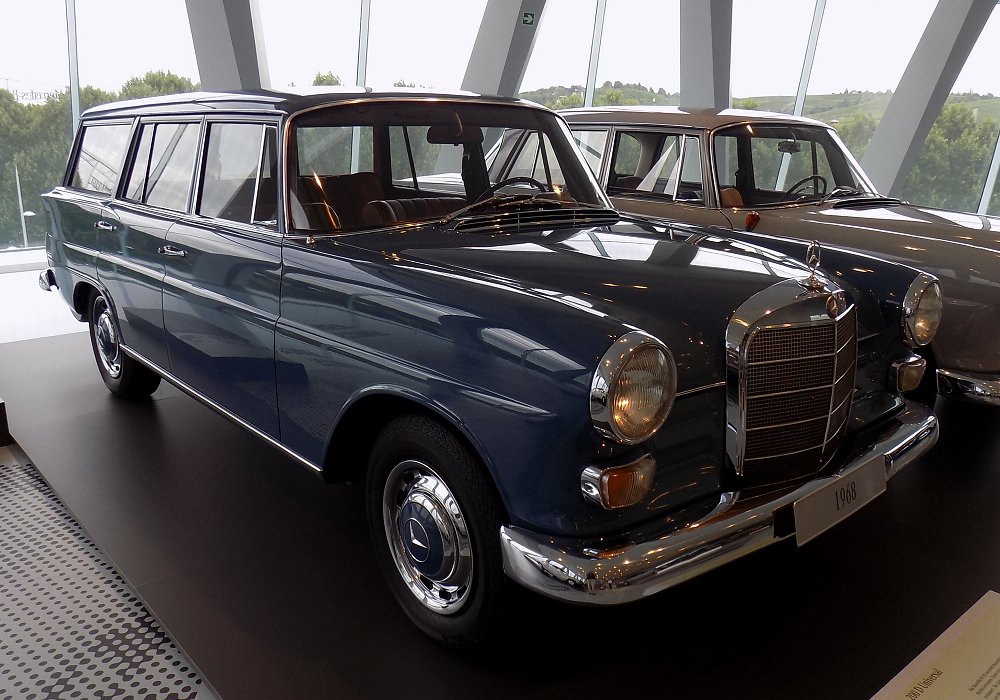
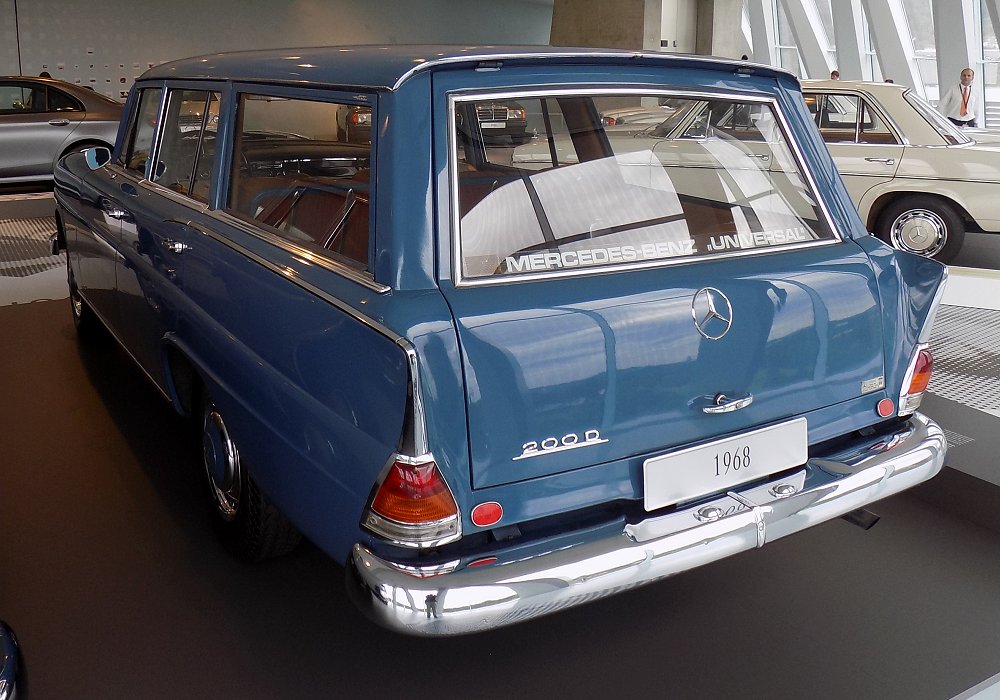
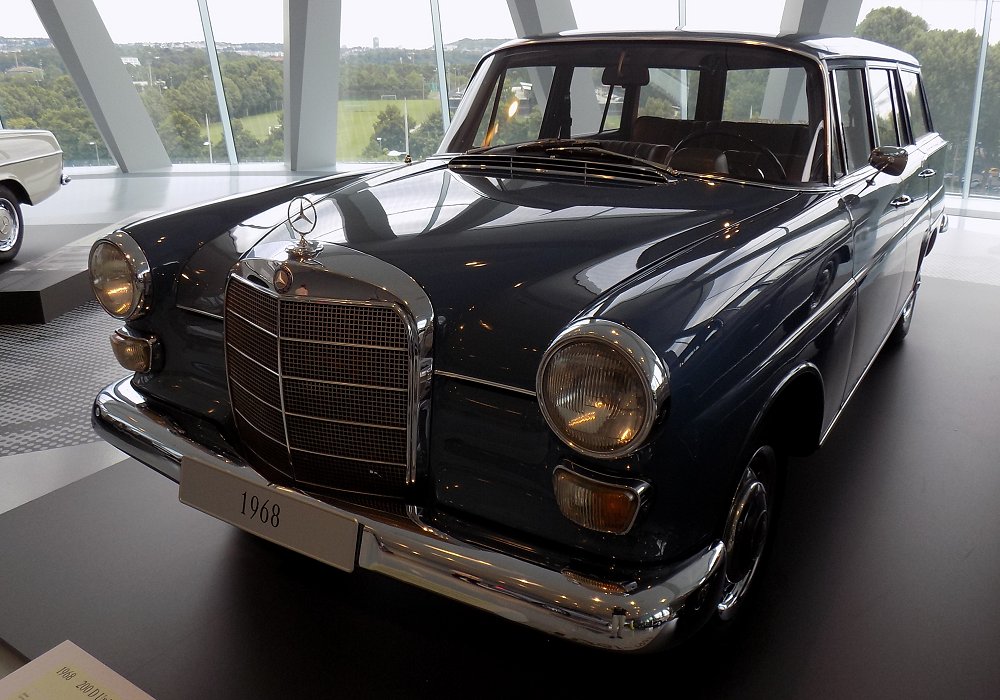
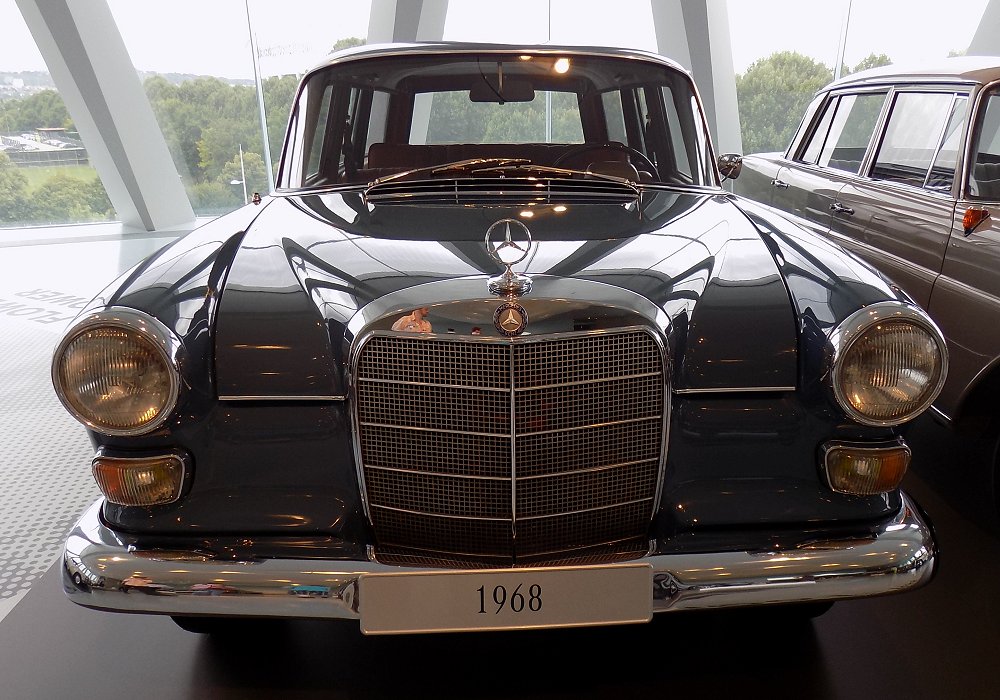
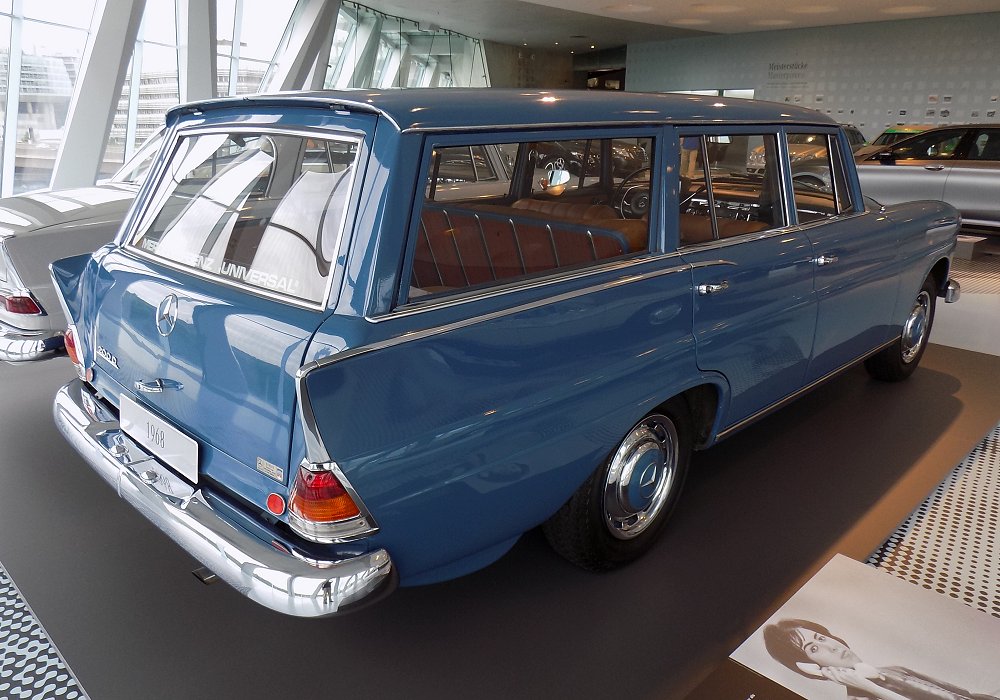
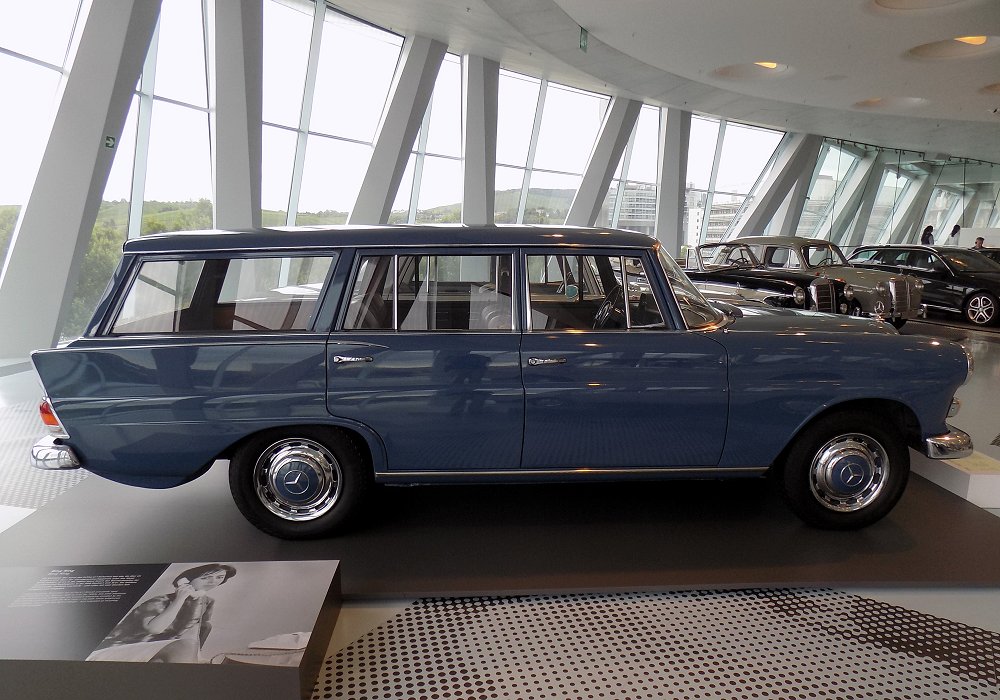
The Mercedes-Benz 200 D Universal was the estate version of the W110 “Fintail” diesel saloon and represented one of the earliest examples of a purpose-built diesel estate car from Mercedes-Benz. Introduced in the mid-1960s, the Universal combined the exceptional durability and economy of the 200 D with increased cargo capacity, making it especially attractive to professional users, families and businesses that required both reliability and practicality. It was a niche but highly respected model, reflecting Mercedes-Benz’s pragmatic approach to real-world transport needs.
Power came from the same 2.0-litre inline four-cylinder diesel engine used in the 200 D saloon. Producing around 55 horsepower, the engine prioritised longevity, fuel efficiency and low-speed torque over performance. Acceleration was slow, particularly when fully loaded, but the engine was capable of sustained operation over long distances with minimal wear. A four-speed manual gearbox drove the rear wheels, with ratios chosen to suit steady cruising and heavy-duty use rather than speed.
Structurally, the 200 D Universal was based on the W110 unitary body but featured a re-engineered rear section to accommodate the extended roofline and cargo area. Suspension followed the standard W110 layout, with double wishbones and coil springs at the front and the improved low-pivot swing axle with coil springs at the rear. This rear suspension design was particularly important for the estate, as it provided greater stability and safer handling when carrying loads. Front disc brakes and rear drum brakes delivered dependable stopping power consistent with the car’s modest performance.
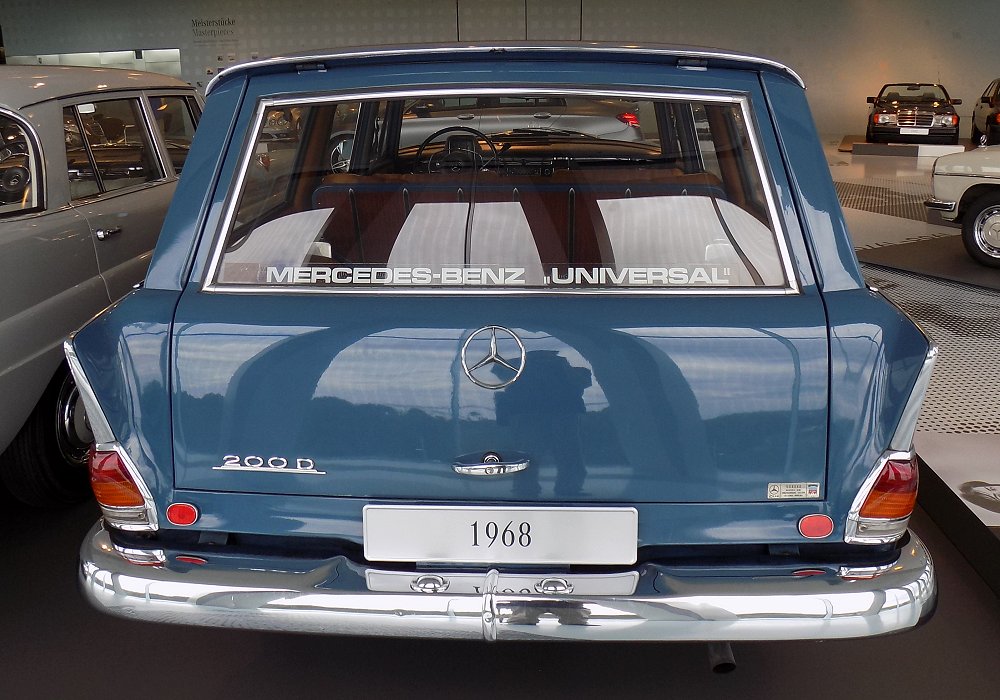
Externally, the Universal retained the restrained fintail styling of the saloon, with small tailfins that aided rear visibility and gave the car its distinctive profile. The extended roofline and large rear load area were integrated cleanly into the design, maintaining a dignified and professional appearance. The tailgate provided wide access to the cargo space, making loading bulky items easier than in the saloon. Overall styling was conservative and functional, aligning with the car’s intended role rather than aesthetic flair.
Inside, the Mercedes-Benz 200 D Universal offered the same robust and spacious cabin as the saloon, with the added benefit of a flexible rear load area. Seating was upright and supportive, trimmed in durable materials designed to withstand years of heavy use. The rear seats could be folded to create a long, flat cargo floor, allowing the car to carry tools, luggage or commercial goods with ease. Interior noise levels were higher than in petrol models, particularly at idle, but buyers generally accepted this as the price of diesel efficiency and longevity.
In everyday use, the 200 D Universal excelled as a working vehicle. Its fuel economy was outstanding for the time, and its mechanical simplicity made it easy to maintain in demanding conditions. While slow by modern standards, it was predictable, stable and capable of operating reliably in all weather and road conditions. These qualities made it especially popular with tradespeople, rural users and taxi operators who needed space as well as endurance.
The Universal variant was produced in relatively small numbers compared with the saloon, making it a rare sight even when new. Its higher cost and specialised appeal meant it was often purchased with a specific purpose in mind rather than as a general family car. Many examples were worked hard throughout their lives, contributing to the scarcity of survivors today.
Today, the Mercedes-Benz 200 D Universal is regarded as a historically significant and highly distinctive model. It represents an early expression of the diesel estate concept that Mercedes-Benz would later perfect with models such as the W123 and W124 estates. Valued for its honesty, durability and practical design, the 200 D Universal stands as a testament to an era when Mercedes-Benz built cars not for trends, but for decades of dependable service.