Description
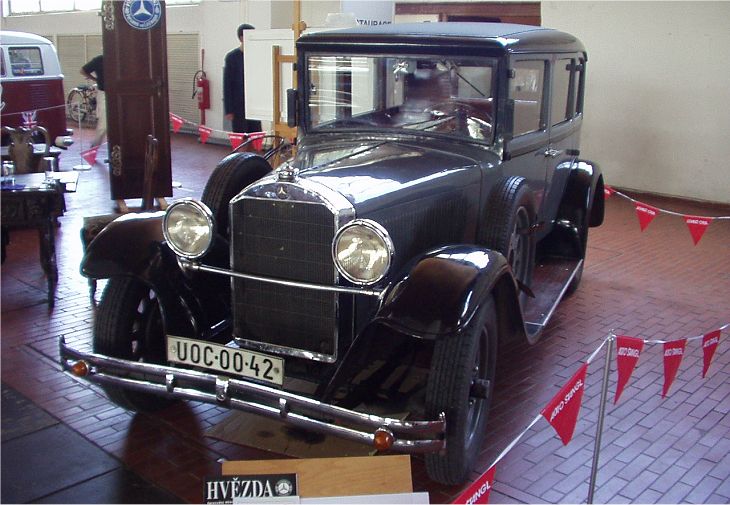
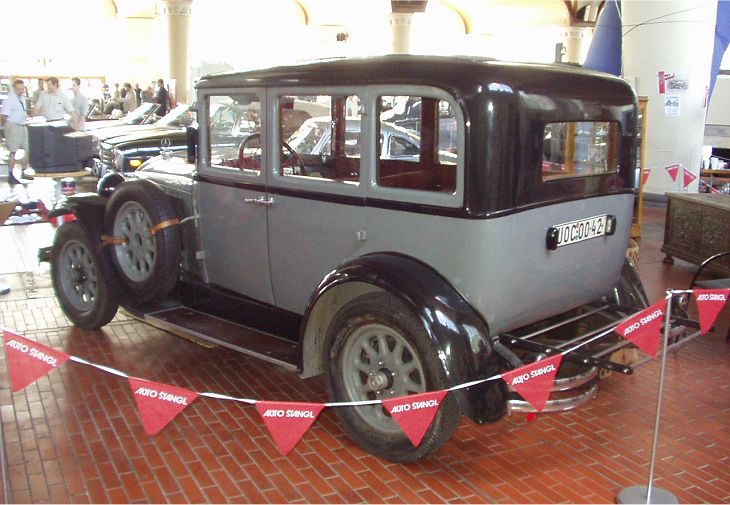
The Mercedes-Benz 200 Stuttgart was introduced in 1928 as part of Mercedes’ new mid-range model line, intended to offer refined engineering and dependable performance in a more compact and affordable package than the large supercharged cars that defined the brand’s sporting reputation at the time. Known internally as the W02, the 200 Stuttgart served as a key model for Mercedes-Benz in the late 1920s and early 1930s, bridging the gap between the prestige of the flagship cars and the practical needs of everyday private motorists and professional drivers.
The heart of the Stuttgart 200 was its 1.9-litre inline-six engine, a smooth and flexible unit that produced around 38 horsepower. While modest in comparison with the large Kompressor models, the engine delivered excellent torque for its size, allowing steady progress even when fully laden. Reliability was a major priority in its design, achieved through careful balancing, a simple and robust valve train and efficient cooling. The engine’s smooth running was frequently praised in period, reflecting Mercedes’ commitment to quality even in their entry-level offerings.
Power was transmitted through a four-speed manual gearbox, notable for its refinement and durability. Early examples used a central gear lever, while later versions adopted a steering-column shift—an innovation that improved cabin space. The drivetrain provided a relaxed cruising character, with gearing suited to both city driving and longer-distance touring. Maximum speed was around 90 km/h, entirely adequate for the road conditions of the late 1920s.
The chassis of the Stuttgart 200 employed a sturdy ladder-frame construction, built to withstand rough surfaces and heavy use. Semi-elliptic leaf springs were fitted at both axles, offering a balanced ride that prioritised durability. Mechanical drum brakes provided reliable stopping power, and the steering was direct and predictable, though requiring effort at low speeds. The overall handling character was stable and reassuring rather than sporty, making the 200 Stuttgart an ideal general-purpose touring and family car.
One of the distinctive features of the Stuttgart series was the wide range of body styles available. Mercedes offered factory-built saloons, cabriolets, landaulets and tourers, each with its own character. The saloons were the most popular, with their upright stance, tall radiator, well-proportioned windows and solid, functional interiors. Cabriolet versions offered open-air motoring with either two or four seats, often finished with high-quality trim and attractive folding roofs. Coachbuilders also produced custom bodies on the Stuttgart chassis, expanding its appeal to buyers who sought individuality without the cost of a large luxury model.
The interior of the 200 Stuttgart was practical yet carefully finished. High-grade materials were used throughout, including quality fabrics or optional leather seating, polished wood dashboards and durable floor coverings. The instrument panel carried clear gauges for oil pressure, speed, fuel and temperature. Seating was upright but comfortable, emphasising good visibility and long-distance usability. The overall atmosphere was one of understated Mercedes craftsmanship: not luxurious in the manner of the larger models, but solid, functional and honest.
On the road, the Stuttgart 200 delivered exactly the character Mercedes intended. It was easy to drive, dependable and well suited to both town duties and touring. The inline-six provided smooth acceleration and steady pulling power, and the car’s mechanical refinement set it apart from many contemporary rivals in its class. Its robust chassis and suspension allowed it to tackle poor roads with confidence, while the efficient brakes and direct steering gave it a reassuring feel.
The Stuttgart 200 was an important commercial success for Mercedes-Benz during a challenging economic period. It became a popular choice among middle-class motorists, professional drivers, taxi operators and small businesses. Its reputation for reliability made it a common sight in German cities, and its understated elegance appealed to private buyers who wanted a Mercedes without the expense of the larger models.
Today, the Mercedes-Benz 200 Stuttgart is appreciated by collectors for its charm, mechanical simplicity and significance in the company’s history. It represents the point at which Mercedes-Benz expanded its reach beyond high-performance and luxury cars, applying the same engineering principles to a practical and accessible model. Well-preserved examples offer an authentic experience of late-1920s motoring and remain a testament to Mercedes’ commitment to quality across every segment of the market.