Description
The Mercedes-Benz 220 was a significant step forward for Mercedes-Benz in the early 1950s, marking the company’s transition from pre-war engineering traditions to a more modern, integrated approach to passenger car design. Introduced in 1951 under the internal designation W187, the 220 was positioned above the 170 series and represented Mercedes-Benz’s return to the upper-middle-class market with a car that combined improved performance, greater comfort and contemporary styling while retaining the brand’s reputation for durability and quality.
Power for the Mercedes-Benz 220 came from a newly developed 2.2-litre inline six-cylinder petrol engine. Producing approximately 80 horsepower, this engine offered a substantial increase in smoothness and performance compared with the four-cylinder units used in earlier models. The six-cylinder layout delivered refined power delivery, making the 220 particularly well suited to longer-distance driving and higher cruising speeds. A four-speed manual gearbox transmitted power to the rear wheels, and the drivetrain was engineered for quiet, effortless operation rather than sporting character.
The chassis was based on a traditional ladder-frame construction, but it was more advanced and refined than that of the 170 series. Independent front suspension with double wishbones and coil springs provided improved handling and ride comfort, while the rear axle used a swing-axle design with coil springs, offering better road manners than older leaf-sprung layouts. Hydraulic drum brakes on all four wheels delivered dependable stopping power and reflected the continued modernisation of Mercedes-Benz passenger cars during this period.
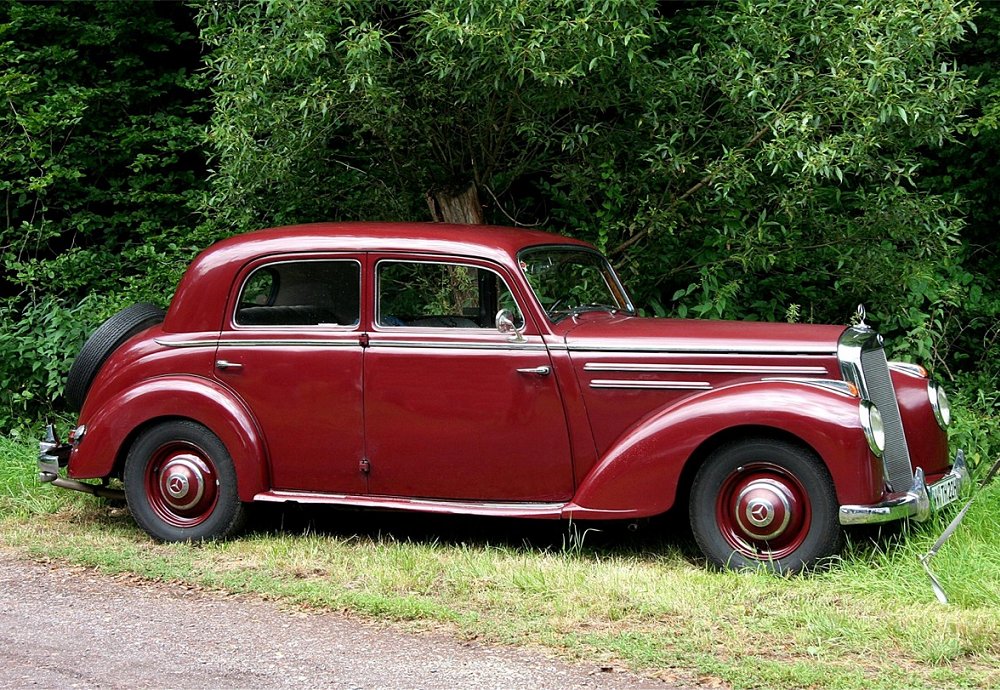
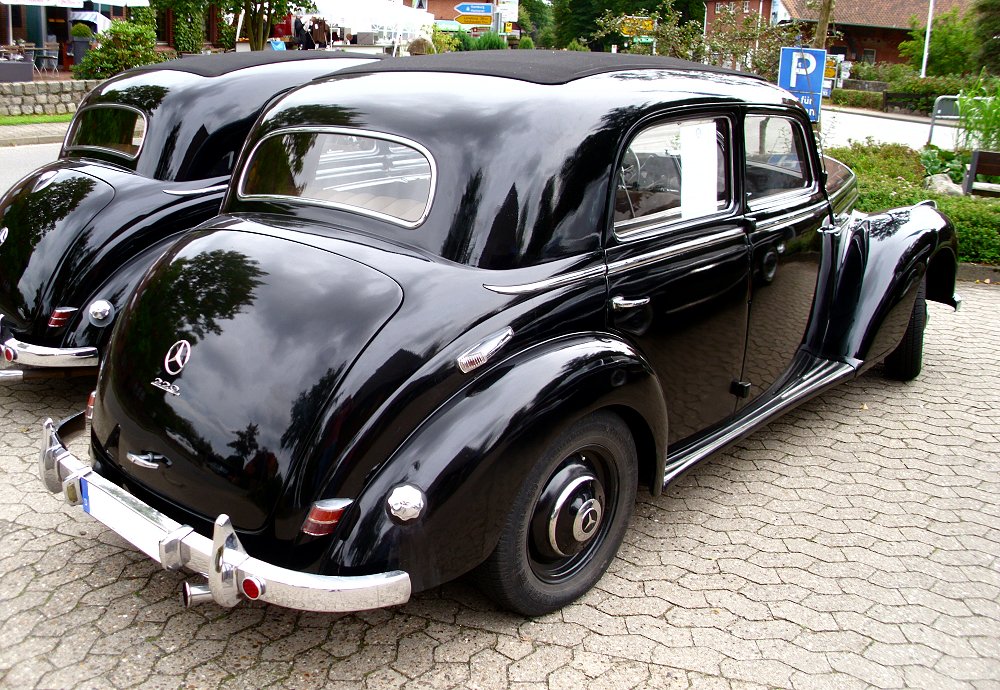
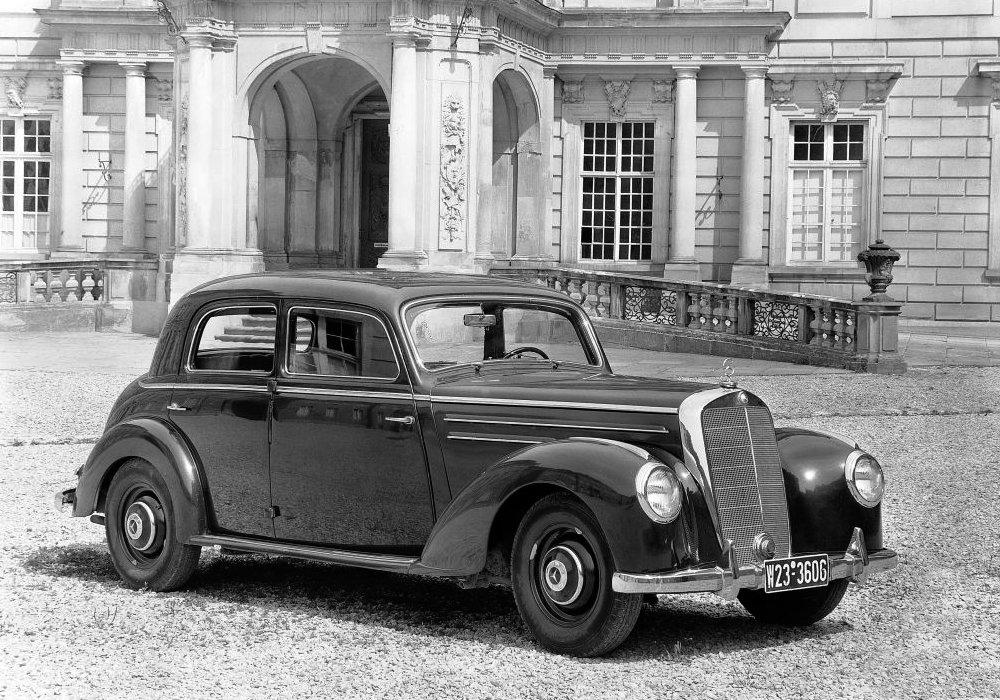
Visually, the Mercedes-Benz 220 represented a clear stylistic evolution. While still conservative, its bodywork was smoother and more integrated than earlier models, with less pronounced separate wings and a more flowing overall profile. The grille remained upright and recognisably Mercedes-Benz, but the car appeared more modern and balanced. Chrome detailing was tasteful rather than excessive, reinforcing the car’s image as a refined executive saloon rather than a luxury showpiece.
Inside, the 220 offered a noticeably higher level of comfort and refinement than its predecessors. Seating was generously padded and designed for long-distance comfort, with improved upholstery materials and better sound insulation. The dashboard was more contemporary in layout, featuring clear instrumentation and improved ergonomics. Overall interior quality reflected Mercedes-Benz’s intention to reassert itself in the premium segment, offering understated luxury built around engineering integrity rather than fashion.
In everyday use, the Mercedes-Benz 220 was praised for its smoothness, stability and relaxed driving character. The six-cylinder engine provided ample power for the road conditions of the early 1950s, and the improved suspension made the car comfortable and predictable even on uneven surfaces. While not a sports saloon, it offered confident performance and a sense of solidity that appealed strongly to professionals and business owners.
The 220 was available in several body styles, including saloon and cabriolet forms, allowing it to serve both formal and private roles. Cabriolet versions, in particular, continued Mercedes-Benz’s tradition of elegant open cars, though production numbers were limited due to cost and complexity. The model also found favour with official users and export markets, helping Mercedes-Benz rebuild its international presence after the war.
Today, the Mercedes-Benz 220 (W187) is regarded as an important transitional model. It bridged the gap between the pre-war influenced 170 series and the more fully modern “Ponton” cars that would follow later in the 1950s. Surviving examples are valued for their smooth six-cylinder engines, solid construction and historical significance. As such, the 220 stands as a key milestone in Mercedes-Benz’s post-war recovery and its return to building refined, high-quality executive automobiles.