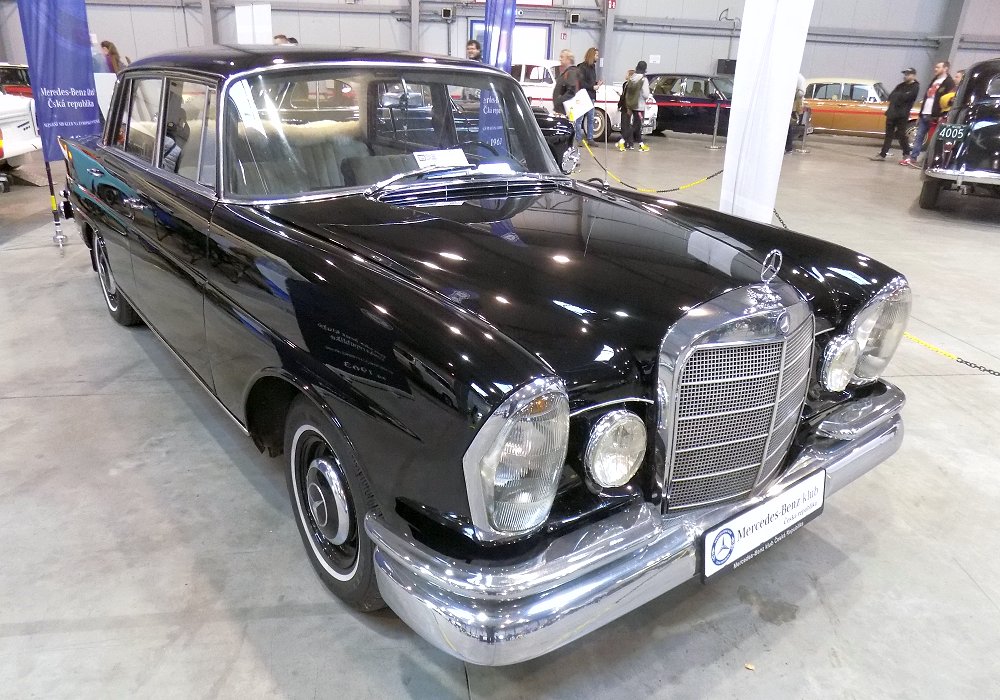
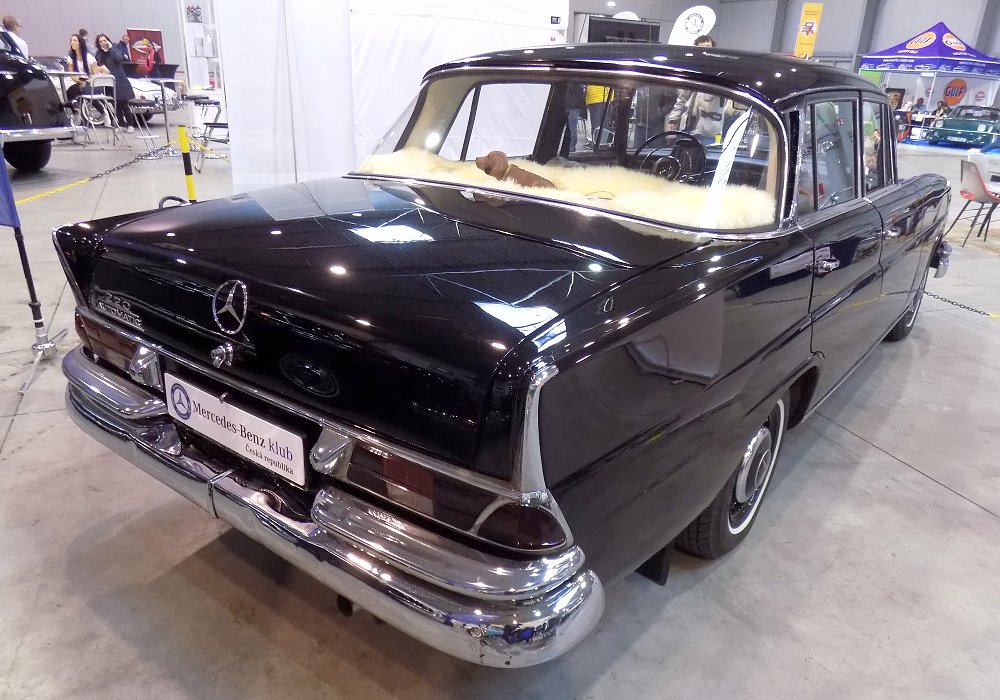
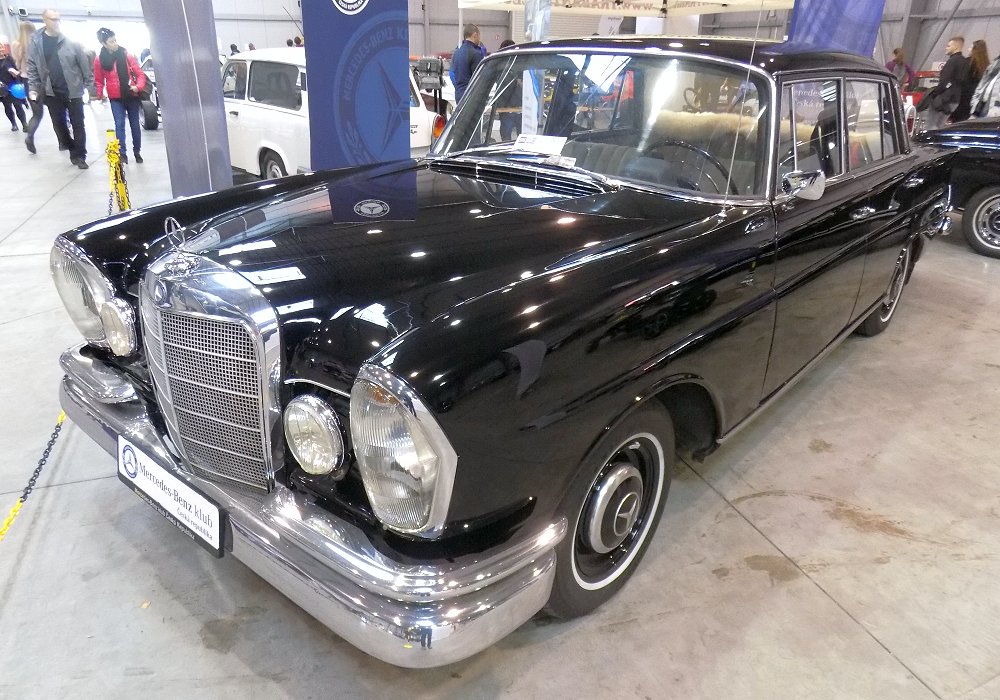
Description
The Mercedes-Benz 220 b Automatic was a rare and technically interesting variant of the Ponton-series six-cylinder saloon, offered during the mid-1950s at a time when automatic transmissions were still uncommon in European cars. It combined the solid engineering and conservative design of the 220 b with the added convenience of automatic shifting, appealing to buyers who prioritised ease of driving and refinement over mechanical simplicity.
Power came from the familiar 2.2-litre inline six-cylinder petrol engine, producing approximately 85 horsepower. This engine was smooth and flexible, well suited to relaxed driving rather than performance. When paired with the automatic transmission, acceleration was modest, but progress was calm and steady. The automatic gearbox, typically a fluid-coupling-based unit, was designed to emphasise smoothness and ease of use rather than speed, making the car particularly comfortable in urban driving and long-distance cruising.
The 220 b retained the Ponton unitary body construction, which integrated body and chassis into a single structure. This design improved rigidity, ride comfort and overall safety compared with earlier separate-chassis designs. Suspension consisted of independent double wishbones with coil springs at the front and a swing-axle rear suspension with coil springs. This setup prioritised comfort on uneven road surfaces, though it required measured driving at higher speeds due to the characteristics of the swing axle. Hydraulic drum brakes were fitted on all four wheels and were appropriate for the car’s performance level.
Styling followed the clean, rounded Ponton design language that defined Mercedes-Benz’s post-war identity. The integrated body shape, smooth surfaces and enclosed wheels gave the car a modern and cohesive appearance for the 1950s. Chrome detailing was restrained, and there were no external cues to distinguish the automatic version from manual models, reinforcing the understated nature of the car.
Inside, the cabin was solidly constructed and focused on durability and comfort. Seating was upright and supportive, trimmed in hard-wearing materials chosen for long-term use. The dashboard layout was simple and functional, with clear instrumentation and logical controls. The automatic transmission reduced driver workload, particularly in traffic, and contributed to the car’s relaxed and dignified character.
On the road, the Mercedes-Benz 220 b Automatic delivered a smooth and unhurried driving experience. The combination of a six-cylinder engine and automatic transmission encouraged gentle throttle inputs and steady cruising. Steering was heavy at low speeds but stable once underway, and the car felt most at home on long journeys rather than spirited driving.
The 220 b Automatic was aimed at professionals, senior business users and official fleets who valued comfort and ease of operation. Due to the high cost and limited demand for automatic transmissions in Europe at the time, production numbers were low, making this variant considerably rarer than the manual version.
Today, the Mercedes-Benz 220 b Automatic is appreciated as an unusual and historically significant Ponton model. Valued for its smooth six-cylinder engine, early adoption of automatic transmission technology and solid post-war engineering, it represents Mercedes-Benz’s early efforts to combine traditional durability with emerging comfort-focused innovations.