Description
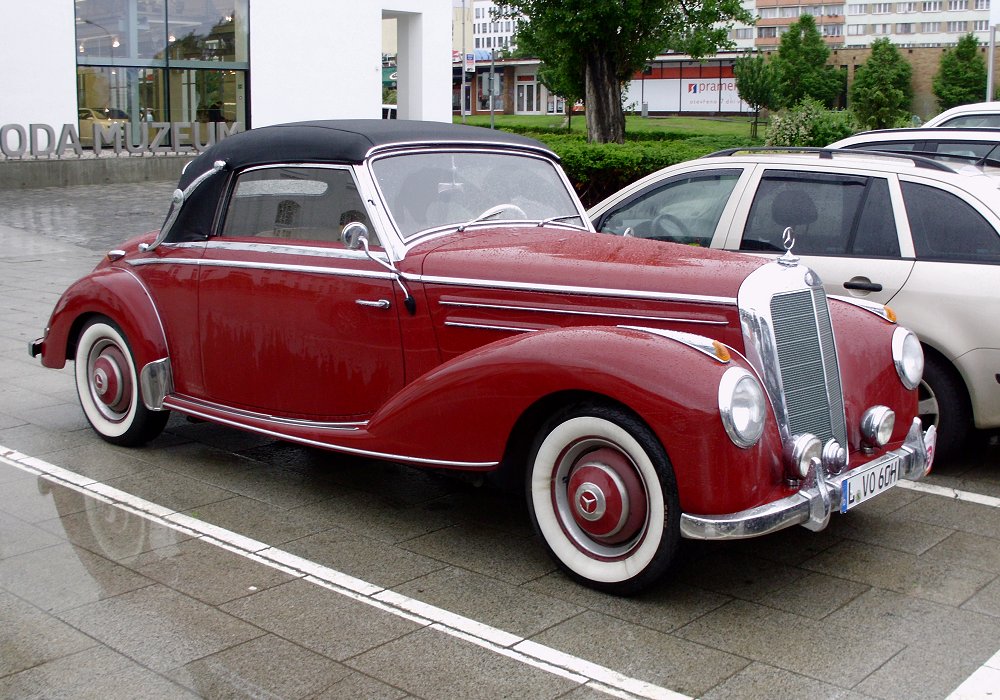
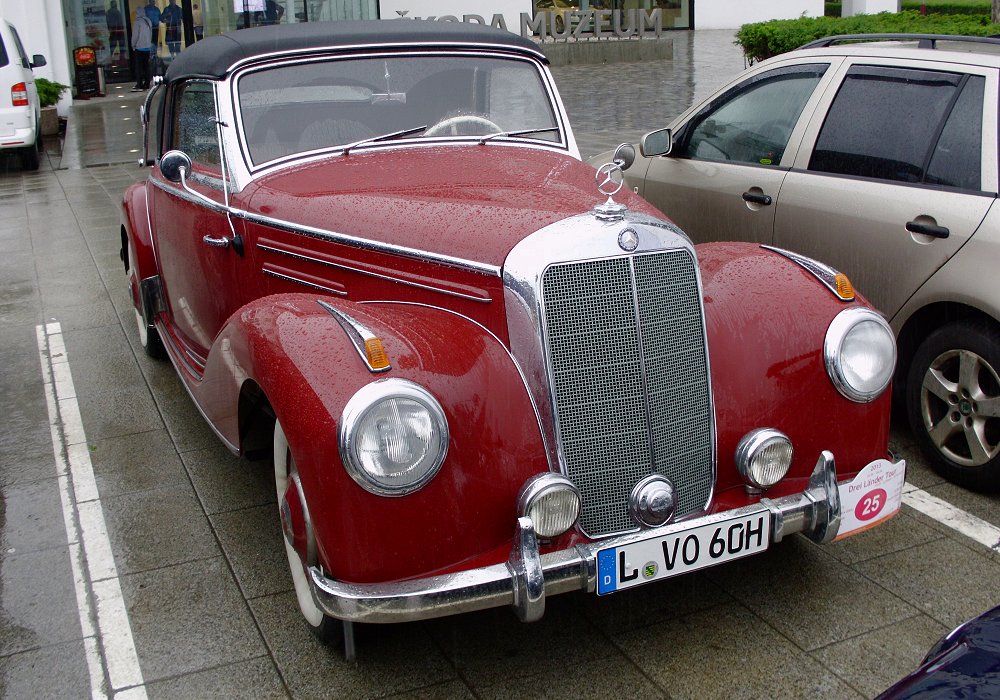
The Mercedes-Benz 220 Cabriolet A was the most exclusive and elegant open version of the W187 series, representing Mercedes-Benz’s return to high-quality luxury cabriolets in the early 1950s. Introduced shortly after the launch of the 220 saloon, the Cabriolet A was aimed at affluent private buyers who desired refined open-air motoring combined with traditional Mercedes-Benz craftsmanship. It stood firmly in the pre-war tradition of large, dignified cabriolets, even as the company was moving toward more modern post-war designs.
Power was provided by the 2.2-litre inline six-cylinder petrol engine developed for the 220 range. Producing approximately 80 horsepower, the engine delivered smooth, flexible performance that suited the Cabriolet A’s relaxed touring character. The six-cylinder layout offered a notable step up in refinement over earlier four-cylinder Mercedes-Benz cabriolets, allowing for quiet cruising and confident long-distance driving. A four-speed manual gearbox drove the rear wheels, with gearing chosen to emphasise smoothness and composure rather than outright speed.
The chassis was based on a strengthened ladder-frame construction, adapted to provide the rigidity required for an open body. Independent front suspension with coil springs improved ride comfort and steering stability, while the rear swing axle with coil springs offered a more compliant and controlled ride than earlier leaf-sprung designs. Hydraulic drum brakes on all four wheels provided reliable stopping power and reflected the growing emphasis on safety and modernisation in Mercedes-Benz passenger cars of the period.
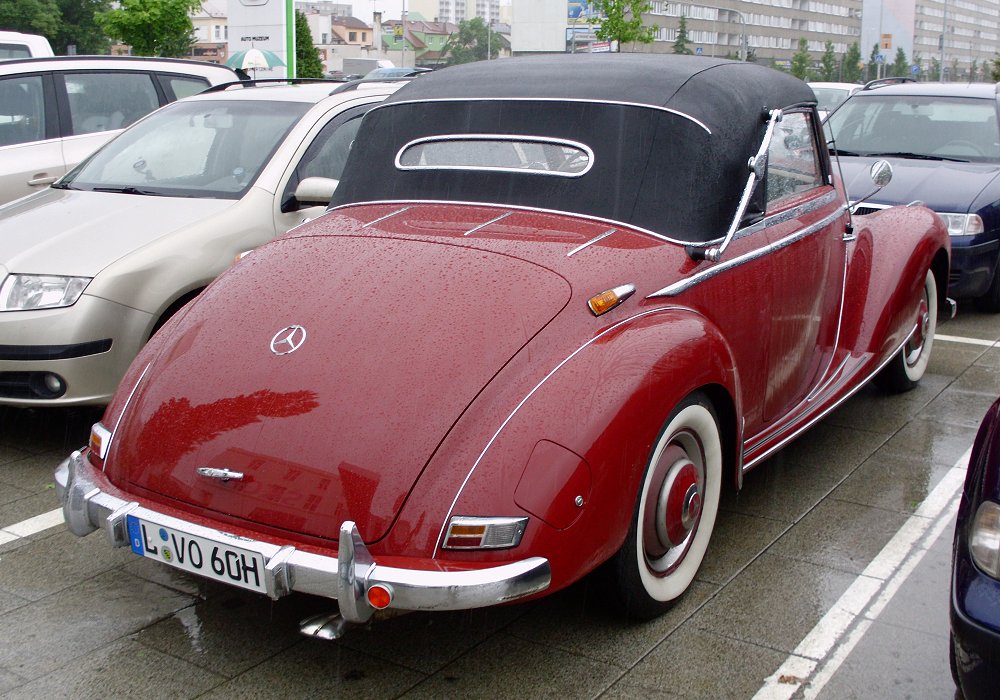
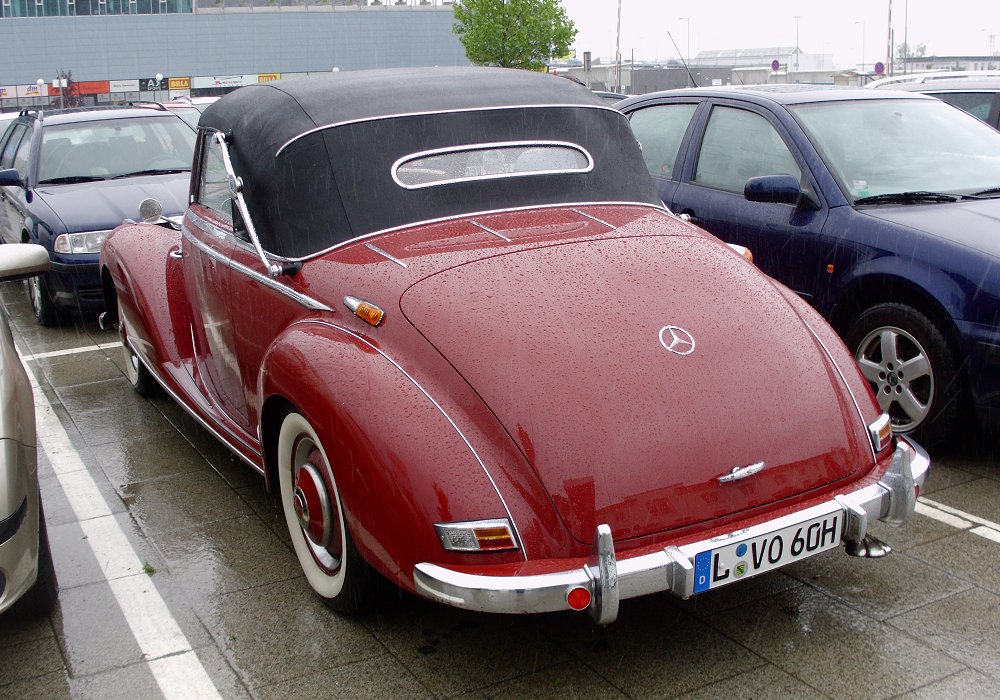
What set the Cabriolet A apart was its bodywork. As the most luxurious cabriolet in the 220 lineup, it featured a full four-seat configuration with a well-engineered folding fabric roof. The proportions were stately and well balanced, with a long bonnet, flowing body lines and restrained chrome detailing. When raised, the hood offered effective weather protection and a clean, formal profile. With the roof lowered, the car presented a dignified open silhouette that echoed Mercedes-Benz’s prestigious pre-war cabriolets rather than contemporary sports cars.
Inside, the Mercedes-Benz 220 Cabriolet A offered a high level of comfort and craftsmanship. Seating was generously proportioned and typically upholstered in fine leather, with ample space for rear passengers. The dashboard was elegantly finished, with clear instrumentation and high-quality materials throughout. Carpeting, door trims and fittings were carefully executed, creating an atmosphere of understated luxury and solidity. The interior was designed for relaxed touring rather than sporting engagement, reinforcing the car’s role as a refined grand tourer.
On the road, the Cabriolet A delivered calm and assured performance. The six-cylinder engine provided smooth acceleration and effortless cruising, while the suspension absorbed poor road surfaces effectively, an important consideration in the early post-war years. Steering was accurate though relatively heavy at low speeds, and the car rewarded measured, unhurried driving. It was not intended to be driven aggressively, but rather to offer a composed and dignified open-air motoring experience.
Production numbers of the Mercedes-Benz 220 Cabriolet A were very limited due to its high cost and the complexity of its construction. It was one of the most expensive Mercedes-Benz passenger cars of its time and was built largely by hand. As a result, it was never common, even when new, and was typically owned by industrialists, senior professionals or officials seeking discreet prestige.
Today, the Mercedes-Benz 220 Cabriolet A is regarded as one of the most desirable post-war Mercedes-Benz cabriolets. Surviving examples are rare and highly valued for their elegance, build quality and historical significance. They represent the final expression of traditional Mercedes-Benz open luxury cars before the company transitioned fully to modern monocoque designs later in the 1950s, making the Cabriolet A an important and highly respected chapter in the marque’s history.