Description
The Mercedes-Benz 220 Coupé was a rare and elegant closed two-door variant of the W187 series, produced in the early 1950s as Mercedes-Benz reasserted its position in the upper-middle and luxury segments after the Second World War. Positioned above the 170 series and alongside the 220 saloon and cabriolets, the coupé offered a more exclusive and sporting interpretation of the 220, combining refined six-cylinder performance with bespoke coachwork and traditional Mercedes-Benz craftsmanship.
Mechanically, the 220 Coupé shared its foundations with the rest of the W187 range. Power was supplied by a 2.2-litre inline six-cylinder petrol engine producing around 80 horsepower. This engine was valued for its smoothness, quiet operation and flexibility rather than outright speed, making it well suited to relaxed touring. Power delivery was progressive and refined, and a four-speed manual gearbox drove the rear wheels. The six-cylinder layout marked a clear step up in refinement over earlier four-cylinder models and was central to the 220’s appeal as a premium car.
The chassis was a robust ladder-frame design, strengthened to support the coupé’s rigid roof structure. Independent front suspension with double wishbones and coil springs provided improved ride quality and more confident handling than earlier Mercedes-Benz designs, while the rear swing axle with coil springs offered a compliant ride and good stability for the period. Hydraulic drum brakes on all four wheels ensured dependable stopping power, consistent with Mercedes-Benz’s conservative but well-engineered approach to safety.
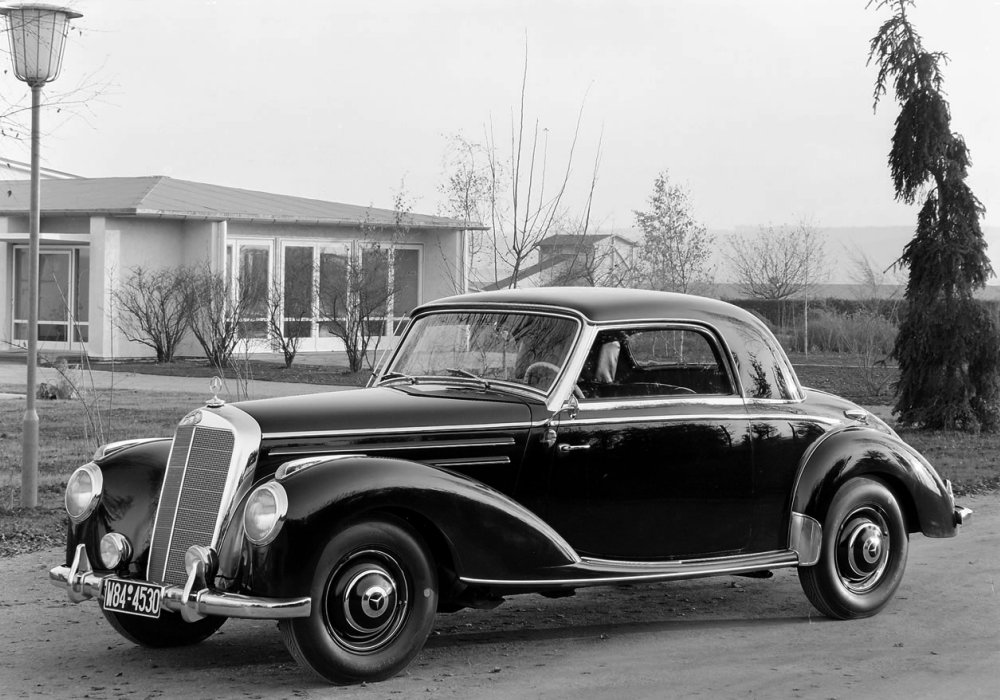
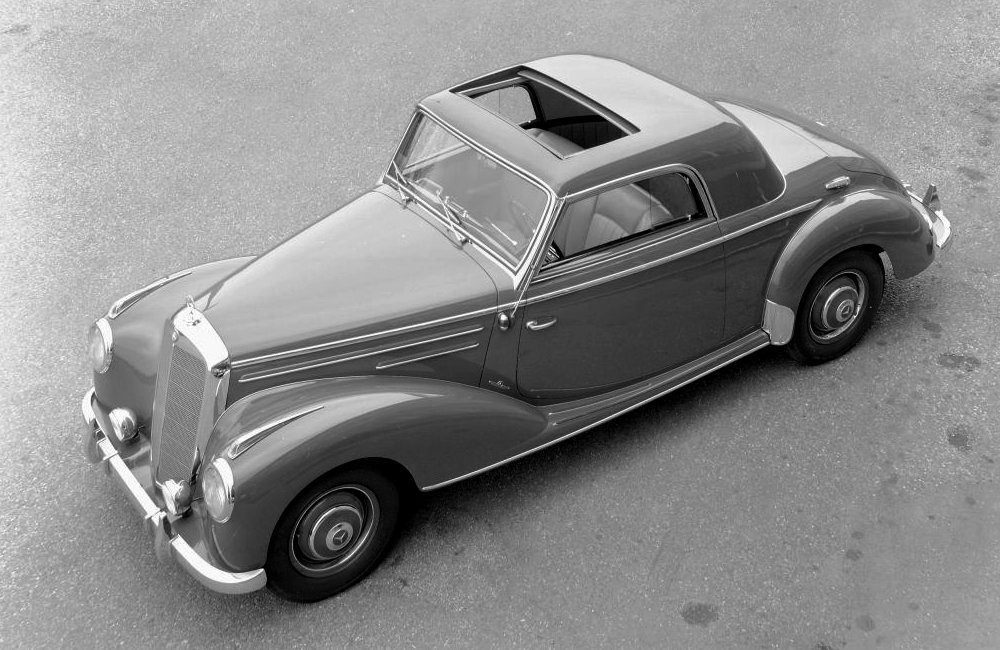
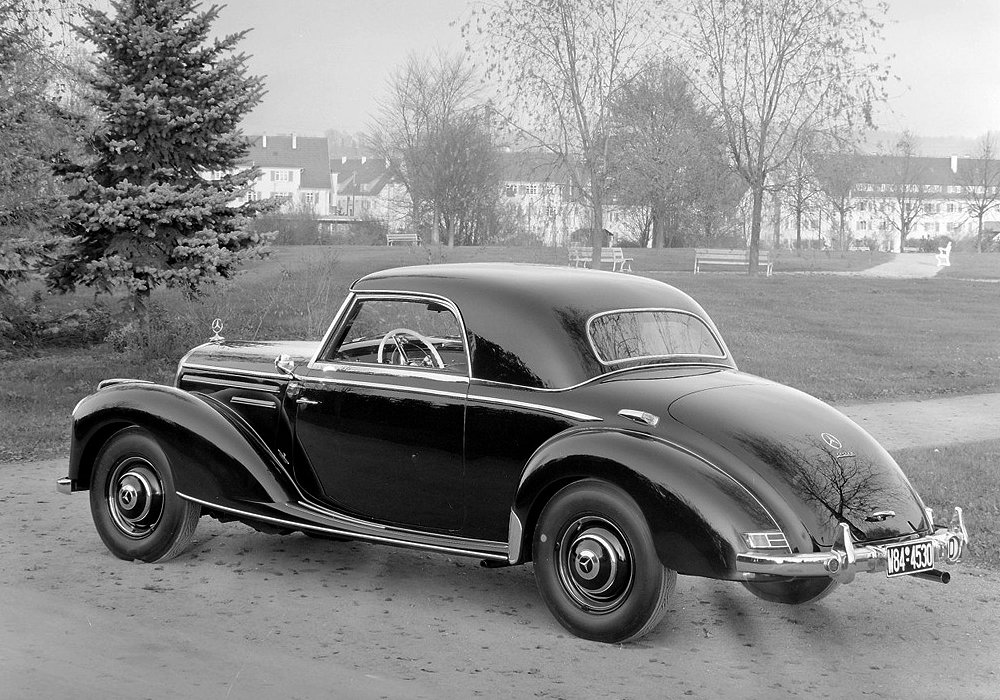
The defining feature of the Mercedes-Benz 220 Coupé was its bodywork. Unlike the saloon, the coupé featured a lower roofline, longer doors and a more flowing profile, giving it a distinctly more elegant and sporting appearance. Styling remained restrained and formal, with smooth body panels, integrated wings and tasteful chrome detailing. The overall design echoed pre-war Mercedes-Benz coupés in spirit, prioritising proportion and dignity over overt sportiness. Production was largely hand-finished, contributing to both the car’s high quality and its rarity.
Inside, the coupé offered a refined and well-appointed cabin. Seating was typically upholstered in high-quality leather or fine cloth, with greater emphasis on comfort and craftsmanship than in the saloon. Front seats were generously sized, and while rear seating was more limited, it remained suitable for occasional adult use. The dashboard featured clear instrumentation and high-quality materials, and sound insulation was improved, reinforcing the car’s role as a quiet and composed grand touring vehicle.
On the road, the 220 Coupé delivered a calm and assured driving experience. The six-cylinder engine provided smooth acceleration and effortless cruising, while the suspension absorbed uneven road surfaces effectively, an important characteristic in early 1950s Europe. Steering was accurate but relatively heavy at low speeds, and the car responded best to measured, unhurried driving. It was not intended as a sports car, but rather as a refined personal car for owners who valued elegance and mechanical integrity.
Production numbers of the Mercedes-Benz 220 Coupé were extremely low, even by the standards of early post-war luxury cars. Its high price and hand-built nature meant it was aimed at a small, exclusive clientele, often professionals or industrialists seeking a discreet but prestigious vehicle. As a result, the coupé was far rarer than both the saloon and cabriolet versions.
Today, the Mercedes-Benz 220 Coupé is regarded as one of the rarest and most desirable variants of the W187 series. Surviving examples are highly prized for their elegance, craftsmanship and historical significance. They represent a brief moment when Mercedes-Benz combined traditional coachbuilt luxury with emerging post-war engineering, making the 220 Coupé an important and understated chapter in the marque’s history.