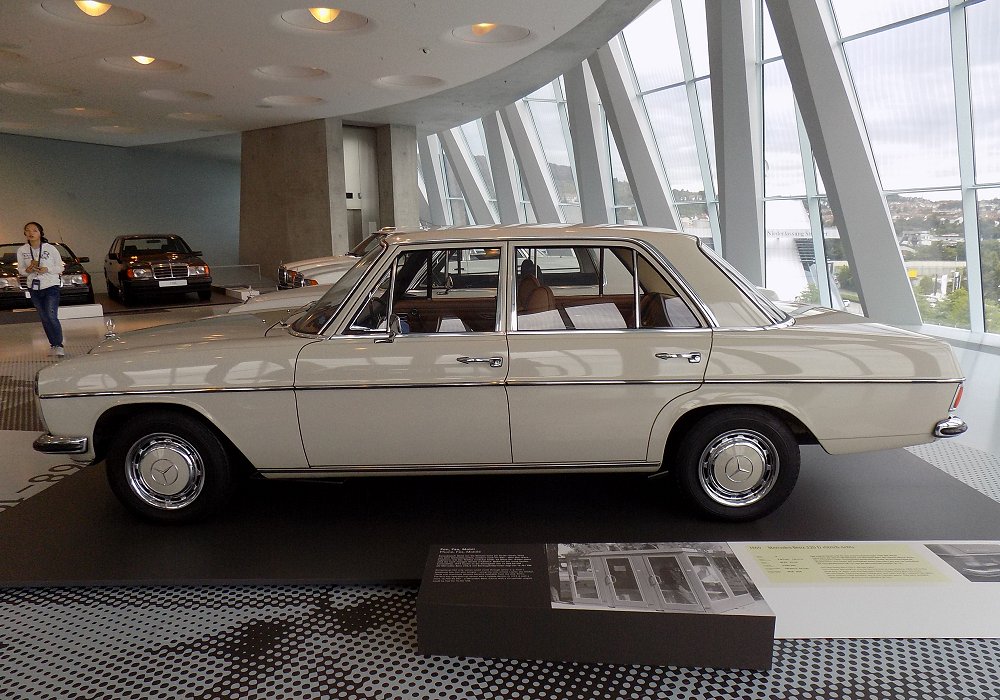
Description
The Mercedes-Benz 220 D was the diesel-powered six-cylinder variant of the W115 series and became one of the most respected and long-lived diesel saloons of its era. Introduced in 1968 alongside the petrol W114 models, the 220 D was aimed squarely at high-mileage users who valued durability, economy and mechanical longevity above all else. It quickly established a reputation as a virtually indestructible car and played a major role in cementing Mercedes-Benz’s dominance in passenger-car diesel engineering.
Power came from a 2.2-litre inline four-cylinder diesel engine producing approximately 60 horsepower. While output was modest, the engine delivered strong low-speed torque and exceptional fuel economy for the time. Performance was slow by petrol-car standards, with leisurely acceleration and a limited top speed, but the engine was designed to run continuously under load with minimal wear. A four-speed manual gearbox drove the rear wheels, with gearing chosen to suit steady cruising and long-distance use rather than responsiveness.
The 220 D was built on the W115 platform, which featured a rigid unitary body with a strong passenger safety cell and carefully engineered crumple zones. Suspension consisted of double wishbones with coil springs at the front and a rear semi-trailing arm arrangement with coil springs, providing predictable handling and good stability even on poor road surfaces. Front disc brakes and rear drum brakes offered reliable stopping power appropriate to the car’s modest performance.
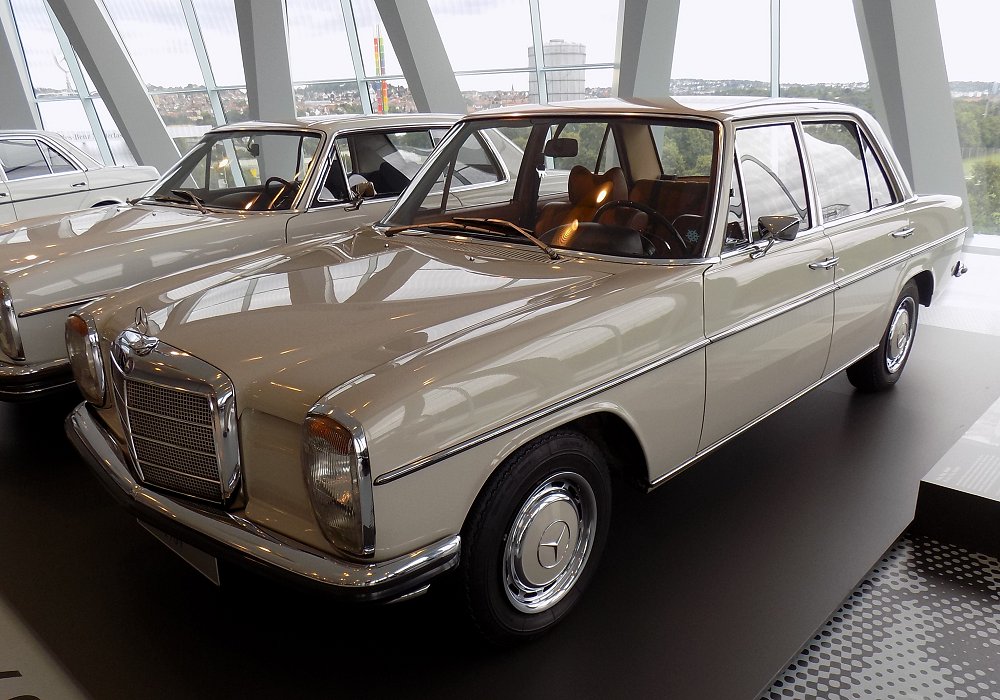
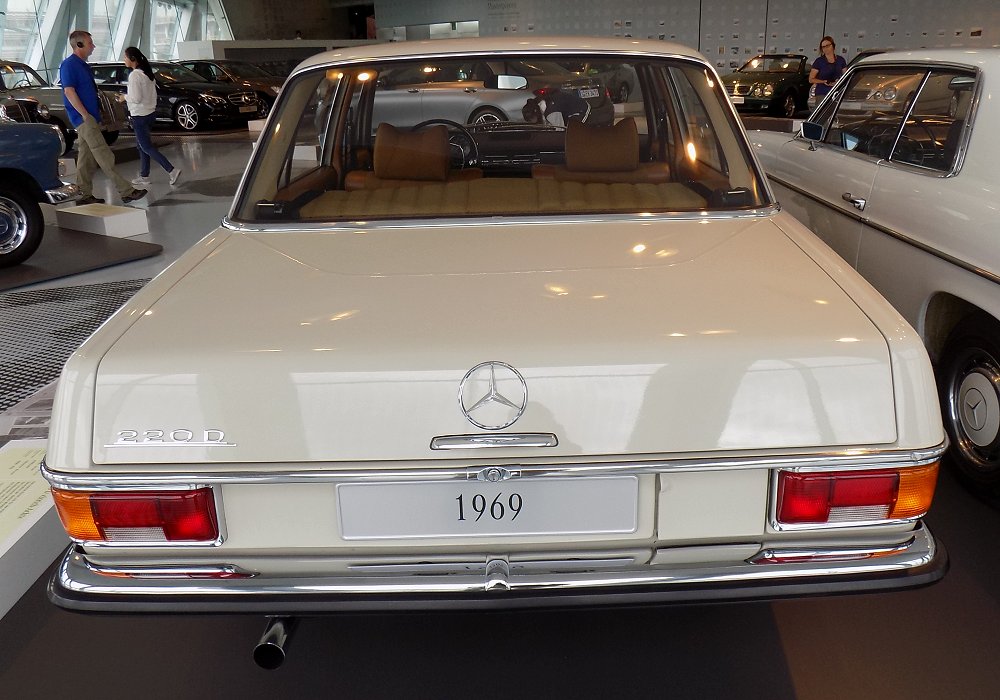
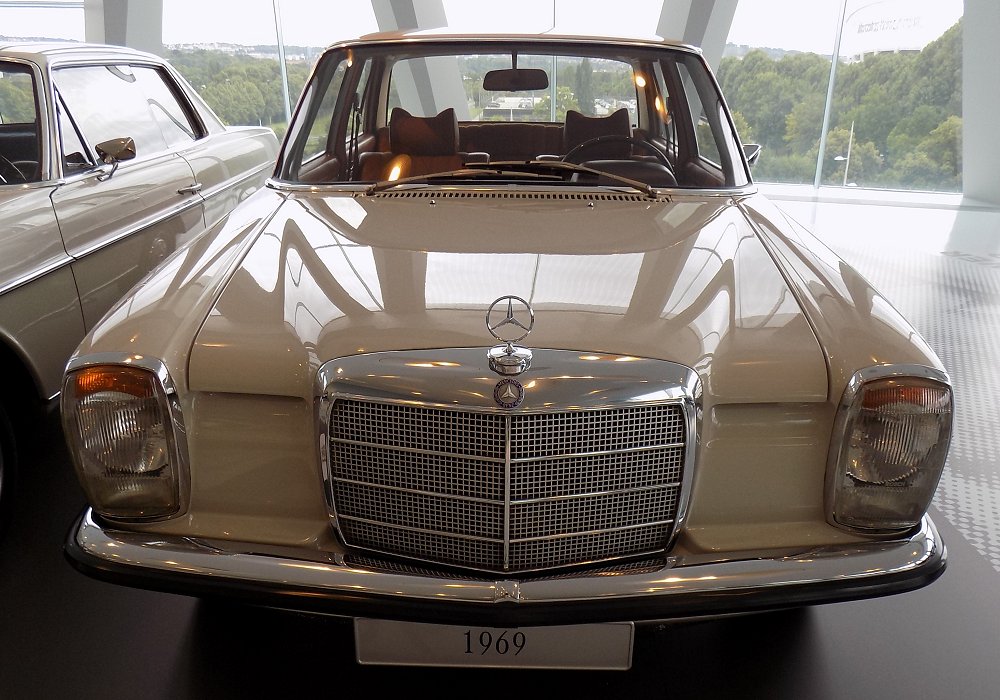
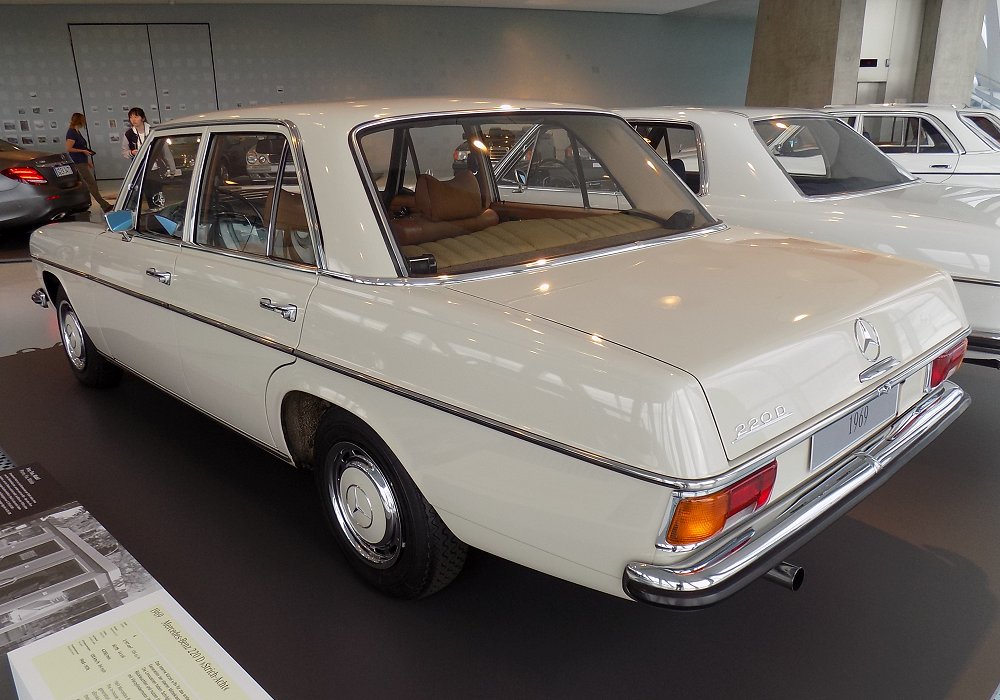
Styling of the Mercedes-Benz 220 D followed the clean, modern design language of the W114/W115 range. Straight body lines, a large glass area and an upright grille gave the car a purposeful, professional appearance. Chrome detailing was restrained, and the overall design emphasised function and durability rather than fashion. Diesel badging was discreet, reflecting Mercedes-Benz’s philosophy that diesel ownership should not involve visual compromise.
Inside, the cabin was spacious, practical and built for longevity. Seating was upright and supportive, trimmed in hard-wearing materials designed to withstand years of intensive use. The dashboard layout was clear and logical, with excellent visibility and simple instrumentation. Noise and vibration levels were higher than in petrol models, particularly at idle, but this was widely accepted by owners in exchange for outstanding economy and reliability.
In everyday use, the 220 D excelled as a working car. It was especially popular as a taxi, company vehicle and long-distance transport, regularly accumulating extremely high mileages with minimal mechanical intervention. Its predictable handling, robust construction and low running costs made it a trusted companion in demanding conditions across Europe, Africa and the Middle East.
The Mercedes-Benz 220 D became symbolic of the brand’s diesel philosophy. At a time when diesel engines were still viewed as crude or commercial, Mercedes-Benz demonstrated that they could be successfully integrated into comfortable, well-engineered saloons. The model’s success directly influenced the development of later diesel icons such as the W123 240 D and 300 D.
Today, the Mercedes-Benz 220 D is regarded as one of the definitive classic diesel saloons. Surviving examples are valued not for speed or luxury, but for their mechanical honesty, endurance and historical importance. As a car that helped define Mercedes-Benz’s diesel legacy, the 220 D stands as a benchmark for longevity and engineering discipline in post-war automotive history.