Description
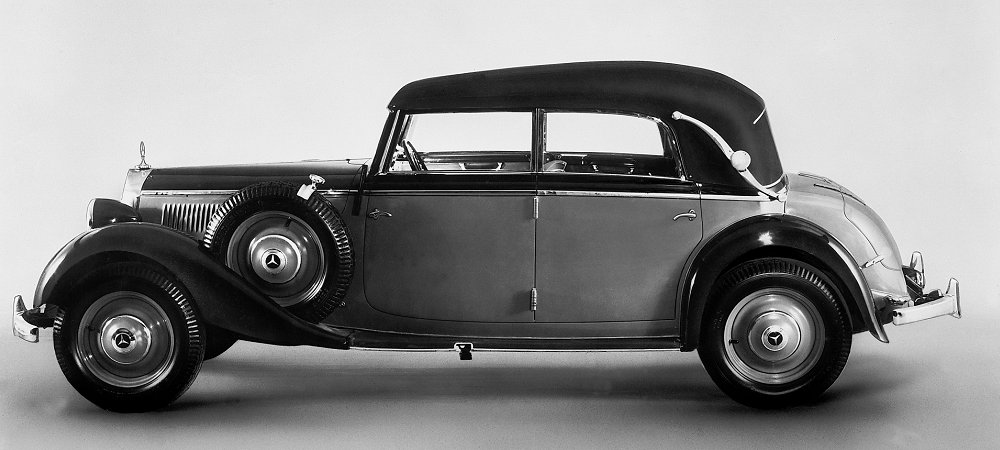
The Mercedes-Benz 230 Cabriolet D was the most spacious and formal open-top variant of the W143 series, introduced in 1937 as an elegant four-door touring cabriolet positioned near the top of Mercedes’ mid-size six-cylinder range. While the Cabriolet A and B models served as personal, stylish open cars for two or four passengers, the Cabriolet D provided a more luxurious, chauffeur-capable configuration with full-sized rear doors, generous interior space and a dignified presence that echoed Mercedes’ larger luxury cabriolets of the era. It offered the refined performance of the 2.3-litre six-cylinder engine, the comfort of a well-appointed cabin and the sophistication of Sindelfingen coachwork in a highly versatile and prestigious package.
The car was powered by the smooth and dependable 2.3-litre inline-six that defined the 230 series. Producing around 55 horsepower, the engine delivered excellent low-speed torque and remarkably quiet operation. It provided relaxed, confident cruising suitable for long-distance touring or formal driving duties. Paired with a four-speed manual gearbox featuring synchromesh on the upper gears, the drivetrain made the Cabriolet D easy to operate and exceptionally refined for a mid-size car of the late 1930s. It was not intended for spirited performance but for calm, unhurried motoring with a focus on comfort and reliability.
The Cabriolet D was built on the longer of the two wheelbases available for the W143, giving it a stretched, graceful appearance and a noticeably roomier interior. The chassis used Mercedes’ sturdy ladder-frame design, capable of supporting the structural demands of a full four-door open body while maintaining excellent rigidity. Suspension employed independent front wheels with a transverse leaf spring and a swing-axle rear layout with coil springs, producing a soft, composed ride suited to comfort-oriented touring. Mechanical drum brakes on all four wheels offered reliable stopping performance consistent with the car’s weight and intended use.
The Sindelfingen-built bodywork gave the 230 Cabriolet D much of its character. Four full-size doors provided easy access for all passengers, distinguishing it from the smaller Cabriolet A and more compact Cabriolet B. The proportions were elegant and formal: a long bonnet, sweeping front wings, tall shoulder line and a stately rear section supporting the folding roof. When the top was raised, the Cabriolet D presented a dignified, almost limousine-like silhouette; when lowered, it transformed into an imposing open tourer with generous seating for four adults. The roof mechanism was crafted from high-quality materials and folded neatly despite its size, maintaining the car’s balanced lines.
Inside, the Cabriolet D offered a refined environment designed for comfort. The spacious cabin allowed ample legroom both front and rear, giving the car an appeal for families, touring passengers or owners employing a driver. Seats were upholstered in high-grade cloth or leather depending on specification, and the interior trim used polished wood or carefully finished metal surfaces. The dashboard followed the clean and elegant layout typical of the W143 series, with clear instruments and well-crafted switchgear. When the roof was lowered, the cabin became a bright, airy space ideal for relaxed travel; with the roof raised, it remained warm, quiet and well insulated for long journeys.
On the road, the 230 Cabriolet D delivered a smooth and composed driving experience. The long wheelbase enhanced ride comfort, absorbing uneven road surfaces with a gentle, rolling motion that suited its luxury-touring role. The six-cylinder engine provided steady, effortless power, and the suspension ensured confident, predictable handling at normal speeds. The car was not designed for rapid cornering but excelled in providing calm, comfortable, open-air travel. Whether used as a family tourer, a prestige personal car or a chauffeur-driven vehicle, it conveyed an unmistakable sense of refinement.
The Cabriolet D held a distinctive place in the 230 lineup. It was more formal and spacious than the Cabriolet B, yet more approachable and manageable than Mercedes’ larger luxury cabriolets. Its combination of elegance, comfort and practicality made it appealing to well-to-do private owners, dignitaries and clients who required open-top motoring without compromising interior space or passenger dignity. Production numbers were modest, adding to its exclusivity.
Today, the Mercedes-Benz 230 Cabriolet D stands as one of the most collectible and impressive variants of the W143 series. Its four-door cabriolet body, smooth six-cylinder power and sophisticated pre-war craftsmanship give it a presence rarely matched by mid-size cars of the era. Well-preserved examples offer a richly atmospheric driving experience and remain highly prized for their rarity, elegance and the enduring appeal of Mercedes-Benz’s finest Sindelfingen coachwork.