

Description
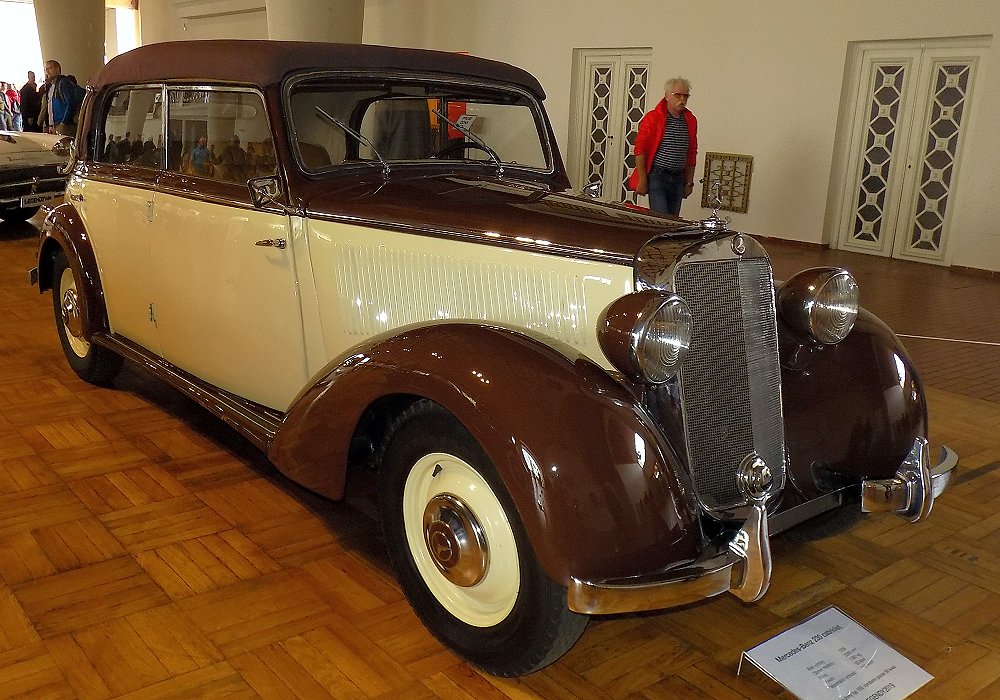
The Mercedes-Benz 230 Cabriolet D of the W153 series was one of the most distinguished open-top touring cars produced by Mercedes-Benz in the late 1930s. Introduced in 1939 as part of the refined W153 model range, it represented a significant stylistic and technical development over the earlier W143 series. The Cabriolet D combined the spacious four-door layout expected of a formal touring car with a newly modernised body design, smoother mechanical refinement and the craftsmanship of the Sindelfingen coachworks. It stood near the top of Mercedes’ mid-size offerings and remains one of the most elegant pre-war four-door cabriolets ever built by the company.
At the heart of the W153 series was a 2.3-litre inline-six engine, an evolution of the earlier powerplant but now improved for greater refinement and smoother operation. It produced around 55 horsepower, delivering quiet and flexible performance well suited to the Cabriolet D’s character. The torque-rich nature of the engine made the car effortless to drive in both town and touring conditions. It was paired with a four-speed manual gearbox featuring synchromesh on the higher gears, allowing smooth shifts and relaxed motoring. The engine’s whispery operation and mechanical precision gave the Cabriolet D a level of refinement approaching that of Mercedes’ larger and more expensive models.
The chassis of the W153 was newly engineered with an emphasis on improved rigidity and comfort. Using a strong box-section frame, it provided greater structural stability than the earlier W143 chassis, which was particularly important for a large four-door open body. The wheelbase was extended, creating a more spacious interior and ensuring a steady, settled ride. Independent front suspension with wishbones and coil springs gave the car a supple response over uneven surfaces, while the familiar swing-axle rear system, also with coil springs, provided comfort and predictable handling at touring speeds. Hydraulic brakes were now used instead of mechanical drums, marking a major improvement in safety and stopping confidence.
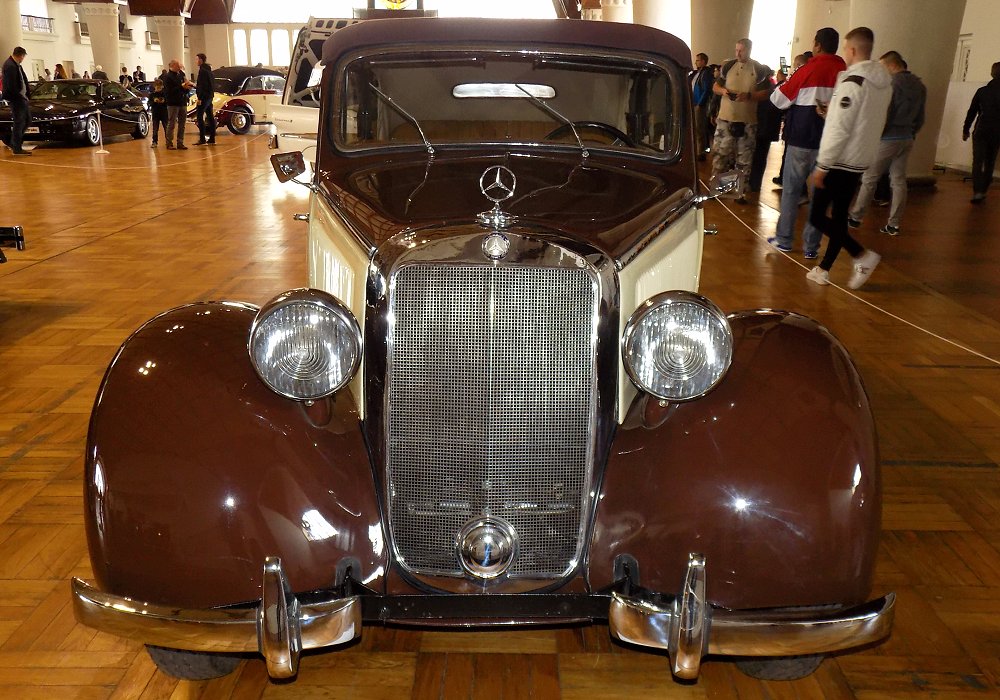
Where the 230 Cabriolet D truly distinguished itself was in its body design. The W153 range introduced a far more modern appearance, abandoning the upright, traditional styling of earlier models in favour of longer, lower lines, a smoother profile and a softer, more rounded silhouette. The four-door cabriolet body from Sindelfingen was exceptionally elegant, featuring fully integrated wings, a gently raked windscreen and a cohesive, streamlined form. The large convertible roof stretched cleanly from the windscreen to the rear deck, and when folded, it sat low and tidy, preserving the car’s graceful proportions. Chrome accents were used sparingly but effectively, creating a refined and contemporary look for the period.
Inside, the Cabriolet D offered a spacious and luxuriously appointed cabin. The extended wheelbase allowed generous legroom for both front and rear passengers, making the car suitable for chauffeur use as well as private touring. Seats were upholstered in high-quality cloth or leather depending on customer preference, and the interior featured polished wood trim, carefully crafted metal fittings and clear, well-arranged instruments. The cabin felt airy and upscale, with the four-door layout providing exceptional ease of entry and exit. With the roof lowered, the interior became a bright, open space ideal for long summer journeys; with the roof raised, it remained warm, quiet and impressively refined.
On the road, the Mercedes-Benz 230 Cabriolet D delivered a calm, sophisticated driving experience. The improved chassis design, hydraulic brakes and smoother six-cylinder engine combined to make the car more advanced in feel than most mid-size European cars of its era. The long wheelbase gave it a dignified, stable ride, while the open-top configuration added a sense of grandeur and leisure. The Cabriolet D was not intended for fast driving but excelled in providing serene, comfortable touring for four adults.
The W153 series had only a short production run, its life cut short by the outbreak of the Second World War. As a result, the 230 Cabriolet D was built in very small numbers and is one of the rarest pre-war Mercedes models. Its modernised design, improved engineering and formal elegance place it among the most desirable open-top Mercedes of the late 1930s.
Today, the Mercedes-Benz 230 Cabriolet D (W153) is celebrated for its rarity, beauty and historical significance. It represents the pinnacle of Mercedes-Benz’s pre-war mid-size engineering and Sindelfingen craftsmanship, combining the poise of a luxury saloon with the romantic appeal of a full four-door touring cabriolet. Well-preserved examples are prized by collectors as some of the finest and most architecturally refined open cars of the pre-war era.