
Description
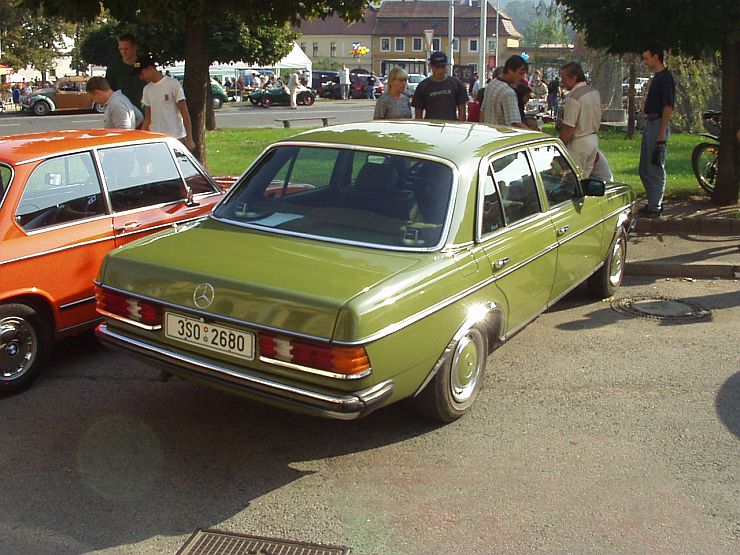
The Mercedes-Benz 230 E Automatic was a refined and technologically significant variant of the W123 series, combining fuel-injected four-cylinder performance with the relaxed driving character of an automatic transmission. Introduced in the late 1970s, the 230 E sat above the carburetted petrol models and below the six-cylinder variants, offering a balanced blend of efficiency, smoothness and modern engineering. It reflected Mercedes-Benz’s move toward more advanced engine management while retaining the durability and comfort for which the W123 became famous.
Power came from a 2.3-litre inline four-cylinder petrol engine equipped with Bosch K-Jetronic mechanical fuel injection. Producing approximately 136 horsepower, this engine represented a clear step up in performance over the carburetted 200 and 230 models. Throttle response was sharper, cold starting was improved and overall drivability was more consistent across a wide range of conditions. The engine was smooth and flexible, well suited to both urban driving and sustained motorway cruising.
The automatic transmission, typically a three-speed unit during this period, was engineered for durability and smooth operation rather than rapid shifting. It complemented the fuel-injected engine well, delivering seamless gear changes and a relaxed driving experience. While the automatic slightly dulled outright acceleration compared with the manual version, it enhanced comfort and ease of use, particularly in traffic and long-distance driving. This configuration appealed strongly to buyers who valued refinement over driver involvement.
The W123 chassis provided the foundation for the 230 E Automatic’s composed road manners. A rigid unitary body with a strong passenger safety cell and carefully engineered crumple zones reflected Mercedes-Benz’s leadership in passive safety. Suspension consisted of double wishbones with coil springs at the front and a rear semi-trailing arm setup with coil springs, delivering excellent ride comfort and predictable handling. Disc brakes at all four wheels provided strong and consistent stopping power, well matched to the car’s performance.
Styling of the 230 E Automatic followed the clean, functional design language that defined the W123 range. Straight body lines, a tall glasshouse and an upright grille conveyed solidity and professionalism rather than fashion. Chrome detailing was restrained, and there was little external indication of the fuel-injected engine or automatic transmission, reinforcing the understated nature of the model.
Inside, the cabin was spacious, practical and exceptionally well built. Materials were chosen for longevity rather than luxury, with durable fabrics, high-quality plastics and solid switchgear. Seating was firm and supportive, ideal for long-distance travel. The automatic transmission contributed to a calm and unhurried driving environment, aligning with the car’s role as a comfortable executive saloon.
In everyday use, the Mercedes-Benz 230 E Automatic offered a mature and reassuring driving experience. Performance was confident without being aggressive, and the combination of fuel injection and automatic transmission made the car easy to live with in all conditions. It was particularly well suited to motorway driving, where its stability, smooth power delivery and low stress levels came into their own.
By the early 1980s, the 230 E Automatic had become a popular choice among professionals and private owners who wanted petrol refinement without moving to a six-cylinder model. It demonstrated that fuel injection could enhance both performance and reliability, helping to pave the way for its widespread adoption across the Mercedes-Benz range.
Today, the Mercedes-Benz 230 E Automatic is regarded as a well-balanced and technically important member of the W123 family. It is valued for its smooth injected engine, robust automatic gearbox and exceptional build quality. As a petrol W123 that combines modern engine technology with traditional Mercedes-Benz engineering values, it stands as a strong example of the brand’s methodical evolution during one of its most respected eras.