Description
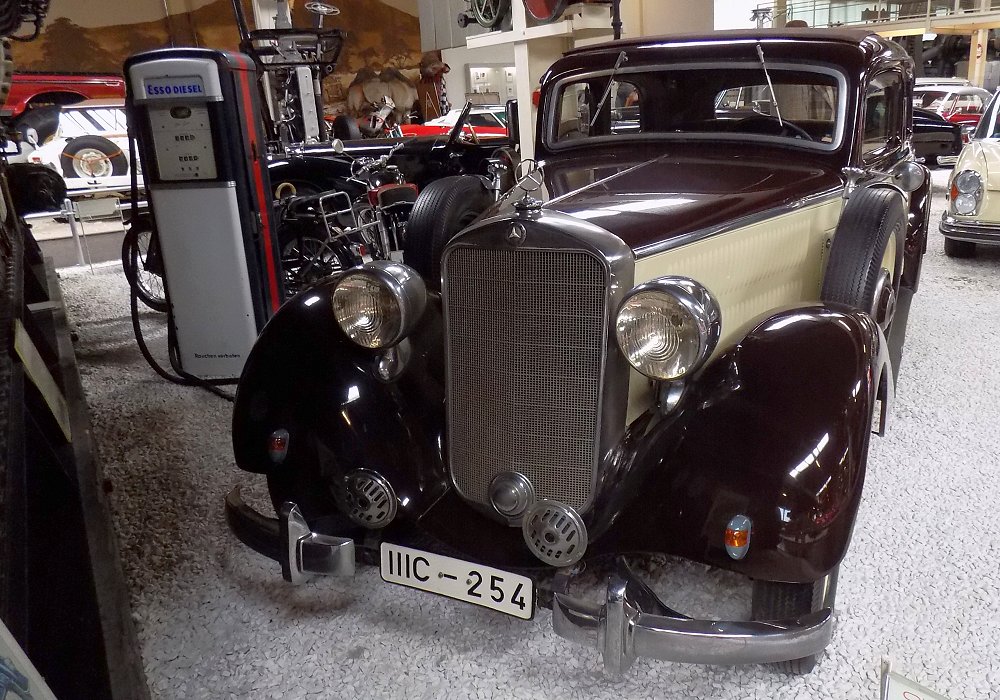
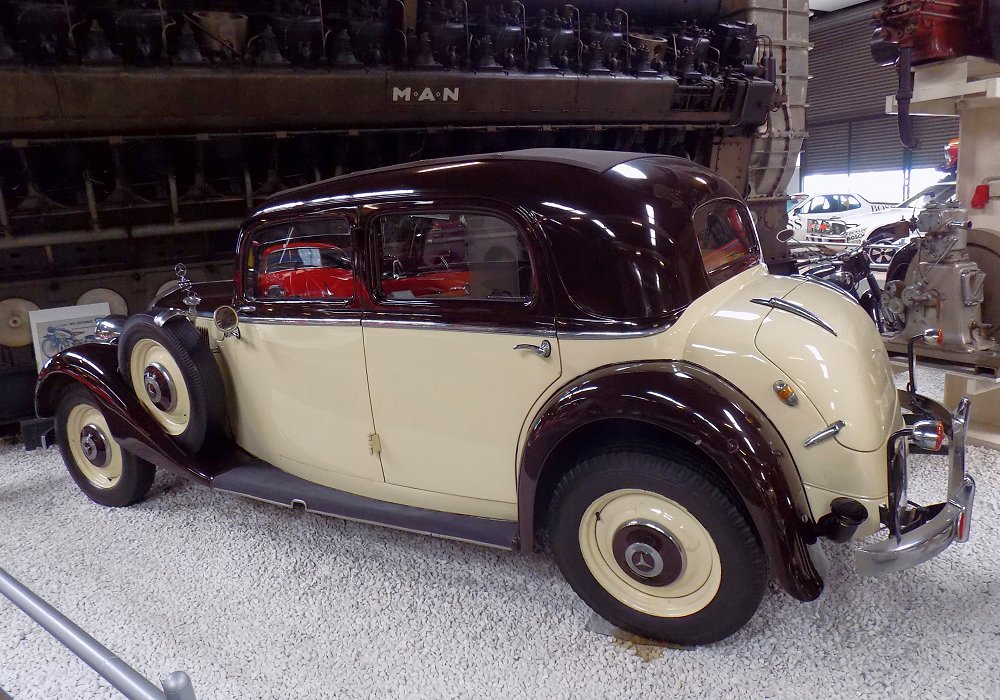
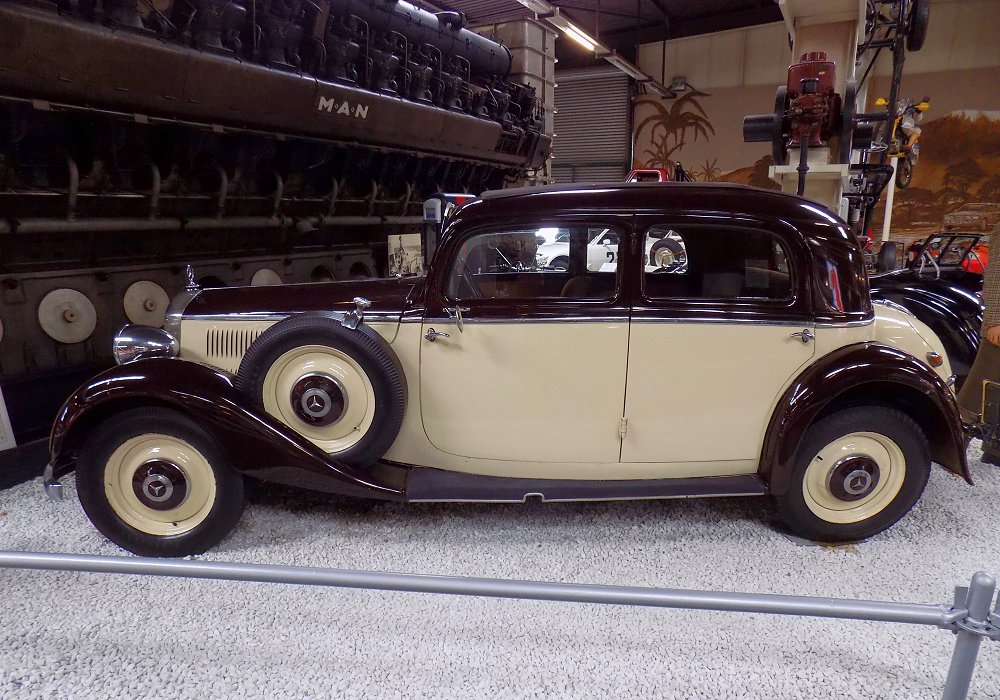
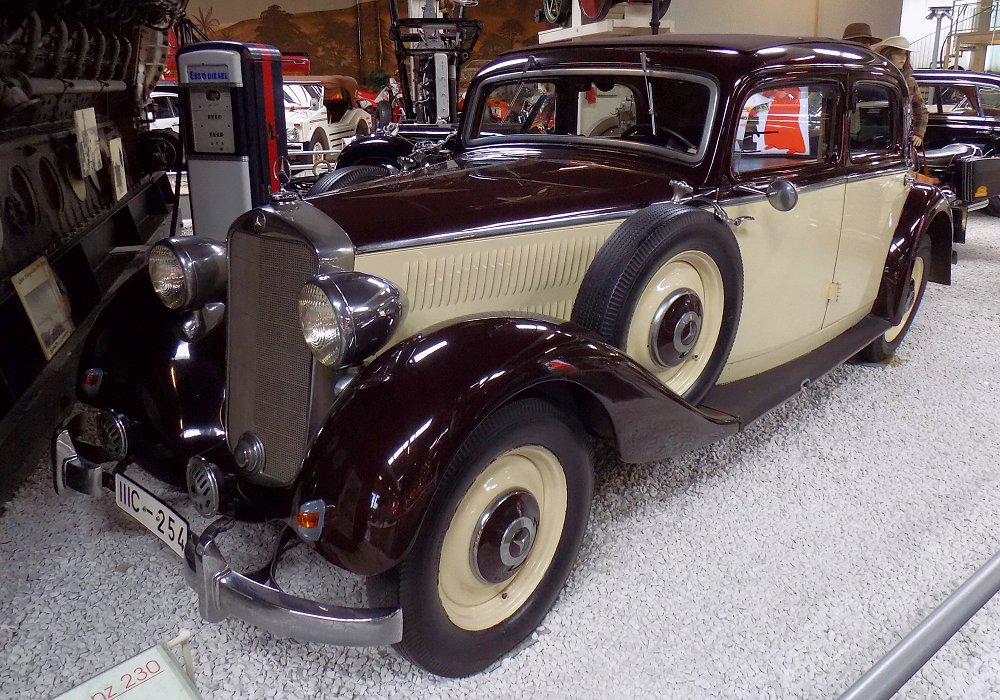
The Mercedes-Benz 230 Limousine was the principal four-door saloon variant of the W143 series, introduced in 1937 as the successor to the earlier Typ 230 W21. It represented Mercedes-Benz’s continuing effort to refine its mid-size six-cylinder range, offering buyers a car that combined practicality, quiet and flexible performance and understated elegance. Positioned below the larger luxury saloons but significantly more refined than the four-cylinder models, the 230 Limousine became one of the core products in Mercedes’ late-1930s lineup and helped define the company’s approach to modern, comfortable family and business transport.
Power came from the smooth and reliable 2.3-litre inline-six engine that characterised the W143 series. Producing around 55 horsepower, the engine delivered a level of refinement and torque unmatched by many competitors in the mid-size segment. It offered quiet, flexible power suitable for both urban driving and long-distance touring. The engine’s durability and smooth running made it a favourite among owners who valued a calm and civilised motoring experience. A four-speed manual gearbox with synchromesh on the upper gears contributed to the car’s ease of operation, allowing smooth shifts and predictable performance.
The 230 Limousine was built on the longer of the two wheelbases available for the W143 range, giving the car generous interior space and a more formal appearance than the earlier short-wheelbase models. The ladder-frame chassis was strong and rigid, supporting the demands of a spacious four-door body while maintaining the mechanical refinement associated with the six-cylinder engine. The independent front suspension with a transverse leaf spring provided a supple ride and confident steering response, while the swing-axle rear suspension with coil springs ensured comfort and stability at cruising speeds. Mechanical drum brakes on all four wheels delivered dependable braking performance.
Stylistically, the 230 Limousine reflected the design evolution of the late 1930s. It retained the upright Mercedes radiator grille and sweeping wings of earlier models but incorporated more streamlined contours, a slightly lower stance and smoother transitions between body panels. The long roofline and elongated rear passenger compartment gave the car a dignified, well-balanced silhouette. Four full-size doors allowed easy entry and exit, and subtle chrome details emphasised the car’s refined yet practical character. The design projected solidity and understated prestige without the ornamentation of the larger luxury classes.
Inside, the 230 Limousine offered a comfortable, spacious cabin capable of seating four or five adults with ease. Upholstery options ranged from durable cloth for practical users to higher-grade materials for private buyers seeking a more luxurious atmosphere. The dashboard featured clear, neatly arranged gauges framed by wood or painted metal trim depending on specification. Switchgear and interior fittings were engineered for durability and ease of use, maintaining Mercedes’ reputation for well-crafted interiors. The rear compartment, in particular, benefitted from the car’s longer wheelbase, providing excellent legroom and a pleasant, airy feel.
On the road, the 230 Limousine delivered a calm, refined driving experience. The six-cylinder engine provided steady, effortless acceleration, and the suspension absorbed uneven road surfaces with confidence. The long wheelbase gave the car a settled, comfortable ride ideal for long-distance touring, business travel or family use. While not intended for sporting performance, the 230 handled predictably and smoothly, excelling in quiet, relaxed motoring. Its combination of comfort, stability and mechanical refinement placed it among the most pleasant mid-size saloons of its era.
The Mercedes-Benz 230 Limousine became one of the most popular versions of the W143 series. It appealed to a broad range of buyers, from professionals and families to small businesses and governmental institutions. Its generous space, reliable six-cylinder power and dignified appearance made it a natural choice for taxi operators and official duties. Production continued until the outbreak of the Second World War, after which surviving examples became valued for their durability and practicality during the difficult post-war years.
Today, the 230 Limousine is appreciated for its understated charm and its role in Mercedes-Benz’s evolution toward the modern luxury saloon. Surviving examples showcase the craftsmanship of Sindelfingen coachwork, the refinement of Mercedes’ early six-cylinder engines and the balanced, elegant design language of the late 1930s. It remains a significant and desirable model for collectors interested in pre-war Mercedes history, representing the foundation from which later generations of Mercedes saloons would grow.