

Description
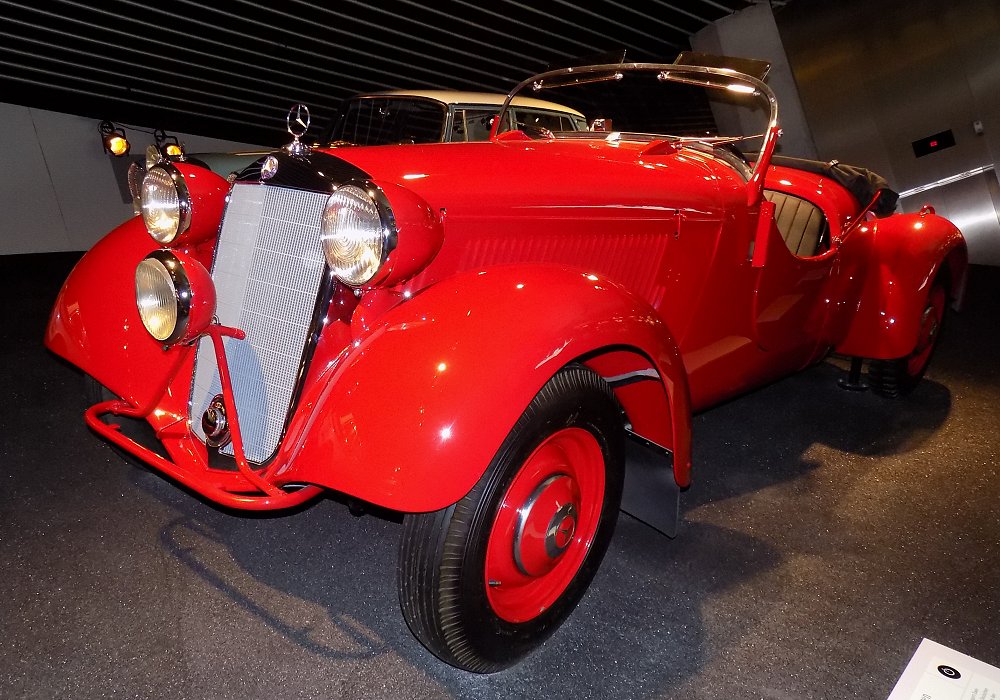
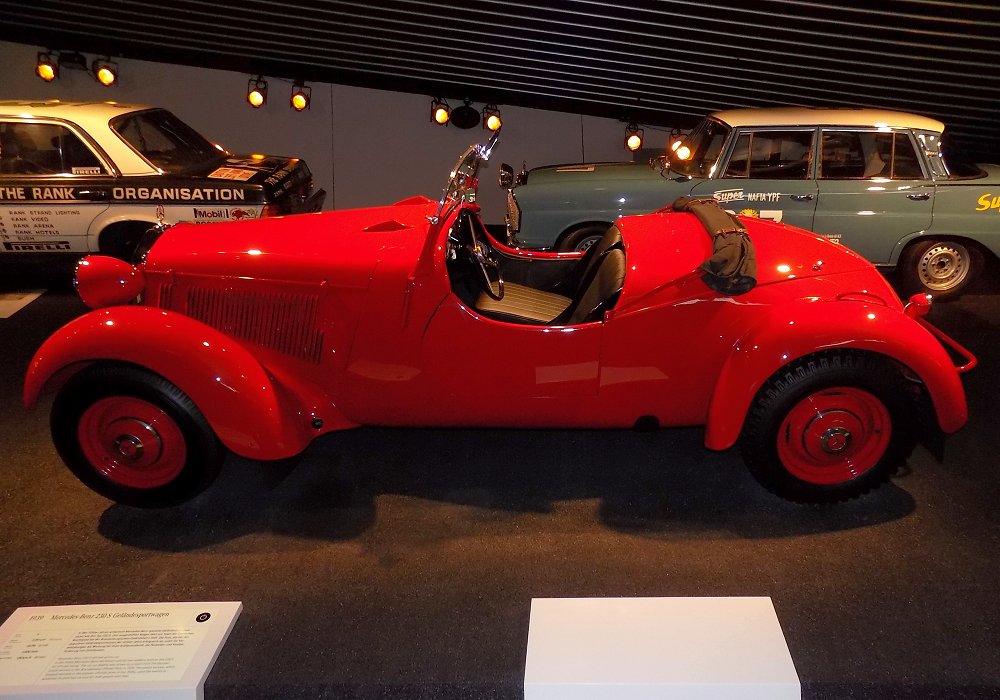
The Mercedes-Benz 230 SV Sport was one of the most intriguing and lesser-known sporting derivatives of the early Mercedes six-cylinder line, developed during the mid-1930s as a more dynamic and driver-focused evolution of the standard Typ 230. While the mainstream 230 models were designed for comfortable family motoring and formal touring, the SV Sport was aimed at enthusiastic drivers who wanted sharper performance, reduced weight and a more purposeful character without sacrificing the refinement of Mercedes’ smooth 2.3-litre engine. It occupied a small but fascinating niche within the pre-war Mercedes range, bridging the gap between road cars and the company’s more specialised competition machinery.
The car was powered by the familiar 2.3-litre inline-six, but the Sport models typically received subtle improvements in carburation, exhaust flow and overall tuning. Output remained in the region of 55 horsepower, but the engine’s responsiveness was improved, giving stronger throttle reaction and a livelier feel at higher revs. The smoothness and torque that characterised the standard 230 remained intact, but in a lighter body the engine delivered noticeably more spirited performance. The four-speed manual gearbox, with synchromesh on the upper gears, enabled fast, confident shifting and made the SV Sport enjoyable to drive with enthusiasm.
The chassis was based on the standard Typ 230 architecture but adapted for a more dynamic driving experience. A lighter, shorter wheelbase was typically employed, reducing weight and increasing agility. The ladder-frame structure provided a solid foundation, while the suspension retained the independent front axle and swing-axle rear design, now tuned for a firmer, more controlled ride. The result was a car that felt more responsive than the saloons and cabriolets, capable of maintaining higher speeds on winding roads and offering sharper steering feedback. Mechanical drum brakes on all four wheels provided strong stopping power for the car’s size, and the lighter overall mass improved braking feel.
The bodywork of the 230 SV Sport varied depending on configuration, but it generally embraced a more streamlined, athletic style than the formal saloons or touring cabriolets. Many examples featured a lightweight two-door body, often with a low, sweeping roofline, flowing fenders and a shortened tail. Some were built as fixed-head coupés, while others took the form of compact roadsters with minimal rear seating or luggage space. Sindelfingen craftsmanship ensured that even the sport-focused bodies retained the elegance and precision associated with Mercedes-Benz. The proportions were taut and purposeful, with clean lines intended to reduce weight and aerodynamic drag.
Inside, the SV Sport’s cabin reflected its dual purpose as both a refined touring car and a sporting machine. Materials remained of high quality, with leather or durable cloth upholstery and polished wood or painted-metal trim depending on specification. Seats were often more heavily bolstered to provide better support during spirited driving. The dashboard retained the clear, logical Mercedes instrument layout, giving the driver precise information with minimal distraction. The cabin was more intimate than the larger 230 models but still maintained an atmosphere of refinement rather than austerity.
On the road, the Mercedes-Benz 230 SV Sport offered a noticeably different character from the standard 230. The lighter body, more responsive engine tuning and firmer suspension combined to create a nimble, engaging driver’s car. Acceleration felt sharper, the car cornered with greater confidence and the steering communicated more directly with the road surface. While still far smoother and more civilised than contemporary sports cars from smaller manufacturers, the SV Sport delivered a level of engagement that the standard 230 simply could not match. It excelled on twisting country roads, where its balance and agility came to the fore, yet remained composed and comfortable enough for long journeys.
The 230 SV Sport was produced in very small numbers, and it was never intended as a mass-market model. Instead, it served as a semi-sporting option for private buyers who wanted a more individual and spirited Mercedes-Benz, and in some cases it was used in mild competition or reliability trials. Its rarity today reflects its specialised purpose and the limited number of customers seeking a sporting pre-war Mercedes in this class.
Modern collectors value the Mercedes-Benz 230 SV Sport for its blend of elegance, rarity and driver-focused character. It represents an important chapter in Mercedes’ pre-war experimentation with lighter, more dynamic road cars—a line of development that would eventually lead to the company’s legendary post-war sporting models. As one of the most unusual and engaging variants of the Typ 230 family, the SV Sport stands today as a compelling reminder of Mercedes-Benz’s early commitment to combining refinement with performance.