
Description
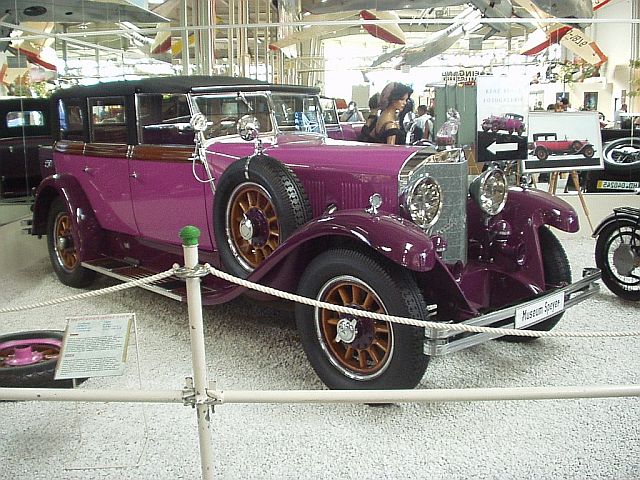
The Mercedes-Benz 24/100/140 PS Type 630 Sedanca de Ville was one of the most prestigious and formal body styles ever mounted on Mercedes’ early supercharged flagship chassis. Built in the mid-1920s at the height of the custom coachbuilding era, the Sedanca de Ville version combined Mercedes’ formidable mechanical engineering with a body form traditionally associated with chauffeur-driven luxury. It was a car designed for aristocratic travel, ceremonial use and occasions demanding maximum presence. At the same time, beneath its dignified coachwork lay the same powerful Kompressor engine and robust chassis that formed the basis of Mercedes’ emerging high-performance dynasty.
The Type 630 was powered by a 6.3-litre inline-six engine using Mercedes’ mechanically driven supercharger system. The name reflected its output: 24 tax horsepower, 100 horsepower in normal aspiration and up to around 140 horsepower with the Kompressor engaged. Full throttle activated a mechanical clutch that drove the Roots-type blower, forcing compressed air into the intake and giving the car a dramatic increase in performance. This made the 630 one of the most powerful luxury cars of its era, capable of high speeds even with heavy, formal coachwork. The Kompressor’s distinct whine and sudden surge of torque added a sporting dimension unusual in chauffeur-driven machinery.
The chassis used the strong and proven Mercedes ladder-frame design, engineered to carry large, luxuriously appointed bodies with stability and composure. Semi-elliptic leaf springs supported the car front and rear, offering a controlled, comfort-oriented ride. The long wheelbase of the Type 630 suited the Sedanca de Ville configuration perfectly, providing generous interior space and a smooth ride quality suited to formal motoring. Four-wheel mechanical drum brakes gave the car excellent stopping power, enhancing control and safety at a time when many luxury vehicles still used rear-only braking systems.
Bodywork for the Sedanca de Ville was always the work of a specialist coachbuilder. Mercedes supplied the high-performance chassis, while renowned European or British firms—such as Sindelfingen, Erdmann & Rossi, Saoutchik or Park-Ward—crafted the custom upper body. The Sedanca de Ville format followed a traditional division: the chauffeur sat in an exposed or semi-exposed front compartment with a folding roof panel, while the rear passengers enjoyed a fully enclosed, richly appointed cabin. This dual-roof arrangement gave the car an instantly recognisable silhouette, with its upright windscreen, long bonnet, formal rear roofline and luxurious rear doors.
The design emphasised presence, elegance and authority. The tall radiator, sweeping wings, large wire-spoke wheels and elongated running boards contributed to the imposing character. The body sides were often straight and formal, punctuated by discreet chrome trim. Spare wheels were typically mounted on the front fenders, accentuating the car’s grandeur. The Sedanca de Ville’s proportions reflected both luxury and engineering weight—the perfect blend of German power and aristocratic formality.
Inside, the rear compartment was the heart of the experience. Passengers sat on deeply upholstered seats trimmed in fine leather or sometimes wool broadcloth, depending on the commissioner’s taste. High-quality wood veneers, polished fittings and custom cabinetry created a serene, comfortable environment. Many Sedanca de Ville bodies included footrests, vanity sets, speaking tubes or electric intercoms, interior lighting, silk curtains and glass division panels separating the rear cabin from the chauffeur. The chauffeur’s compartment was more functional, with simpler trim and easy access to the long gear lever and clear Mercedes instrumentation.
On the road, the 630 Sedanca de Ville delivered a surprising combination of refinement and power. In normal driving it behaved as a quiet, smooth, luxurious touring carriage. But when the Kompressor was engaged, the car’s personality transformed. Even with heavy coachwork, the supercharged engine provided strong acceleration and effortless high-speed cruising. The rigid chassis and confident braking gave it assured road manners, allowing the car to carry its passengers swiftly and comfortably across long distances. It was equally suited to ceremonial procession and cross-continental travel.
Historically, the 630 Sedanca de Ville represents the last great era of bespoke, chauffeur-driven Mercedes luxury before the company shifted toward more performance-focused factory-built models such as the S, SS and SSK series. Its mechanical foundations—powerful supercharged engines, advanced braking and robust chassis engineering—directly influenced the high-performance Mercedes cars that would soon achieve worldwide fame.
Today, the Mercedes-Benz 24/100/140 PS Type 630 Sedanca de Ville is extraordinarily rare and deeply prized. It stands as one of the most elegant and formal interpretations of Mercedes’ early Kompressor technology. Collectors value it for its imposing presence, rich craftsmanship and historical significance as a symbol of upper-class motoring at a time when luxury automobiles were entirely custom-made.