

Description
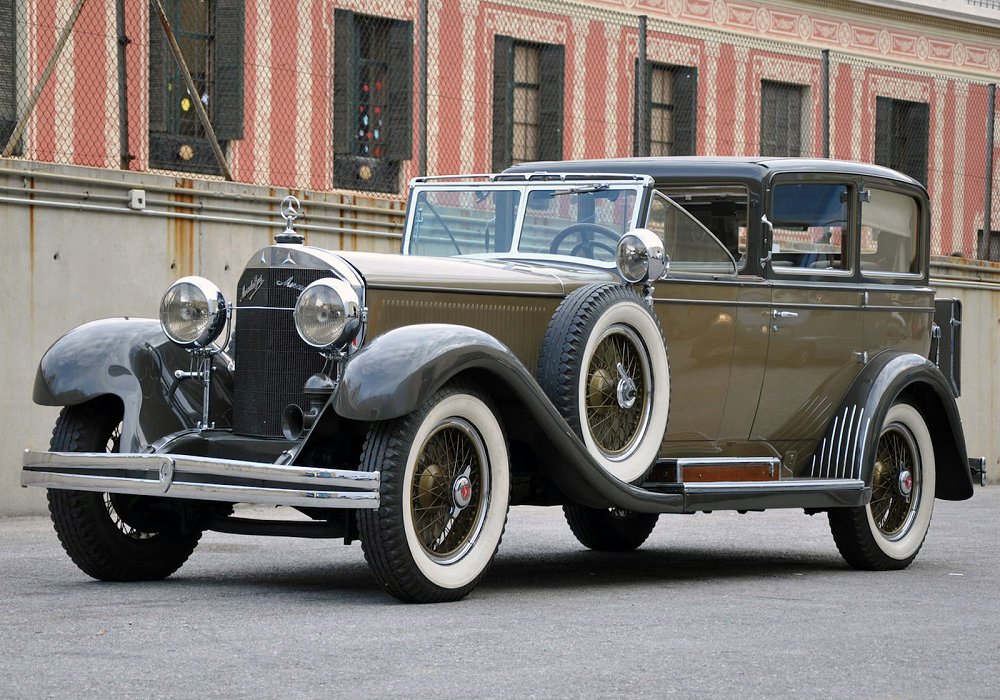
The Mercedes-Benz 24/100/160 PS Type 630 K Sedanca de Ville was one of the most formal and luxurious interpretations of Mercedes’ early supercharged flagship, combining the powerful 630 K chassis with the aristocratic body style traditionally used for chauffeur-driven motoring. Built during the mid-1920s, it stood at the very top of the luxury car hierarchy, offering an imposing presence, advanced engineering and bespoke coachbuilt craftsmanship tailored to the tastes of Europe’s wealthiest clients. The Sedanca de Ville version was particularly associated with ceremonial use, diplomatic transport and high-society travel, representing both prestige and power in equal measure.
The 630 K designation came from the shortened Kurz wheelbase and the enhanced performance of the Kompressor-equipped 6.3-litre inline-six engine. In standard, naturally aspirated running the engine produced around 100 horsepower, but once the driver opened the throttle fully, the mechanical supercharger engaged and raised output to roughly 160 horsepower. This surge of power transformed the car’s character, giving it performance far beyond what might be expected from a formal, chauffeur-driven body. The Kompressor system, already a Mercedes hallmark, delivered instant torque and a distinctive change in engine tone, ensuring that even a large Sedanca body could be propelled with surprising urgency.
The chassis beneath the Sedanca de Ville body was the short-wheelbase 630 K frame, a rigid and durable ladder-design engineered to handle both the weight of custom coachwork and the stresses of high-speed touring. Semi-elliptic leaf springs at the front and rear provided a smooth, controlled ride, while the adoption of four-wheel mechanical drum brakes gave the car confident stopping ability. The shorter wheelbase made the 630 K more agile and responsive than the earlier long-chassis 24/100/140 PS models, benefiting both the driver’s control and passenger comfort.
The Sedanca de Ville body style was the ultimate expression of formal motoring. Built by Europe’s leading coachbuilders—often Sindelfingen, but sometimes Erdmann & Rossi, Saoutchik, Gangloff or British specialists—it divided the car into two distinct compartments. The chauffeur sat in a semi-exposed front section, usually with only a folding roof panel above, while the rear passengers enjoyed a fully enclosed, richly appointed compartment. This configuration produced the classic Sedanca silhouette: long bonnet, upright windscreen, open front cockpit and an imposing enclosed rear cabin with a formal roofline.
Coachbuilders endowed the Type 630 K Sedanca de Ville with an elegant, stately appearance. Tall radiators, sweeping wings, side-mounted spare wheels and long running boards contributed to its authoritative presence. The proportions were balanced for grandeur rather than sportiness, yet the shorter wheelbase lent the car a slightly more compact and purposeful stance than the long-chassis versions. Despite its size, the Sedanca retained the crisp engineering lines that distinguished early performance Mercedes models.
Inside, the rear compartment offered the height of 1920s luxury. Plush seating, fine leather or broadcloth upholstery, polished wood trim and subtle lighting created an environment designed for quiet comfort. Many examples included partition windows, speaking tubes or later intercom systems, footrests, vanity sets and bespoke cabinetry. Thick carpets, silk curtains and high-quality fittings contributed to a sense of elegance suited to formal occasions. The chauffeur’s section, by contrast, was functional and businesslike, with large instruments, a tall gear lever and straightforward trim designed for durability.
On the road, the 24/100/160 PS 630 K Sedanca de Ville delivered a surprisingly dual character. Driven gently, the car behaved as a smooth, refined luxury vehicle, ideal for city travel or leisurely touring. When the Kompressor was engaged, however, the car’s performance transformed: strong acceleration, confident hill-climbing ability and a top speed impressive for such a large formal body. The rigid chassis, effective brakes and shorter wheelbase gave the car stability and authority at higher speeds, allowing it to cover long distances with ease and dignity.
Historically, the 630 K Sedanca de Ville represents the last great era of bespoke, chauffeur-driven supercharged Mercedes luxury before the company shifted emphasis toward the high-performance S-, SS- and SSK-type sports cars. The engineering foundations laid in the 630 K—supercharging, strong chassis construction and advanced braking—played a central role in the development of those later racing-influenced models.
Today, the Mercedes-Benz 24/100/160 PS Type 630 K Sedanca de Ville is exceptionally rare and highly prized among collectors. Its combination of technical innovation, imposing presence, luxurious coachwork and historical significance makes it one of the most desirable formal body styles of Mercedes’ early Kompressor era. It stands as a remarkable blend of aristocratic elegance and advanced German engineering, a true masterpiece of 1920s bespoke motoring.