Description
The Mercedes-Benz 240 D introduced in 1978 was part of the W123 series and represented one of the most respected diesel saloons of the late 1970s. By this time, the W123 range had already become synonymous with durability, safety and engineering integrity, and the 240 D sat at the heart of Mercedes-Benz’s diesel lineup. It offered a meaningful step up in performance over the smaller 200 D while retaining the legendary economy and longevity that defined Mercedes-Benz diesel cars of the era.
Power came from a 2.4-litre inline four-cylinder diesel engine producing approximately 65 horsepower. Although modest by modern standards, this engine delivered noticeably stronger torque than the 2.0-litre unit, making the 240 D better suited to real-world driving, particularly when carrying passengers or luggage. Acceleration was still unhurried, but cruising ability was improved, and the car could maintain motorway speeds with greater ease. A four-speed manual gearbox was standard, with an automatic transmission available for buyers who prioritised comfort and relaxed driving.
The W123 chassis provided an exceptionally strong and well-engineered foundation. The unitary body structure incorporated a rigid passenger safety cell with carefully designed crumple zones, reflecting Mercedes-Benz’s leading role in passive safety during the 1970s. Suspension consisted of double wishbones with coil springs at the front and a rear semi-trailing arm arrangement with coil springs, delivering a stable, comfortable ride even on poor road surfaces. Disc brakes were fitted at all four wheels, providing reliable and consistent stopping power appropriate to the car’s weight and performance.
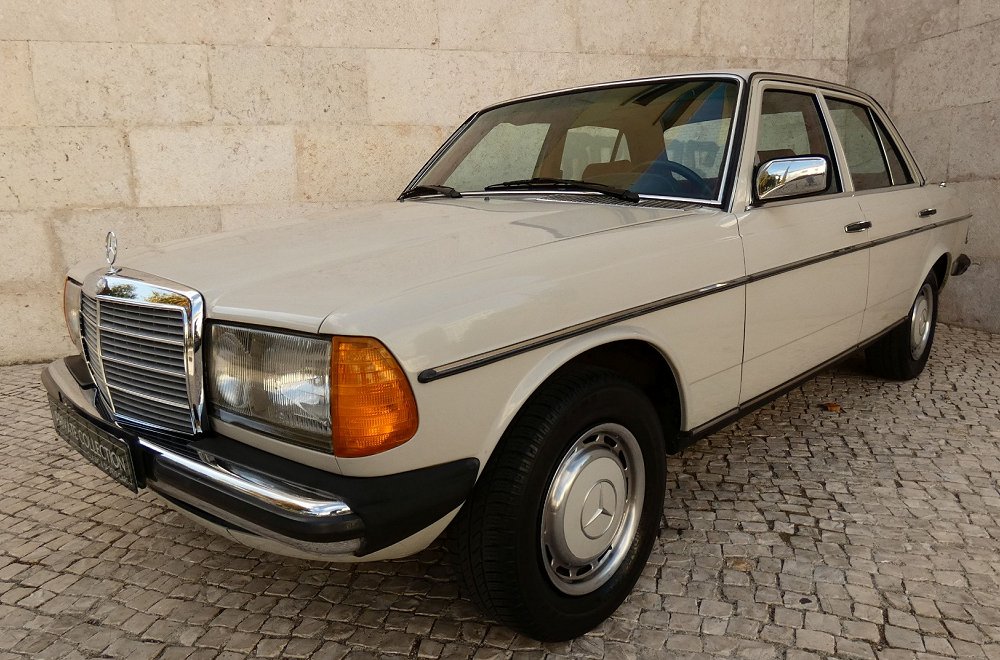
Styling of the 1978 Mercedes-Benz 240 D followed the clean, functional design language that made the W123 instantly recognisable. Straight body lines, a tall glasshouse and an upright grille gave the car a purposeful, professional appearance. Chrome detailing was restrained and functional rather than decorative, reinforcing the impression of solidity and durability. The design was conservative but timeless, and it quickly became associated with reliability in both private and professional use.
Inside, the cabin was spacious, practical and built to an exceptionally high standard. Seats were firm and supportive, designed for long hours behind the wheel, and trimmed in hard-wearing materials chosen for longevity. The dashboard layout was simple and logical, with clear instrumentation and excellent visibility. Interior fittings were robust and well assembled, contributing to the car’s reputation for surviving decades of continuous use.
In everyday driving, the Mercedes-Benz 240 D rewarded smooth, patient operation. While it was not fast, it offered predictable handling, excellent stability and low running costs. The additional torque over the 200 D made it more versatile, particularly for overtaking and sustained high-speed driving. Fuel consumption remained very low, making the 240 D especially attractive to taxi operators, fleet users and private owners who covered high annual mileages.
By 1978, the 240 D had already established itself as one of the definitive diesel saloons of its time. It struck an ideal balance between economy and usability, and many examples accumulated extremely high mileages with routine maintenance. Its ability to tolerate varying fuel quality and harsh operating conditions made it popular far beyond Europe, particularly in export markets.
Today, the Mercedes-Benz 240 D from 1978 is regarded as one of the most durable production cars ever built. It is valued not for speed or luxury, but for its mechanical honesty, engineering resilience and historical importance. As a central pillar of the W123 legend, the 240 D stands as a lasting symbol of an era when Mercedes-Benz designed diesel cars to work reliably for decades, often under the most demanding conditions.