Description
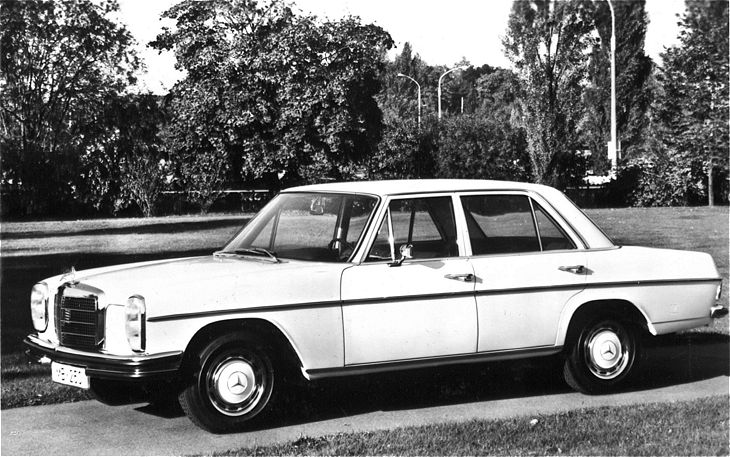
The Mercedes-Benz 250 was a prominent six-cylinder model within the W114/W115 series, introduced in 1968 as part of Mercedes-Benz’s new generation of mid-size executive cars. Positioned above the 230, the 250 offered increased performance and refinement while retaining the conservative engineering, safety focus and durability that defined Mercedes-Benz during the late 1960s and early 1970s. It was aimed at buyers who wanted smooth, effortless power without moving up to the larger and more expensive S-Class.
Power came from a 2.5-litre inline six-cylinder petrol engine. In early carburetted form, the engine produced approximately 130 horsepower, delivering noticeably stronger acceleration and more relaxed high-speed cruising than the 230. The engine was designed for smoothness and longevity rather than sportiness, with excellent balance and low vibration. A four-speed manual gearbox was standard, while automatic transmission was widely specified, reinforcing the 250’s role as a refined long-distance saloon.
The W114 chassis represented a major step forward in Mercedes-Benz engineering. The car used a rigid unitary body with a carefully engineered safety cell and front and rear crumple zones, reflecting the company’s leadership in passive safety. Suspension consisted of double wishbones with coil springs at the front and a rear semi-trailing arm setup with coil springs, providing a comfortable ride and predictable handling. Front disc brakes and rear drums delivered reliable and confidence-inspiring stopping power appropriate to the car’s performance.
Styling of the Mercedes-Benz 250 was clean, restrained and modern, marking a clear departure from the finned designs of the early 1960s. Straight body lines, a large glass area and an upright grille gave the car a dignified and timeless appearance. Chrome detailing was subtle, and the overall design prioritised clarity and function over decoration, a theme that would define Mercedes-Benz saloons for decades.
Inside, the 250 offered a spacious and exceptionally solid cabin. Seating was upright, supportive and well suited to long-distance driving. Interior materials were chosen for durability rather than luxury, but build quality was exemplary, with tight panel fit and long-lasting trim. The dashboard layout was logical and uncluttered, with clear instrumentation and excellent outward visibility, reinforcing the car’s reputation as a driver-friendly executive saloon.
On the road, the Mercedes-Benz 250 delivered a calm and assured driving experience. The six-cylinder engine provided smooth, flexible power, making motorway and autobahn driving particularly effortless. Handling was stable and predictable, favouring comfort and composure over agility. The car responded best to smooth, measured driving and excelled at covering long distances with minimal fatigue.
The 250 was popular with professionals, senior executives and private owners who valued refinement, reliability and understated prestige. It was widely used across Europe and export markets, often accumulating high mileages thanks to its robust mechanical design and ease of maintenance. Its balance of performance and comfort made it one of the most desirable variants in the W114 range.
Today, the Mercedes-Benz 250 is regarded as a highly respected classic from a period when Mercedes-Benz engineering focused on longevity and safety above all else. Surviving examples are valued for their smooth six-cylinder engines, solid construction and timeless design. As a refined and capable executive saloon, the 250 represents the W114 series at its most balanced and remains a strong symbol of Mercedes-Benz’s reputation for building cars designed to last for decades.