

Description
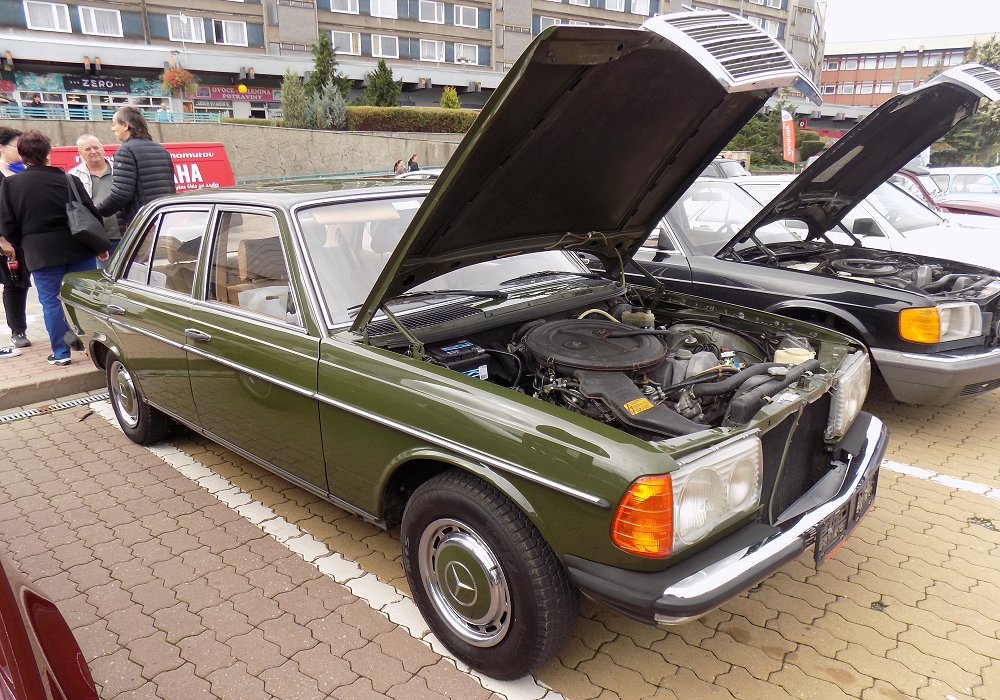
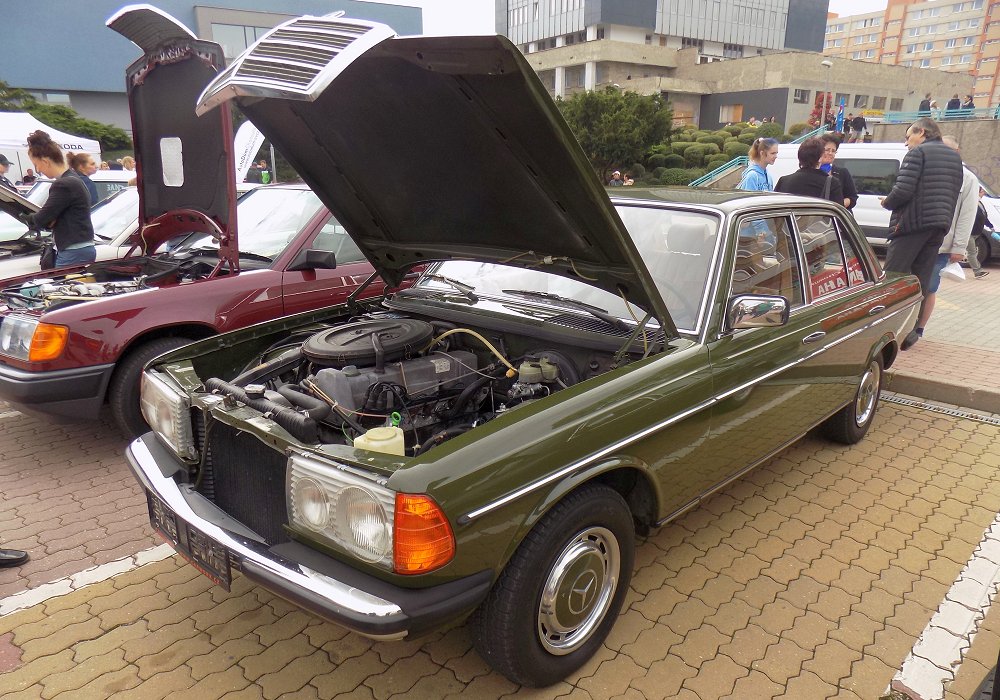
The Mercedes-Benz 250 in 1976 belonged to the W114/W115 generation and represented one of the final appearances of Mercedes-Benz’s classic carburetted six-cylinder mid-size saloon before the W123 fully replaced the range. By this point, the model had benefited from several years of incremental refinement, making the 250 a mature, well-engineered car that balanced smooth performance with the durability and safety for which Mercedes-Benz was already renowned.
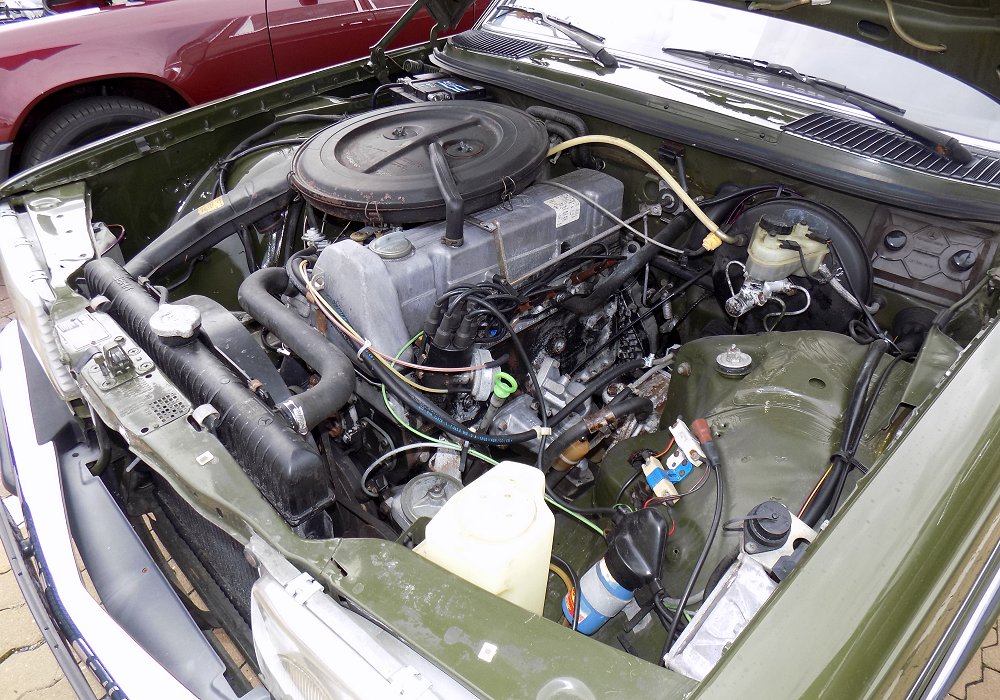
Power came from a 2.5-litre inline six-cylinder petrol engine, producing approximately 129 horsepower in its later form. This engine was valued for its smoothness, flexibility and quiet operation rather than outright speed. Acceleration was confident for the period, and the car was particularly well suited to sustained motorway and autobahn cruising, where the six-cylinder’s relaxed nature came into its own. A four-speed manual gearbox was standard, while an automatic transmission was widely available and commonly specified by buyers seeking maximum comfort.
The chassis was based on Mercedes-Benz’s robust unitary body construction, featuring a strong passenger safety cell and carefully engineered crumple zones. Suspension consisted of double wishbones with coil springs at the front and a rear semi-trailing arm arrangement with coil springs, delivering predictable handling and a comfortable ride. Compared with earlier swing-axle designs, this layout provided improved stability and safety, particularly at higher speeds. Front disc brakes and rear drum brakes offered reliable and progressive stopping power consistent with the car’s performance.
Styling of the 1976 Mercedes-Benz 250 followed the clean, restrained design language of the W114/W115 series. Straight body lines, an upright grille and a large glass area gave the car a dignified and timeless appearance. Chrome detailing was subtle, reinforcing the sense of solidity and professionalism rather than luxury or sportiness. By the mid-1970s, the design was conservative but well respected, appealing to buyers who valued understatement over fashion.
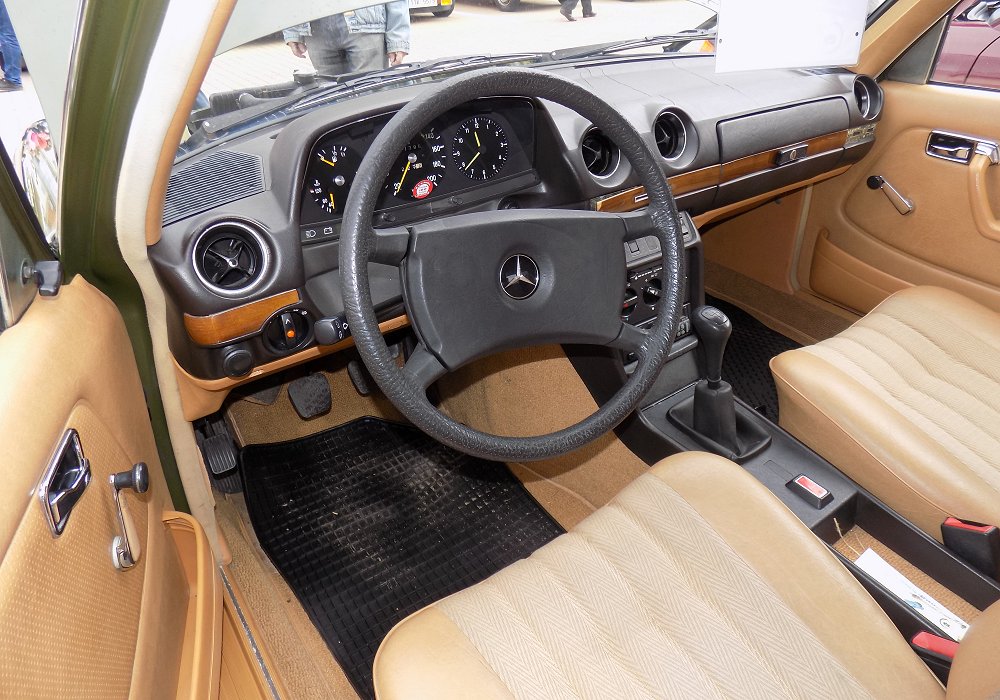
Inside, the cabin was spacious, practical and built to a very high standard. Seats were upright and supportive, ideal for long-distance travel, and interior materials were chosen for durability rather than visual extravagance. The dashboard layout was logical and uncluttered, with clear instrumentation and excellent visibility, reflecting Mercedes-Benz’s strong emphasis on ergonomics and driver confidence.
On the road, the Mercedes-Benz 250 delivered a calm and composed driving experience. The six-cylinder engine provided smooth, effortless power, making the car feel noticeably more refined than four-cylinder variants. Handling was stable and predictable, favouring comfort and composure over agility. Steering was accurate but relatively heavy at low speeds, and the car responded best to smooth, unhurried driving.
By 1976, the 250 appealed primarily to professionals and private owners who wanted a petrol alternative to the increasingly popular diesel models, without stepping up to the larger S-Class. Its balance of performance, comfort and reliability made it a capable everyday car as well as a relaxed long-distance cruiser.
Today, the Mercedes-Benz 250 from 1976 is appreciated as a representative example of late W114/W115 engineering. It stands at the end of an era just before the W123 became dominant, reflecting Mercedes-Benz’s traditional approach to refinement through careful evolution rather than radical change. Valued for its smooth six-cylinder engine, solid construction and understated character, the 250 remains a respected and authentic classic within the brand’s mid-size saloon history.