Description
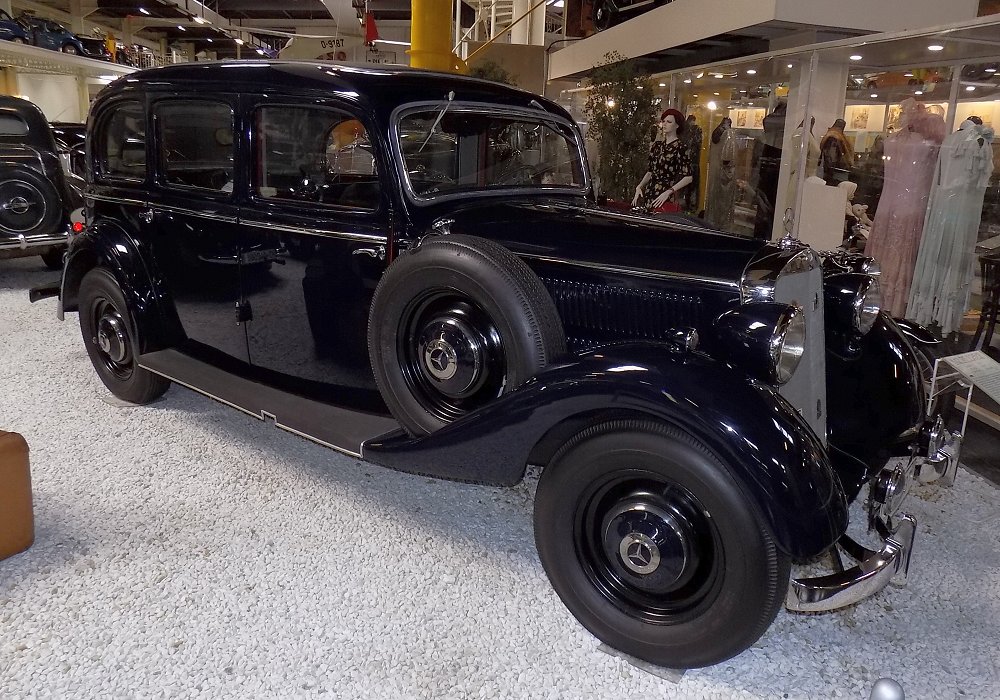
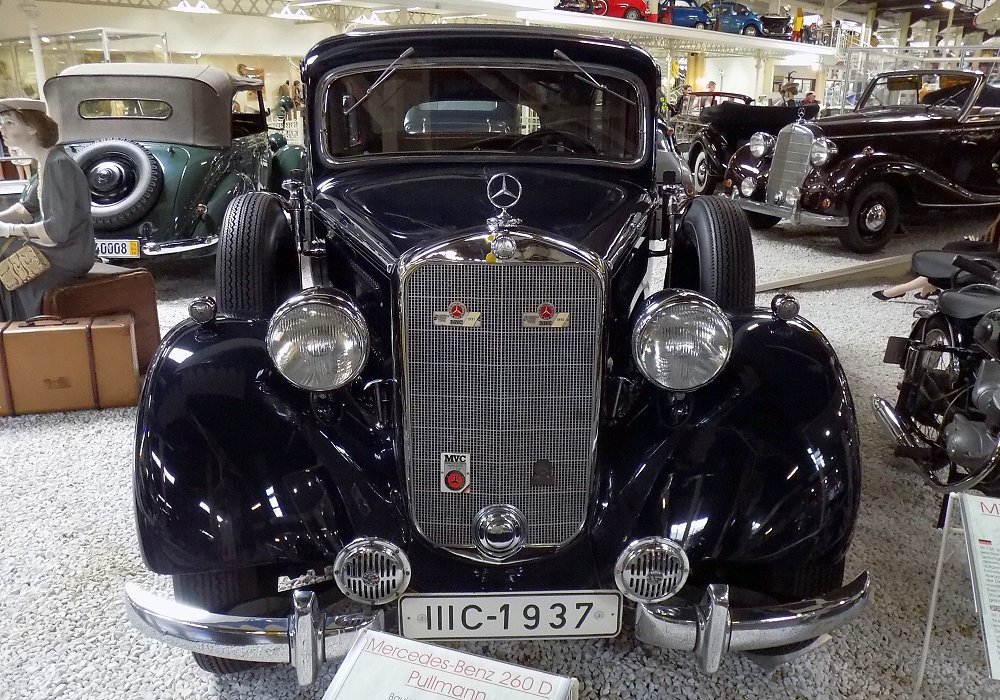
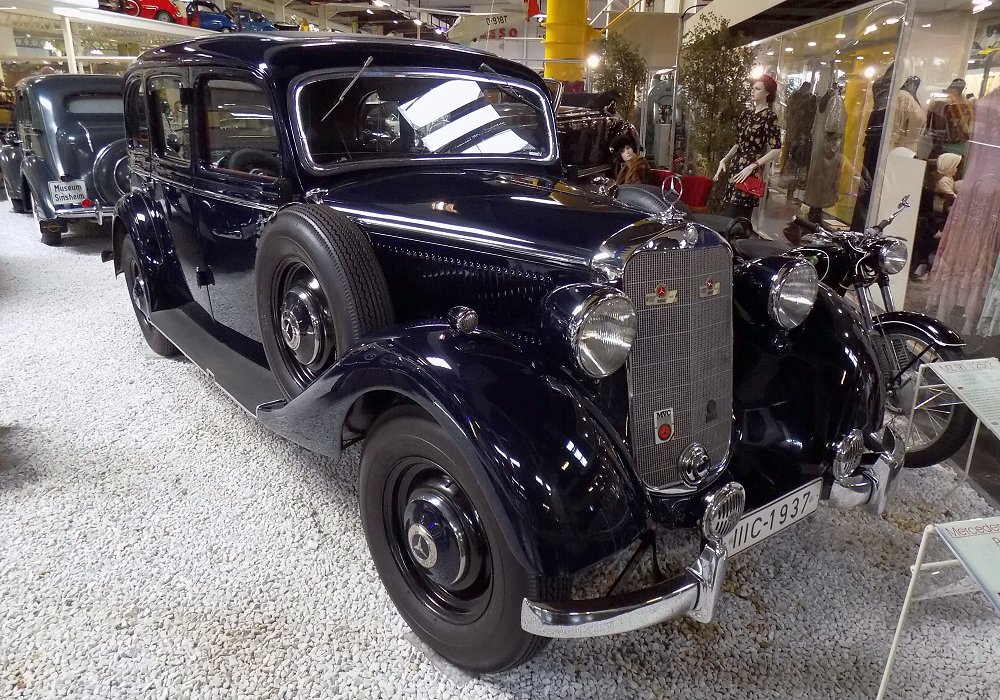
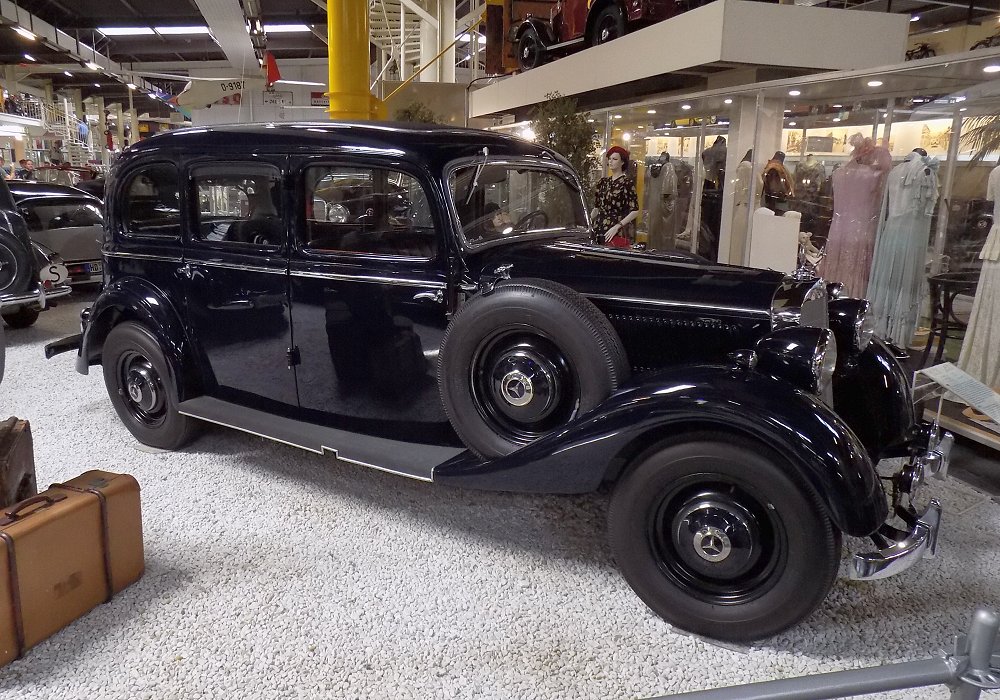
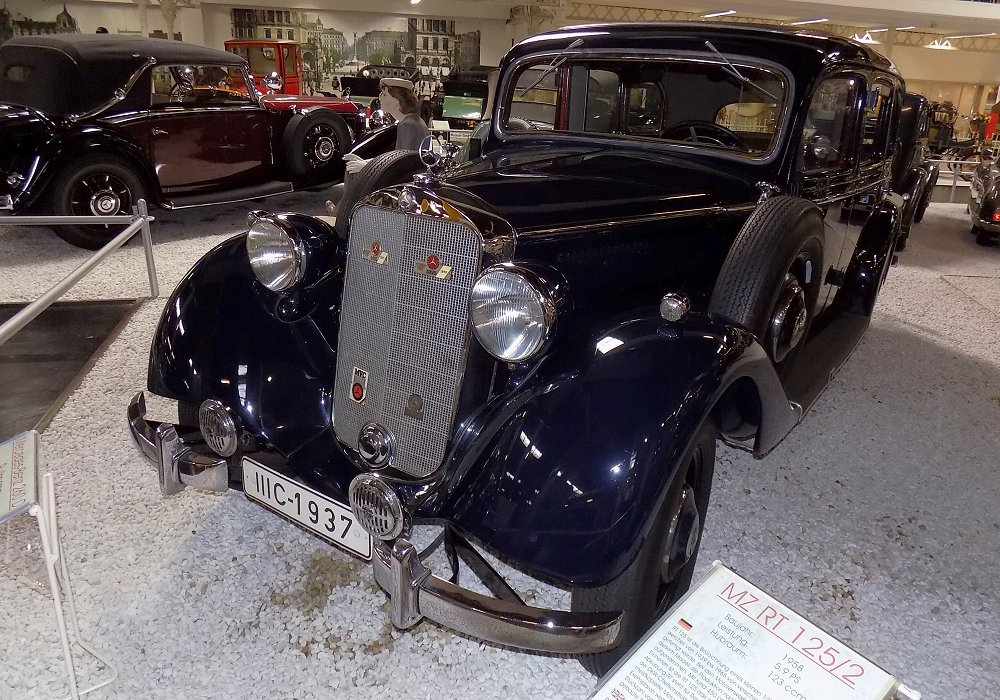
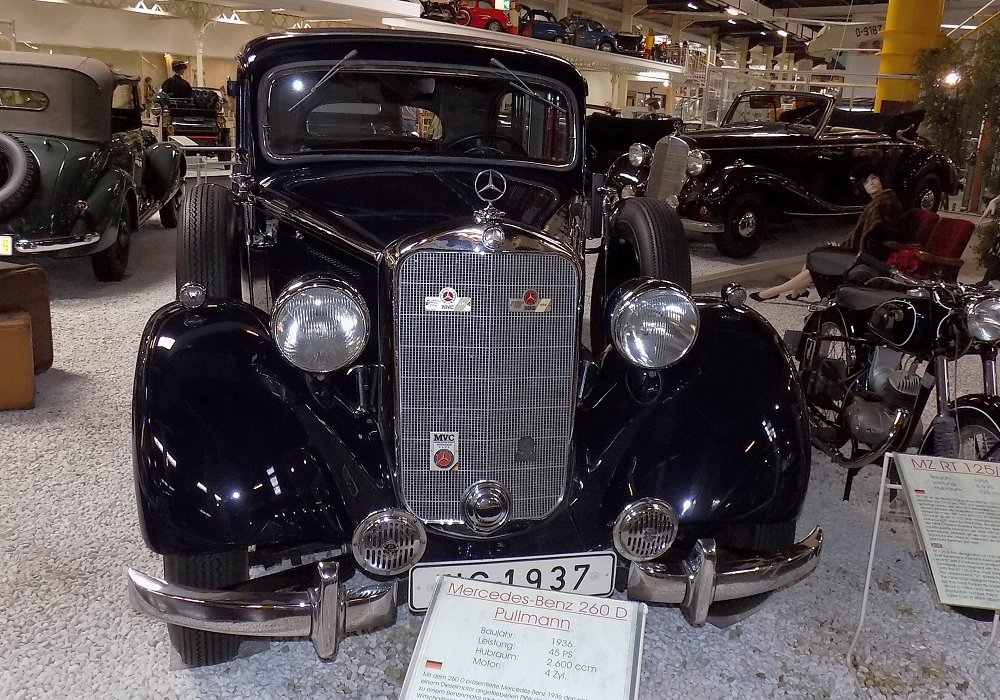
The Mercedes-Benz 260 D Pullman was the most prestigious and spacious variant of the pioneering W138 diesel model line, introduced in 1936 as the world’s first series-production diesel passenger car. While the standard 260 D saloons and landaulets were primarily aimed at professional and commercial use, the Pullman represented the top of the range: a long-wheelbase, chauffeur-orientated formal limousine designed for institutions, government bodies, high-ranking officials and large private hotels. It combined the remarkable economy and longevity of Mercedes’ early diesel technology with the commanding presence and generous interior space associated with Pullman-class Mercedes models.
Power came from the groundbreaking OM138 diesel engine, a 2.6-litre four-cylinder unit producing about 45 horsepower. Though modest in output, the engine’s significance lay in its mechanical endurance and fuel efficiency. It delivered strong low-speed torque and was engineered for extremely long service life, making it ideal for heavy professional use. Its slow-revving, smooth operation gave the Pullman a steady, unhurried character. The four-speed manual gearbox was geared to suit the diesel’s torque delivery, allowing relaxed cruising even when fully loaded with passengers. The 260 D Pullman was not fast, but it was extraordinarily dependable and economical, traits that made it highly valued by drivers and fleet operators.
The Pullman was built on the longest chassis available within the W138 programme. The extended wheelbase provided exceptional interior space and created the commanding stance expected of a formal limousine. The ladder-frame structure was robust enough to support the heavy, fully enclosed Pullman body and its additional passengers. Semi-elliptic leaf springs at both axles provided a soft, compliant ride, well suited to the limousine’s ceremonial and comfort-orientated role. Mechanical drum brakes offered reliable stopping power, and the steering—though firm at low speeds—was predictable and steady once the car was moving. The long wheelbase delivered excellent stability on long routes and contributed to the car’s authoritative road presence.
The bodywork, crafted by Sindelfingen, gave the 260 D Pullman its characteristic grandeur. The long bonnet, tall radiator grille and sweeping wings established a dignified frontal appearance. Behind the driver’s compartment, the extended passenger cabin featured large doors, generous window surfaces and ample headroom. Depending on specification, the interior could be configured with forward-facing seats, fold-down jump seats or a combination designed for institutional or executive transport. The emphasis was always on space, comfort and professional presentation. Trim materials ranged from durable cloth for commercial fleets to more refined finishes for private or governmental use.
Inside, the Pullman offered a formal and impressive environment. The rear cabin provided exceptional legroom, making it suitable for high-ranking officials, travelling dignitaries and VIP hotel guests. Upholstery was typically robust and comfortable, and the seat design allowed long periods of travel without fatigue. The dashboard layout matched the standard 260 D, with clear instruments and simple, durable controls, while the chauffeur’s compartment was more functional than ornate. The interior design focused on practicality, dignity and ease of maintenance, reflecting the car’s expected long-term role in demanding service conditions.
On the road, the 260 D Pullman delivered a calm, measured driving experience. The diesel engine’s quiet, torque-rich operation suited the limousine’s leisurely mission, and the long wheelbase smoothed out road irregularities with ease. It was ideal for city routes, hotel transfers, railway station service and cross-country journeys where reliability mattered more than speed. The Pullman’s substantial size and height gave passengers an elevated, secure feeling, while the engine’s exceptional fuel economy made it far cheaper to operate than petrol-powered limousines of similar scale.
The 260 D Pullman quickly became favoured by government agencies, public institutions and taxi fleets that required large, dependable vehicles. Its diesel economy allowed significant cost savings, while its imposing appearance ensured that it suited formal duties. The model played a vital role in establishing Mercedes-Benz as the leader in diesel-powered passenger vehicles, a legacy that would continue for decades.
Today, the Mercedes-Benz 260 D Pullman is considered a landmark vehicle in automotive history. Very few examples survive, as most spent long working lives in demanding professional service. Collectors prize the Pullman for its rarity, its technical significance as part of the first diesel passenger-car series, and its imposing pre-war ceremonial presence. As both an engineering milestone and a symbol of early Mercedes-Benz durability, the 260 D Pullman stands as one of the most historically important limousines of its era.