Description
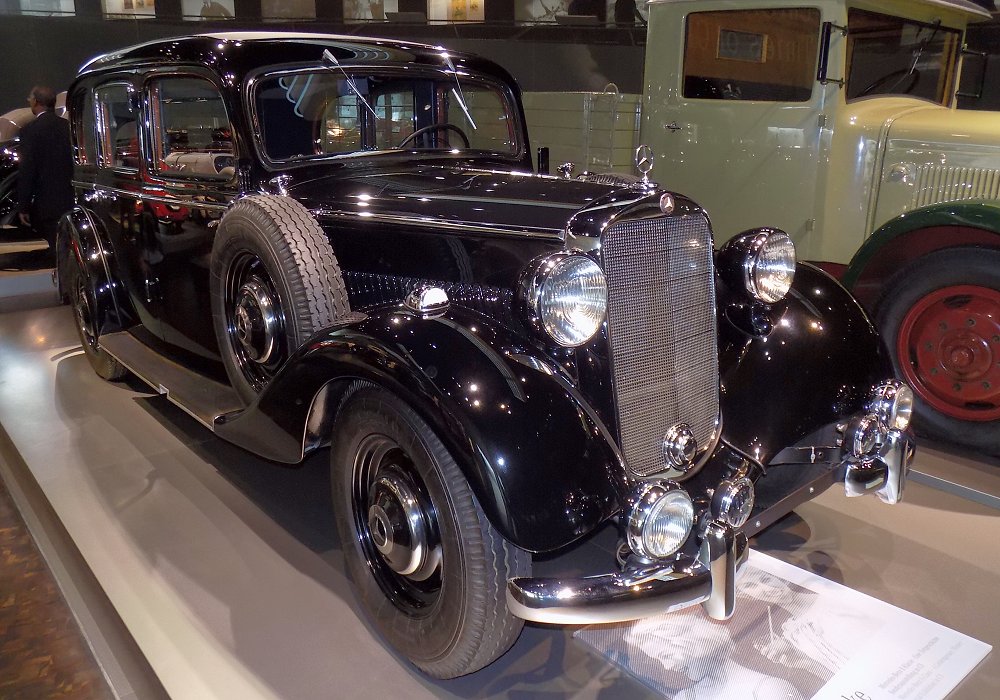
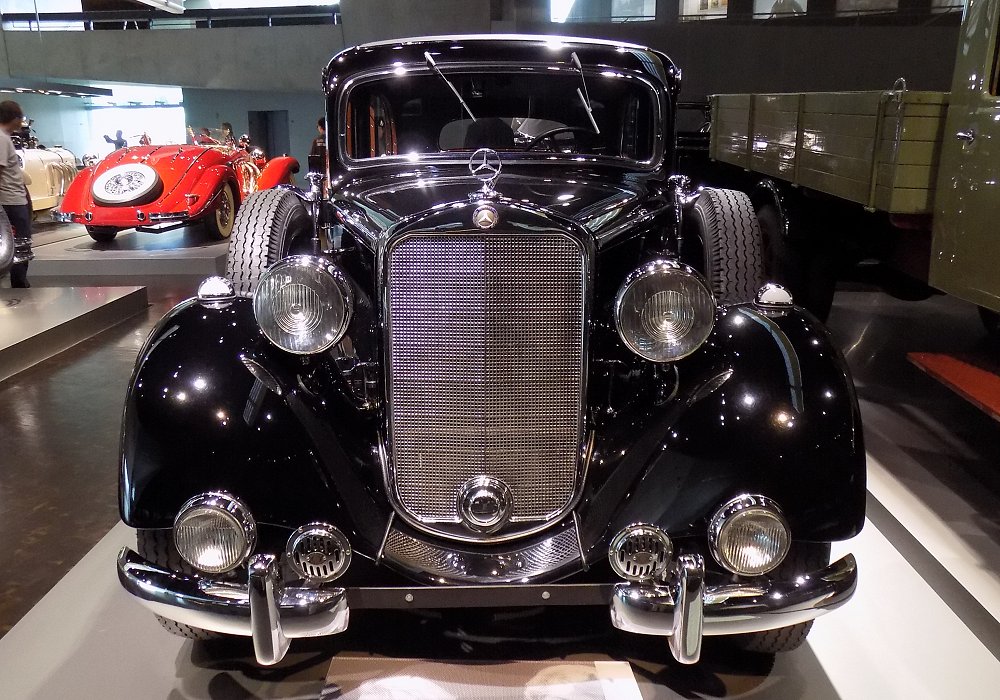
The Mercedes-Benz 260 D Pullman Limousine was the most formal and imposing closed-body variant of the pioneering W138 diesel range, introduced in 1936 as part of the world’s first series-produced diesel passenger car family. Designed for official duties, institutional fleets, long-distance taxi service and high-ranking private clients, the Pullman Limousine combined the extraordinary economy and durability of Mercedes’ groundbreaking OM138 diesel engine with the spaciousness and dignity expected of a true Pullman-class Mercedes. It represented the peak of pre-war diesel luxury and laid the foundation for the company’s long tradition of executive-class diesel limousines.
The car was powered by the OM138, a 2.6-litre four-cylinder diesel producing roughly 45 horsepower. Though modest in output, the engine’s importance lay in its reliability, longevity and efficiency. It delivered strong torque at low speeds and ran with a slow, steady smoothness ideal for heavy service. The engine’s operating costs were significantly lower than comparable petrol engines of the period, which made the Pullman Limousine exceptionally attractive to taxi companies, government fleets and institutions transporting passengers over long distances. The four-speed manual gearbox was geared to complement the diesel’s torque characteristics, enabling relaxed cruising even when fully loaded.
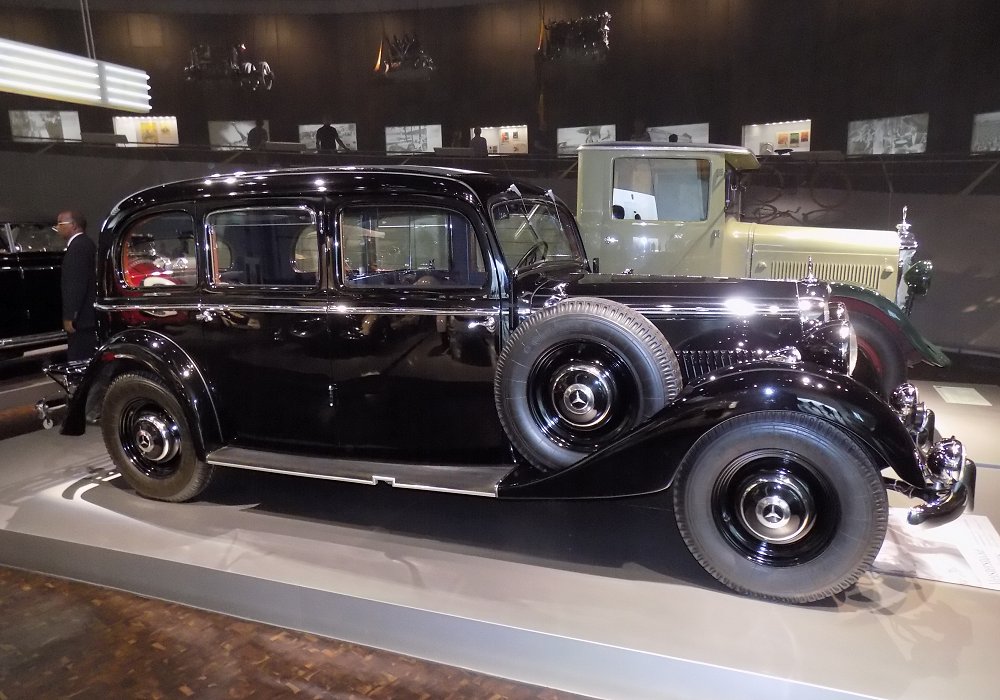
The Pullman Limousine was built on the longest chassis of the W138 programme, providing exceptional space in the rear compartment and a dignified, elongated silhouette. The robust ladder-frame construction was designed to accommodate the weight of the diesel engine and the large, formal body. Suspension consisted of semi-elliptic leaf springs at both axles, producing a soft and comfortable ride that suited the limousine’s ceremonial and professional role. Mechanical drum brakes on all four wheels ensured reliable stopping power, while the long wheelbase delivered outstanding stability at touring speeds and on rougher roads. The steering was typically firm at low speeds but became smoother and more controlled once underway.
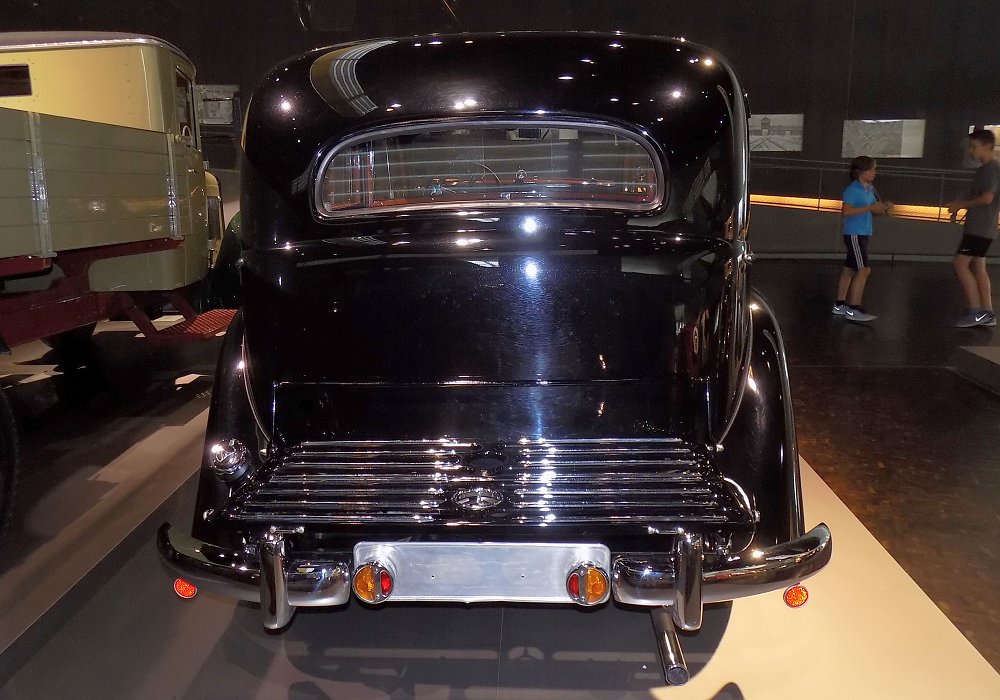
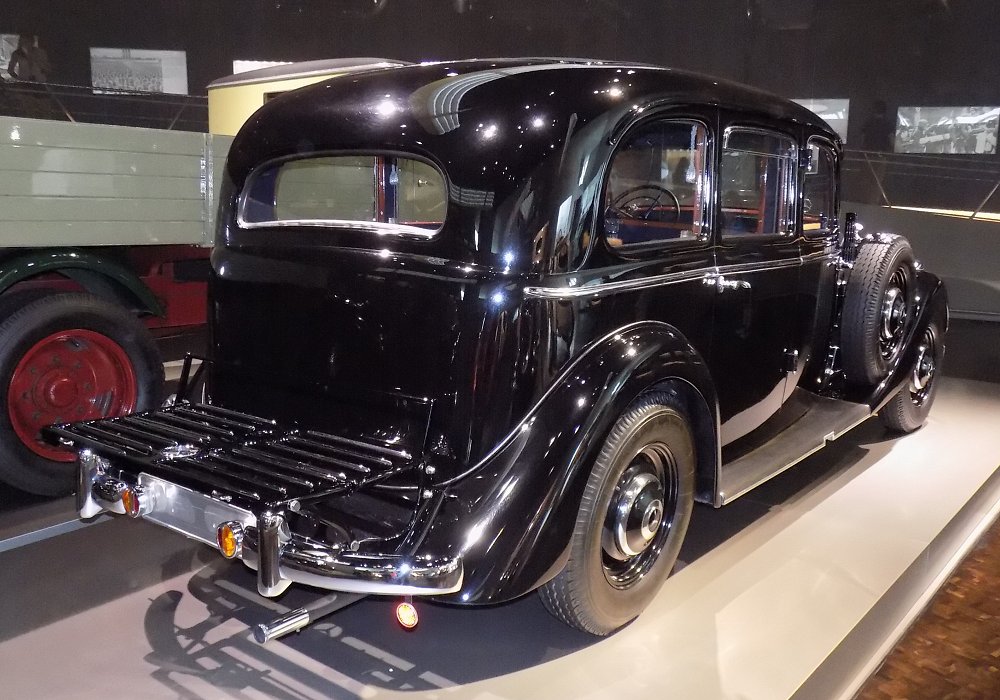
Stylistically, the 260 D Pullman Limousine embodied the pre-war Mercedes approach to formal design. A tall, upright radiator grille, long bonnet and sweeping front wings formed a commanding front profile, while the extended cabin featured large doors, wide side windows and a tall roofline that ensured excellent interior space. Sindelfingen coachwork guaranteed high build quality, precise panel fit and robust durability. The closed body created a quiet, sheltered environment for passengers, making the car suitable for year-round official duties.
Inside, the Pullman Limousine offered a spacious, comfortable and dignified cabin. Depending on specification, the rear compartment could be arranged with a full rear bench, additional jump seats or a semi-formal arrangement suitable for diplomatic or executive transport. Upholstery ranged from durable cloth for heavy-duty taxi or institutional service to leather and higher-grade materials for private buyers. The chauffeur’s compartment was functional and straightforward, with clear instrumentation and controls designed for long hours of operation. The emphasis throughout the cabin was on comfort, practicality and durability rather than ornate decoration.
On the road, the 260 D Pullman Limousine delivered a calm, unhurried driving experience. The diesel engine provided steady torque and excellent fuel economy, making the car ideal for long-route taxi work, hotel transfer service, government duties and institutional transport. The long wheelbase allowed the car to glide over uneven surfaces with a gentle, rolling motion, ensuring that rear passengers experienced a smooth and relaxing ride. While the car was not designed for speed or agility, it excelled in reliability, efficiency and comfort—qualities that made it indispensable in the markets it served.
The 260 D Pullman Limousine contributed significantly to the early acceptance of diesel engines in passenger transport. Taxi companies embraced it for its low running costs, while government and official fleets valued its dependability and dignified appearance. Though production numbers were modest, the Pullman Limousine had a meaningful impact on professional transport in the late 1930s and early post-war years. Most examples saw long, demanding service lives, which makes surviving vehicles extremely rare today.
In the modern era, the Mercedes-Benz 260 D Pullman Limousine is revered as a historical milestone. It stands as one of the earliest examples of a large diesel-powered executive limousine and reflects Mercedes-Benz’s forward-thinking engineering at a time when diesel propulsion was still in its infancy for passenger cars. Collectors prize it not only for its rarity but also for its symbolic role in establishing the durability and efficiency that would later define generations of Mercedes diesel vehicles.