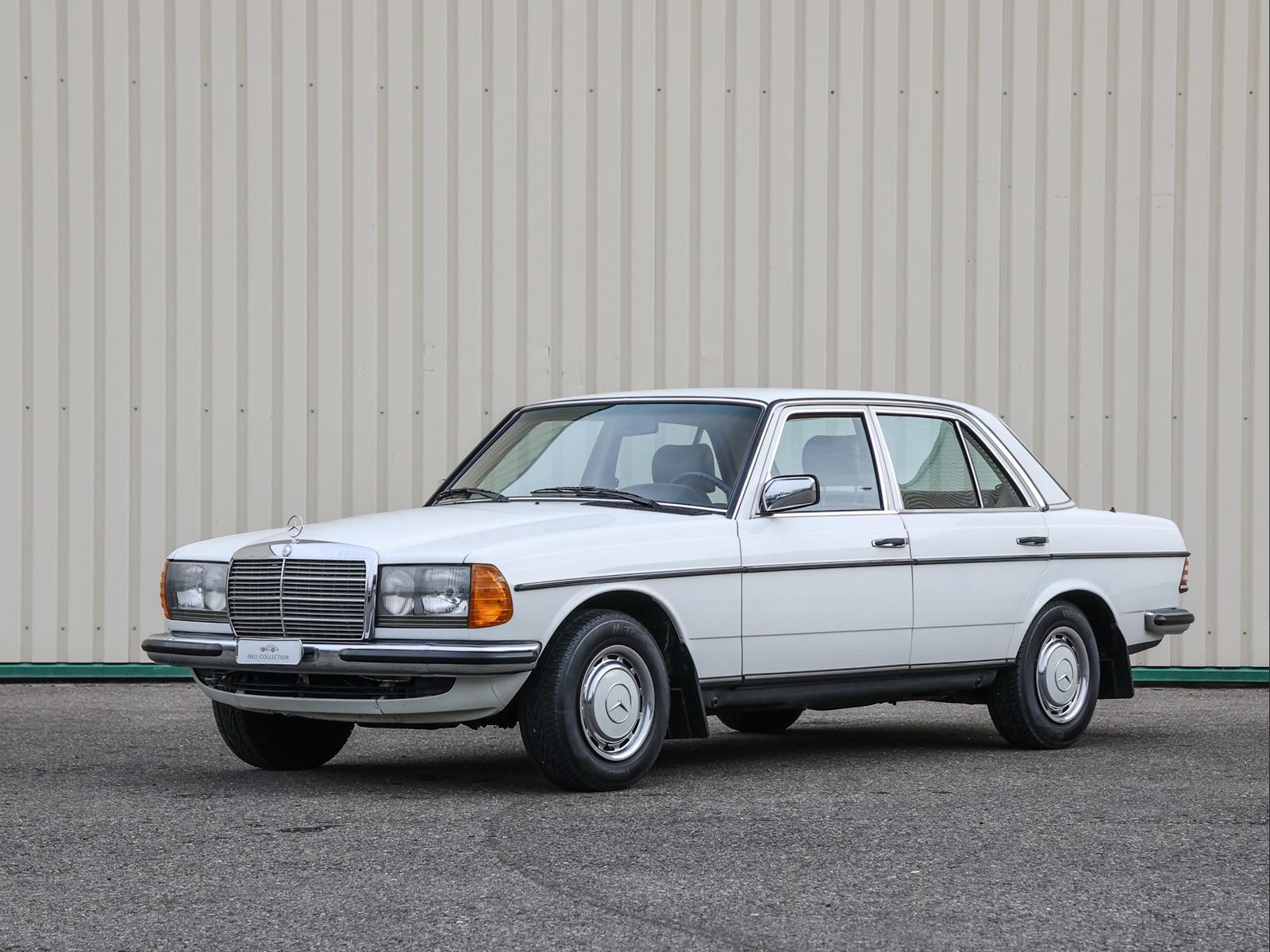
Description
The Mercedes-Benz 280 E was the fuel-injected six-cylinder flagship of the W123 saloon range and represented one of the most refined and capable executive cars of its era. Introduced in the late 1970s, the 280 E sat at the top of the petrol lineup and combined strong performance, advanced engine technology and the legendary build quality for which Mercedes-Benz became famous during this period. It was aimed at buyers who wanted effortless performance and long-distance comfort without moving up to the S-Class.
Power came from a 2.8-litre inline six-cylinder petrol engine equipped with Bosch K-Jetronic mechanical fuel injection. Producing approximately 185 horsepower, this engine delivered a substantial performance advantage over the four-cylinder models and even the smaller six-cylinder variants. Throttle response was smooth and immediate, and the engine was particularly strong in the mid-range, making overtaking and high-speed cruising easy and relaxed. The 280 E could be paired with a four-speed manual gearbox or a three-speed automatic transmission, with the automatic being the most common choice due to its refined, effortless character.
The W123 chassis provided a superb foundation for the 280 E’s performance. The unitary body structure was exceptionally strong and incorporated a rigid passenger safety cell with carefully engineered crumple zones. Suspension consisted of double wishbones with coil springs at the front and a rear semi-trailing arm layout with coil springs, delivering excellent ride comfort and predictable handling. Disc brakes were fitted at all four wheels, providing confident and consistent stopping power to match the car’s higher performance.
Styling of the Mercedes-Benz 280 E followed the restrained, functional design language that defined the W123 range. Straight body lines, a tall glasshouse and an upright grille gave the car a dignified, professional appearance. Chrome detailing was subtle and purposeful rather than decorative. Externally, the 280 E differed little from lesser models, reinforcing Mercedes-Benz’s philosophy that performance and engineering sophistication did not need overt visual expression.
Inside, the 280 E offered a spacious, well-appointed and extremely solid cabin. Materials were chosen for durability and long-term use, with high-quality plastics, robust switchgear and excellent fit and finish. Seats were firm and supportive, designed for extended journeys, and higher specifications often included leather upholstery, wood trim, automatic climate control and other comfort features. Instrumentation was clear and logically arranged, maintaining Mercedes-Benz’s strong emphasis on ergonomics and driver confidence.
On the road, the 280 E delivered a calm yet authoritative driving experience. Acceleration was brisk for a saloon of its size and era, while motorway cruising was effortless and quiet. The chassis remained composed at speed, and the suspension absorbed poor road surfaces with ease. Steering was accurate and reassuring, favouring stability and smoothness over sporting sharpness. The car rewarded measured, confident driving and excelled at covering long distances with minimal fatigue.
The Mercedes-Benz 280 E was popular with senior professionals, executives and private owners who valued refinement, performance and reliability. It was also widely respected for its mechanical robustness, with many examples covering very high mileages when properly maintained. In period, it was regarded as one of the finest all-round executive saloons available, offering S-Class levels of performance and comfort in a more compact and discreet package.
Today, the Mercedes-Benz 280 E is considered one of the most desirable petrol W123 models. It is valued for its smooth and powerful fuel-injected engine, exceptional build quality and timeless design. As the performance pinnacle of the W123 petrol range, the 280 E stands as a lasting example of Mercedes-Benz’s engineering philosophy at its peak, combining durability, refinement and understated authority in a single, highly respected model.