Description
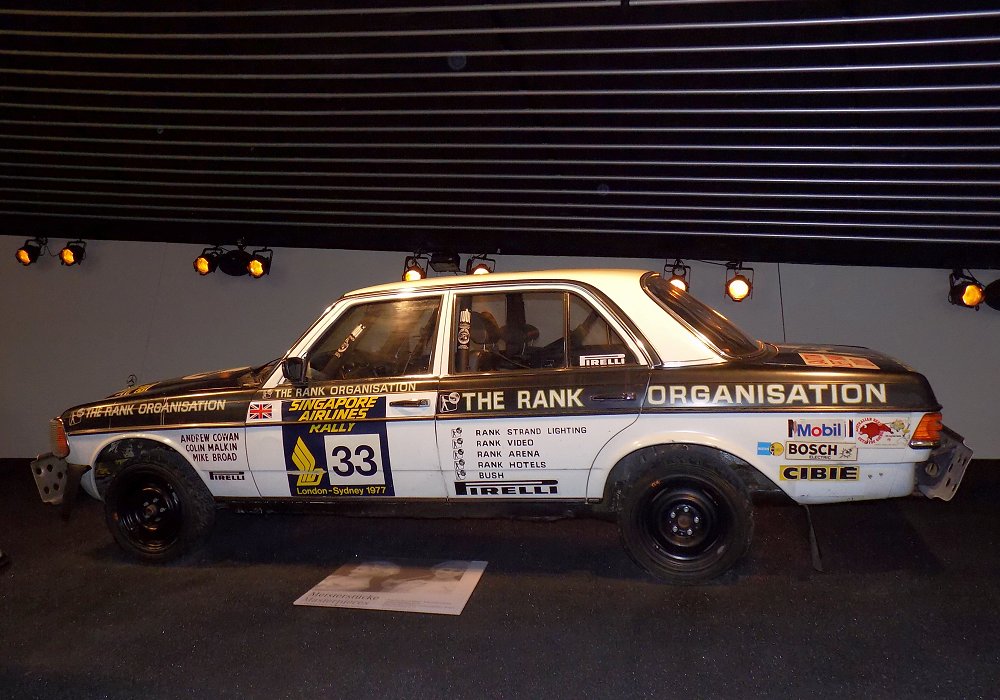
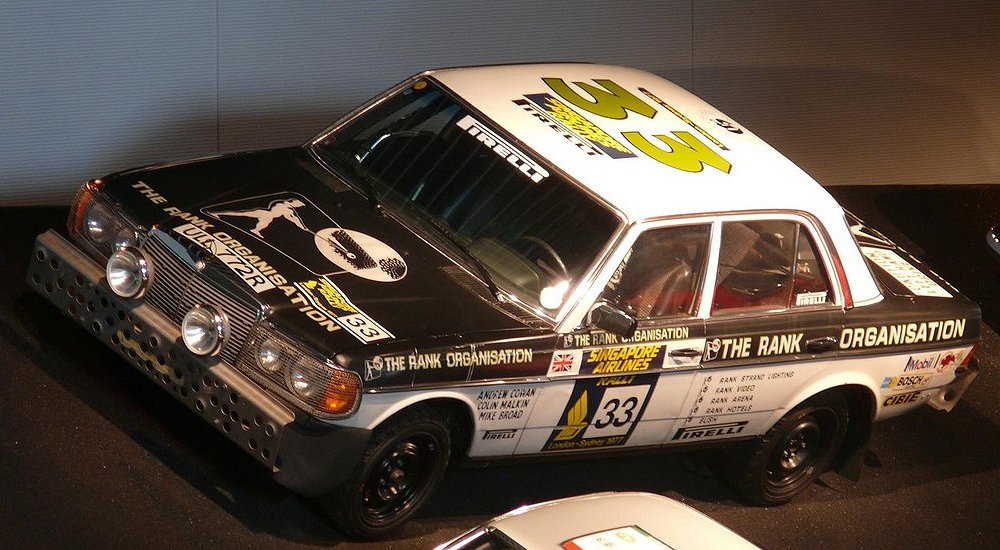
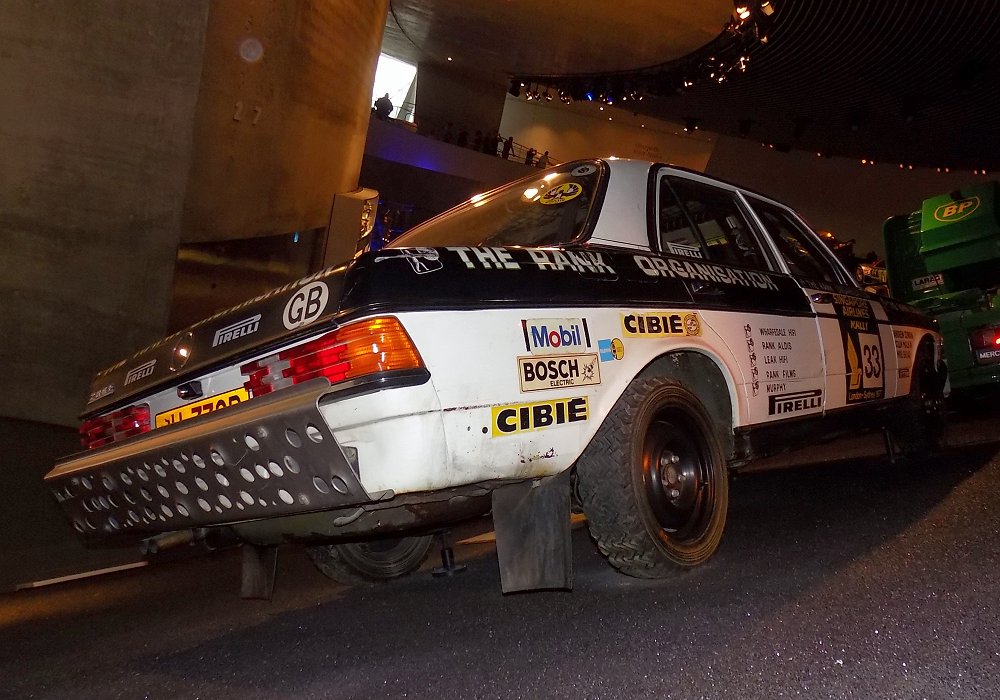
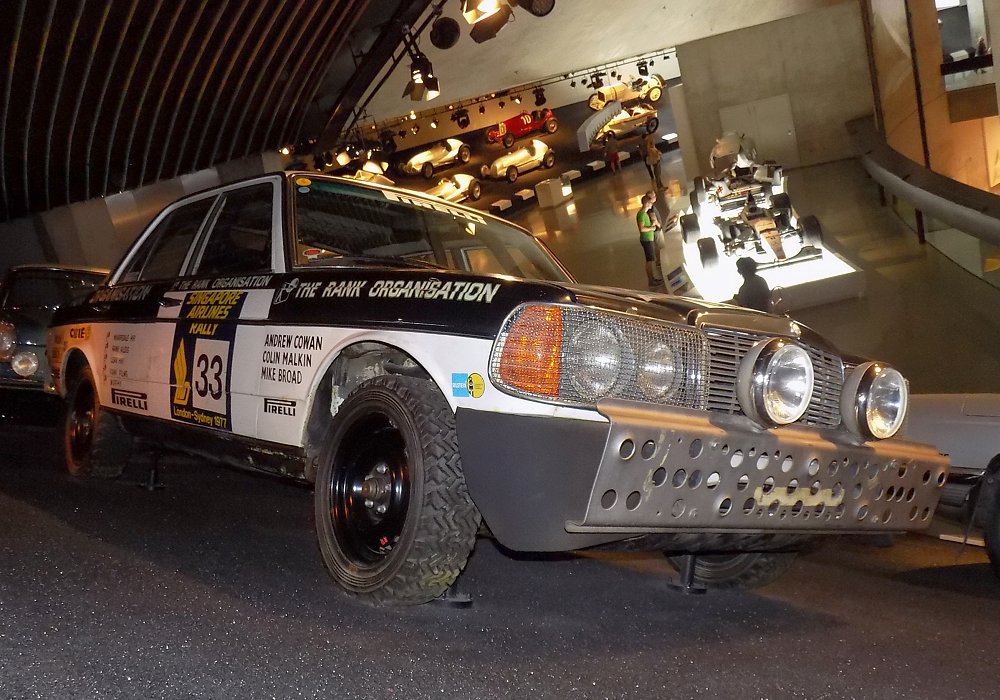
The Mercedes-Benz 280 E Rallye was a competition-focused interpretation of the W123-based 280 E, developed for long-distance rallying rather than circuit racing. It demonstrated Mercedes-Benz’s belief that durability, stability and engineering discipline could be just as effective in motorsport as outright lightness or extreme tuning. The Rallye cars were not mass-produced showroom models, but factory-prepared or semi-works competition vehicles built to withstand punishing conditions in international endurance rallies.
The base for the Rallye version was the Mercedes-Benz 280 E saloon, powered by a 2.8-litre inline six-cylinder petrol engine with Bosch K-Jetronic mechanical fuel injection. In standard road trim this engine produced around 185 horsepower, but for rally use it was tuned with an emphasis on reliability, torque delivery and cooling rather than peak output. Modifications typically included reinforced engine components, revised ignition and fuel mapping, uprated cooling systems and heavy-duty lubrication to cope with sustained high loads and extreme temperatures.
Power was delivered to the rear wheels through a strengthened manual gearbox, often with revised ratios suited to mixed-surface rally stages and long liaison sections. Unlike many contemporary rally cars that pursued lightweight construction, the 280 E Rallye retained much of its standard body structure. This resulted in a heavier car, but one with exceptional robustness and the ability to survive events that destroyed less durable competitors.
Chassis preparation was extensive. Suspension components were reinforced and revalved to cope with rough surfaces, jumps and long-distance abuse. Ride height was often increased, and stronger springs and dampers were fitted to maintain control over broken terrain. Steering and braking systems were uprated for endurance reliability, and underbody protection was added to safeguard vital mechanical components during off-road stages.
Externally, the Mercedes-Benz 280 E Rallye remained relatively discreet compared with purpose-built rally specials from other manufacturers. Bodywork changes were functional rather than dramatic, typically including additional lighting for night stages, reinforced bumpers, mud flaps and protective skid plates. The understated appearance reflected Mercedes-Benz’s philosophy that competition success came from engineering strength rather than visual aggression.
Inside, the cabin was stripped and adapted for rally use. Sound insulation and unnecessary trim were removed, and a full roll cage was installed to improve safety and chassis rigidity. Rally seats with multi-point harnesses replaced the standard seating, and additional instrumentation was fitted to monitor engine and vehicle health. Navigation equipment for the co-driver was also installed, underlining the car’s focus on endurance rallying rather than short sprint events.
In competition, the Mercedes-Benz 280 E Rallye proved particularly effective in long, gruelling rallies where reliability and consistency were more important than outright speed. It was well suited to events such as African and South American endurance rallies, where heat, dust and poor road conditions tested vehicles to their limits. The car’s stability at high speeds, strong brakes and resilient drivetrain allowed it to maintain competitive pace over vast distances.
The most famous chapter in the 280 E Rallye story came in the late 1970s, when Mercedes-Benz achieved notable success in international rallying using W123-based cars. These efforts helped re-establish Mercedes-Benz’s motorsport credibility in endurance competition and laid the groundwork for later rally projects, including the famous 450 SLC 5.0 Rallye.
Today, the Mercedes-Benz 280 E Rallye is regarded as a fascinating example of an unconventional approach to motorsport. Rather than chasing lightweight design, it relied on strength, engineering margin and long-term durability. Surviving examples are rare and highly prized, valued not only for their competition history but also for what they represent: a period when Mercedes-Benz proved that a solid executive saloon could be transformed into a formidable endurance rally machine through intelligent preparation and uncompromising engineering discipline.