Description
The Mercedes-Benz 290 Cabriolet A was the most elegant and exclusive two-seat open-top variant of the W18 series, introduced in 1933 as part of Mercedes-Benz’s refined mid-size six-cylinder range. It stood at the top of the model family in terms of style, craftsmanship and personal luxury. While the saloons and larger cabriolet variants catered to families, business users and touring passengers, the Cabriolet A was conceived as a sophisticated two-seat prestige car for private owners who desired beauty, refinement and a more intimate driving experience.
Power came from the smooth 2.9-litre inline-six engine, producing around 60 horsepower depending on year and carburettor configuration. The engine delivered strong, steady torque and notably quiet operation, reflecting Mercedes’ focus on refined long-distance motoring. While not a high-performance unit, it provided effortless cruising and confident acceleration at moderate speeds, making the Cabriolet A particularly well suited to relaxed touring. The four-speed manual gearbox featured synchromesh on the upper gears, giving the car a civilised, easygoing driving character.
The chassis used the sturdy ladder-frame construction that defined the W18 series. Its proportions were shorter and more compact than the limousine and touring models, enhancing agility and road feel. The front suspension employed independent setups using a transverse leaf spring, while the rear used a swing axle with coil springs. This allowed the 290 Cabriolet A to ride more smoothly than many contemporaries, absorbing bumps with composure and offering stable, predictable handling. Mechanical drum brakes on all four wheels provided reliable stopping power appropriate for the car’s weight and intended use.
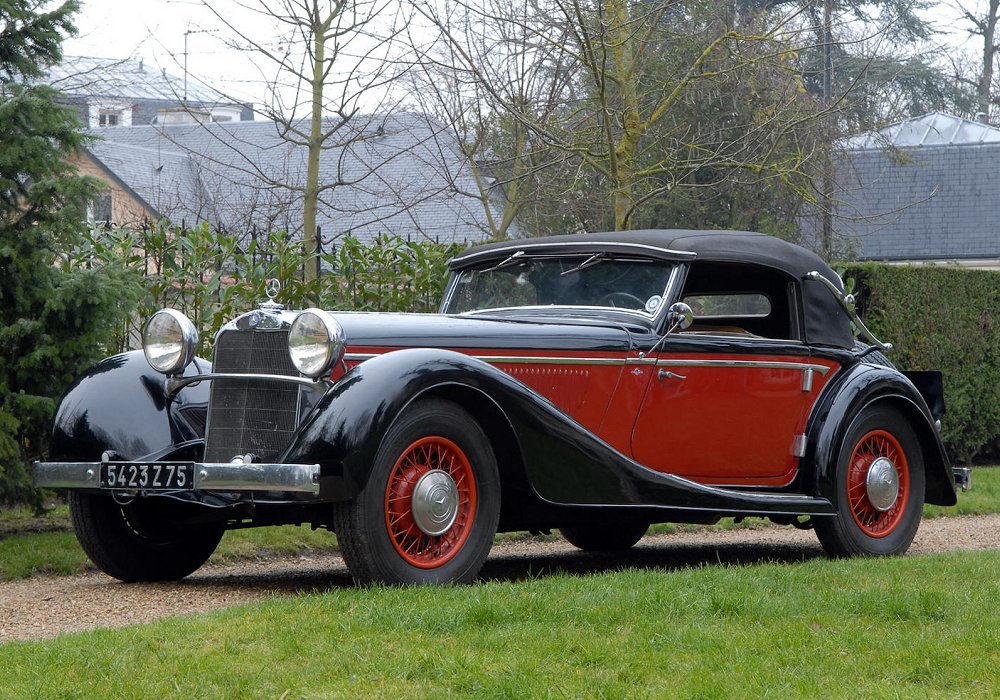
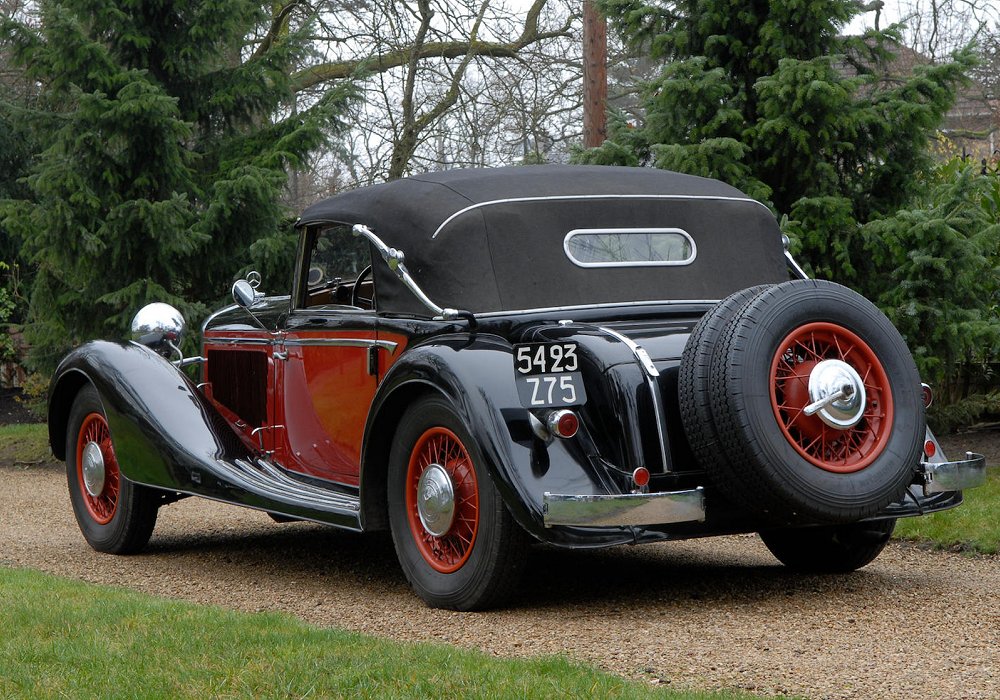
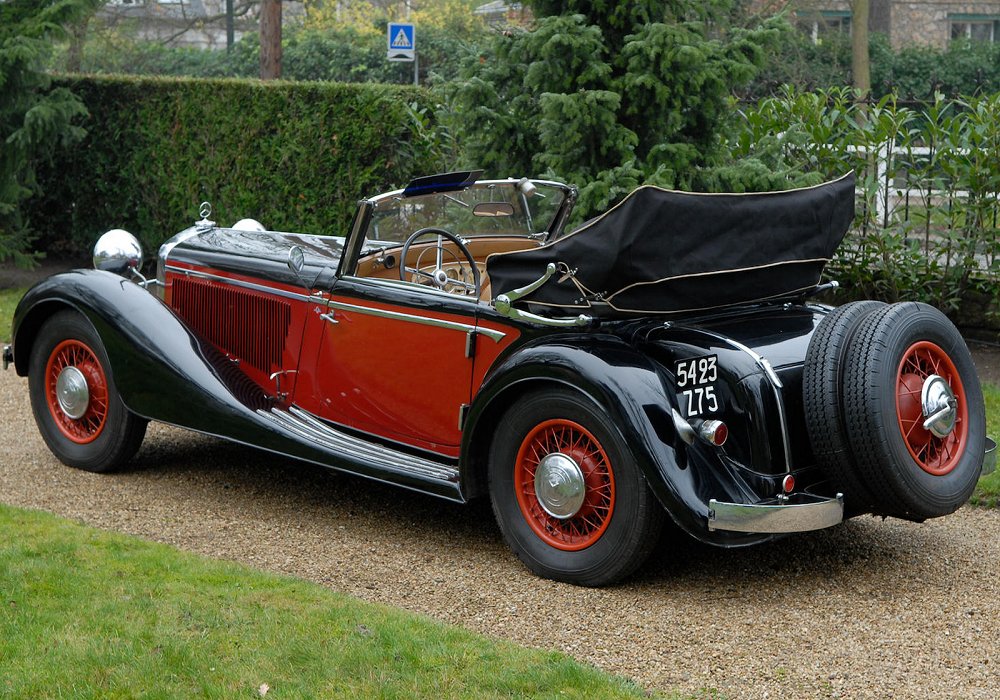
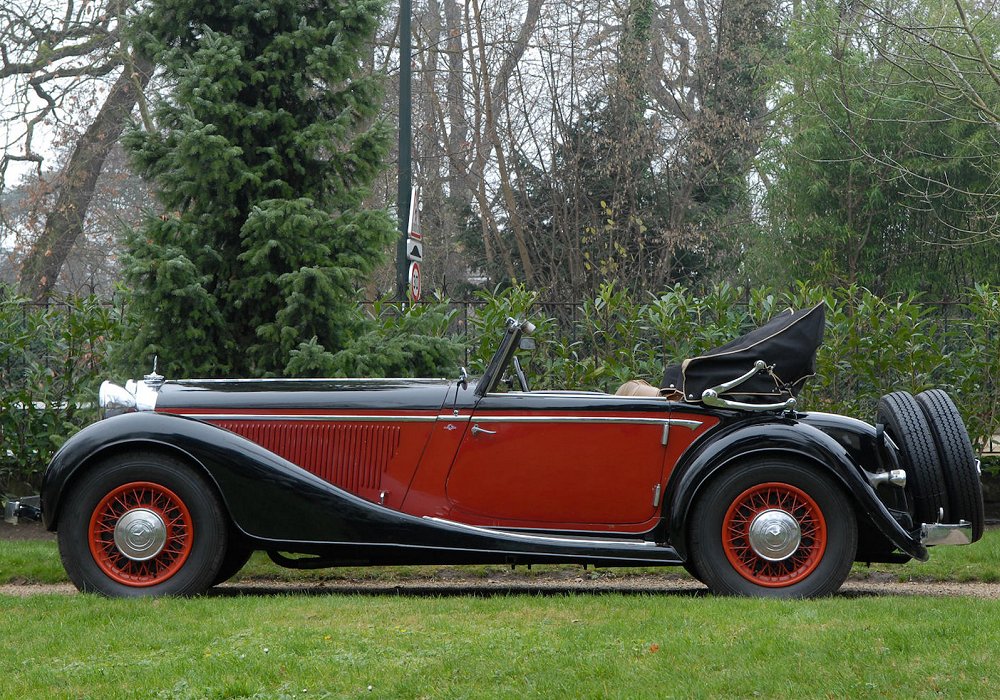
Where the Cabriolet A set itself apart was in its bodywork—crafted entirely by the Mercedes-Benz Sindelfingen coachworks and among the most refined designs of the pre-war era. The silhouette was beautifully balanced: a long, flowing bonnet; low doors; sweeping front wings; and a compact, gracefully tapered rear deck where the folded roof rested. The fabric top was made from high-quality materials and sat low and neat when folded, preserving the car’s clean, uninterrupted lines. With the roof raised, the car retained a dignified, luxurious appearance; with the roof down, it became a pure, elegant two-seat roadster with unmistakable presence.
Inside, the Cabriolet A offered an intimate yet richly appointed cabin. Two deeply cushioned seats were upholstered in fine leather or carefully selected cloth, depending on customer request. The dashboard featured polished wood or painted metal surfaces, with clear instrumentation arranged with Mercedes’ usual precision. Chrome detailing, high-quality switchgear and solid fittings reflected the car’s premium positioning. Though compact, the cabin felt inviting and luxurious, emphasising craftsmanship rather than ornamentation.
On the road, the 290 Cabriolet A delivered a serene and refined driving experience. The six-cylinder engine provided smooth, flexible power, while the suspension offered comfort well suited to long journeys on varied road surfaces. The shorter wheelbase gave the car a more lively feel than the larger W18 models, allowing it to respond more readily to steering inputs without sacrificing stability. Open-top motoring added a sense of freedom, making the Cabriolet A an ideal companion for scenic touring and relaxed weekend drives.
The 290 Cabriolet A occupied a special niche within the Mercedes range. It was not intended for families or commercial users but rather for private owners seeking a luxurious two-seat car of impeccable craftsmanship and understated elegance. Production numbers were low compared with the saloons and four-seat cabriolets, enhancing its exclusivity both then and now.
Today, the Mercedes-Benz 290 Cabriolet A is considered one of the most desirable and collectible pre-war Mercedes models. Its graceful proportions, refined six-cylinder performance and exceptional Sindelfingen construction capture the essence of 1930s German luxury motoring. Surviving examples are treasured by enthusiasts for their rarity, purity of design and the unforgettable driving experience they provide—a timeless representation of Mercedes-Benz elegance in the pre-war era.