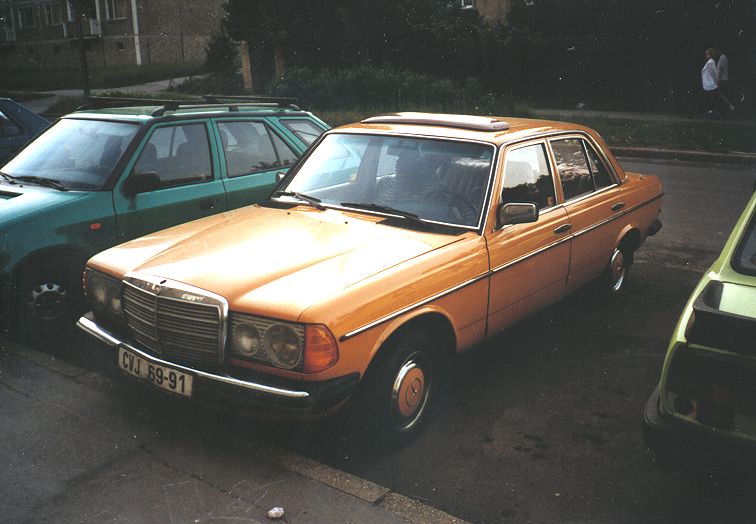
Description
The Mercedes-Benz 300 D was one of the most influential diesel saloons ever produced and became a cornerstone of Mercedes-Benz’s reputation for durability, efficiency and long-distance comfort. Introduced as part of the W123 series in the mid-1970s, the 300 D represented the most powerful and refined diesel option in the range, offering a meaningful performance advantage over smaller diesel models while preserving the brand’s core engineering values. It was aimed at buyers who wanted diesel economy without sacrificing refinement or usability.
Power came from a 3.0-litre inline five-cylinder diesel engine, an unusual configuration at the time that balanced smoothness with strong torque delivery. Early naturally aspirated versions produced around 80 horsepower, which, while modest by modern standards, was a significant step up from the four-cylinder diesels. The engine’s strong mid-range torque made the 300 D notably more capable in everyday driving, particularly on motorways and when fully loaded. Later versions, especially in some markets, introduced turbocharging, further enhancing performance and cementing the model’s reputation as a genuinely usable diesel executive car. Manual and automatic transmissions were offered, with the automatic proving especially popular due to its relaxed cruising character.
The W123 chassis provided an exceptionally strong and comfortable foundation for the 300 D. The unitary body structure featured a rigid passenger safety cell with carefully engineered crumple zones, reflecting Mercedes-Benz’s leadership in passive safety. Suspension consisted of double wishbones with coil springs at the front and a rear semi-trailing arm layout with coil springs, delivering excellent ride comfort and predictable handling even on poor road surfaces. Disc brakes at all four wheels provided confident and consistent stopping power, appropriate for the car’s increased weight and performance.
Styling of the Mercedes-Benz 300 D followed the clean, functional design language that defined the W123 range. Straight body lines, a tall glasshouse and an upright grille conveyed solidity and professionalism rather than fashion. Chrome detailing was restrained, and there was little external differentiation between the 300 D and lesser models, reinforcing the understated nature of the car and Mercedes-Benz’s philosophy that engineering substance mattered more than visual display.
Inside, the cabin was spacious, practical and exceptionally well built. Materials were chosen for durability rather than luxury, with high-quality plastics, robust fabrics and solid switchgear designed to withstand years of intensive use. Seating was firm and supportive, ideal for long-distance driving, and the dashboard layout was logical and uncluttered, with clear instrumentation and excellent visibility. Noise levels were higher than in petrol models, particularly at idle, but the five-cylinder engine was smoother than earlier four-cylinder diesels, improving overall refinement.
In everyday use, the 300 D stood out for its ability to combine diesel economy with genuine long-distance capability. It could cruise comfortably at motorway speeds for extended periods, something that smaller diesel models struggled to achieve. The engine’s tolerance for varying fuel quality and harsh operating conditions made the car especially popular in export markets, where it often served as a taxi, company car or family vehicle for decades.
The Mercedes-Benz 300 D played a crucial role in shaping perceptions of diesel passenger cars. It demonstrated that diesel engines could power comfortable, refined executive saloons without compromise, influencing the development of later diesel models across the industry. In markets such as North America, the turbocharged 300 D in particular helped introduce diesel technology to a wider audience during periods of fuel uncertainty.
Today, the Mercedes-Benz 300 D is regarded as one of the definitive diesel classics. Well-preserved examples are highly valued for their mechanical honesty, exceptional longevity and historical importance. As a key pillar of the W123 legend, the 300 D stands as a lasting symbol of an era when Mercedes-Benz engineered cars to cover vast distances reliably and comfortably, often outlasting several generations of newer vehicles.