Description
Here is the full narrative article for the Mercedes-Benz 320 Cabriolet A 3.4, written in the same style and structure as your other W142-series entries, with no bullet points and no bold text.
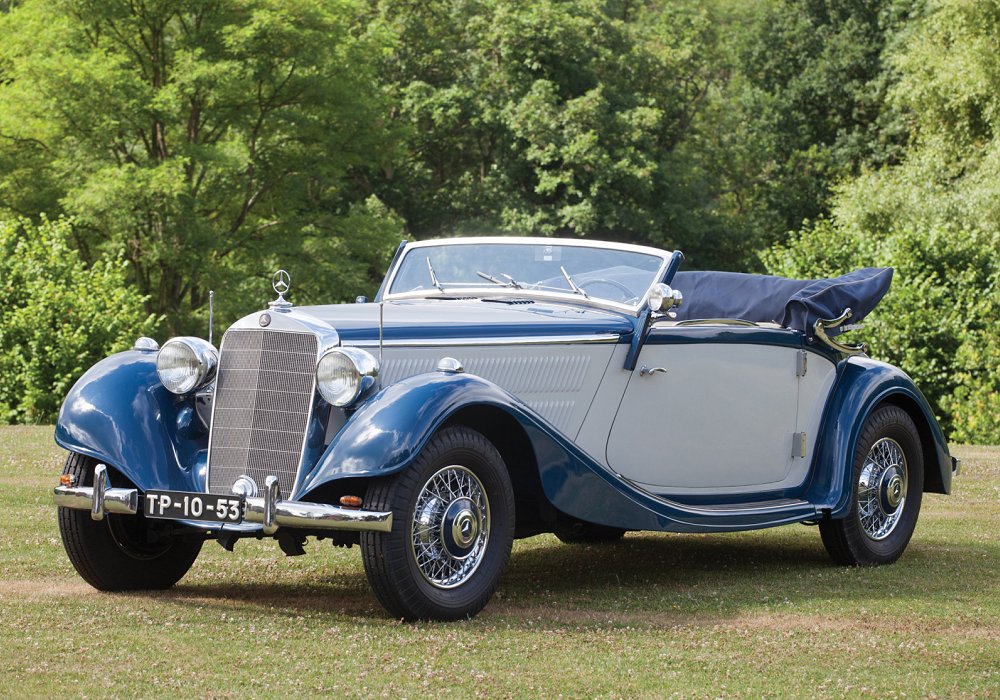
The Mercedes-Benz 320 Cabriolet A 3.4 was the ultimate expression of the two-seat open-top design within the W142 series, distinguished not only by its elegant Sindelfingen bodywork but also by its more powerful 3.4-litre engine. Introduced late in the model’s production run, this enhanced version addressed the growing demand for stronger performance while maintaining the refined, understated luxury that defined the original 320 Cabriolet A. It represented the peak of pre-war Mercedes-Benz personal touring cars: intimate, beautifully proportioned and mechanically advanced.
The defining feature of this enhanced model was its enlarged 3.4-litre inline-six engine, which displaced 3,405 cc compared with the earlier 3.2-litre unit. Power output rose to approximately 79–80 horsepower, but the real improvement came in torque and flexibility. The larger engine delivered smoother acceleration, better mid-range pull and an increased ability to sustain higher cruising speeds. These refinements transformed the driving experience without altering the serene, effortless character that customers expected from a luxury Mercedes. It was paired with a four-speed manual gearbox featuring synchromesh on the upper gears, allowing smooth shifts and a relaxed driving style suited to both touring and city motoring.
The Cabriolet A 3.4 retained the short-wheelbase version of the W142 chassis, giving it compact proportions and a more sporting stance than the four-seat models. The chassis was constructed from a strong box-section frame, engineered to support the more powerful engine and the demands of spirited driving. Suspension was among the most advanced of any pre-war Mercedes, with independent front wheels using coil springs and a swing-axle rear system also with coil springs, delivering a supple yet controlled ride. Hydraulic brakes on all four wheels provided reliable stopping power and enhanced confidence behind the wheel. Overall, the chassis allowed the Cabriolet A 3.4 to feel both luxurious and more responsive than the earlier 3.2-litre versions.
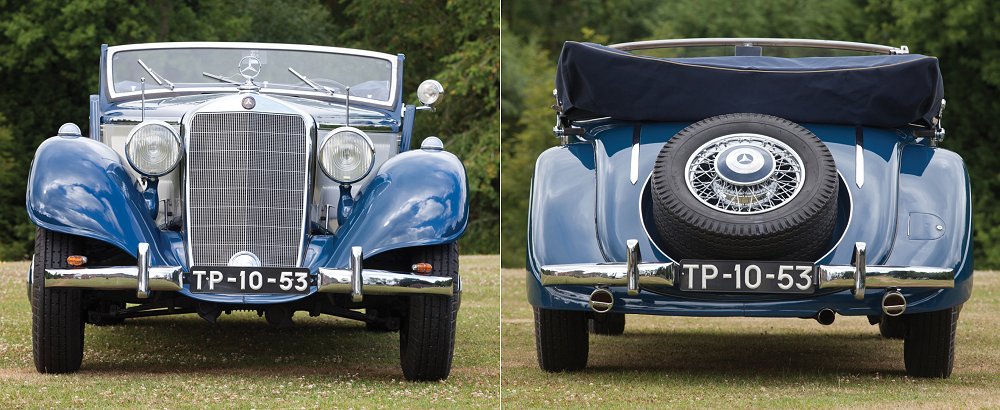
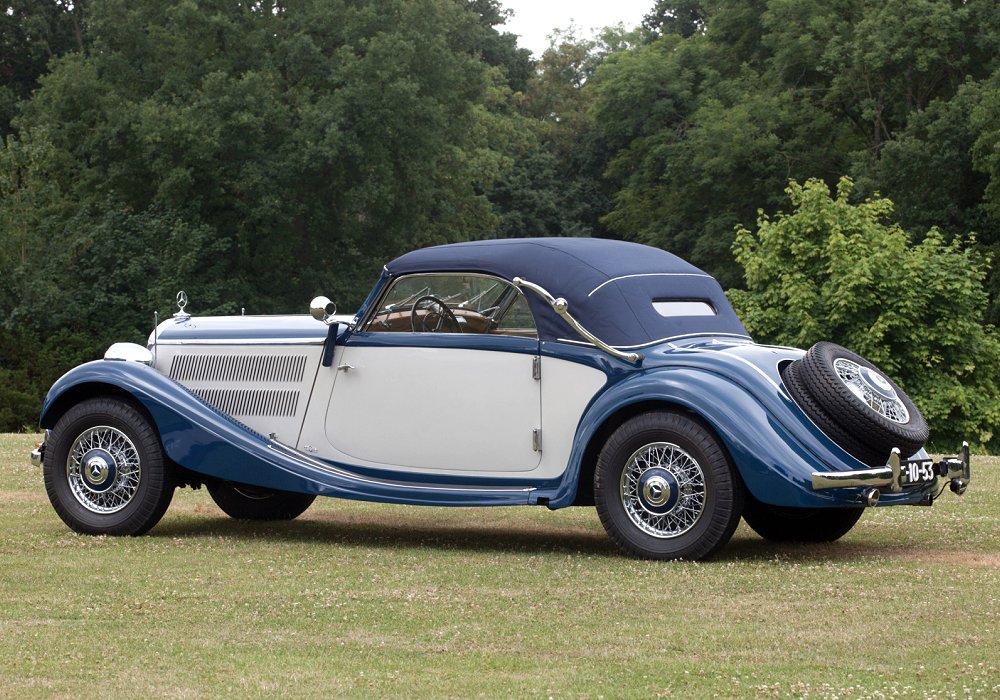
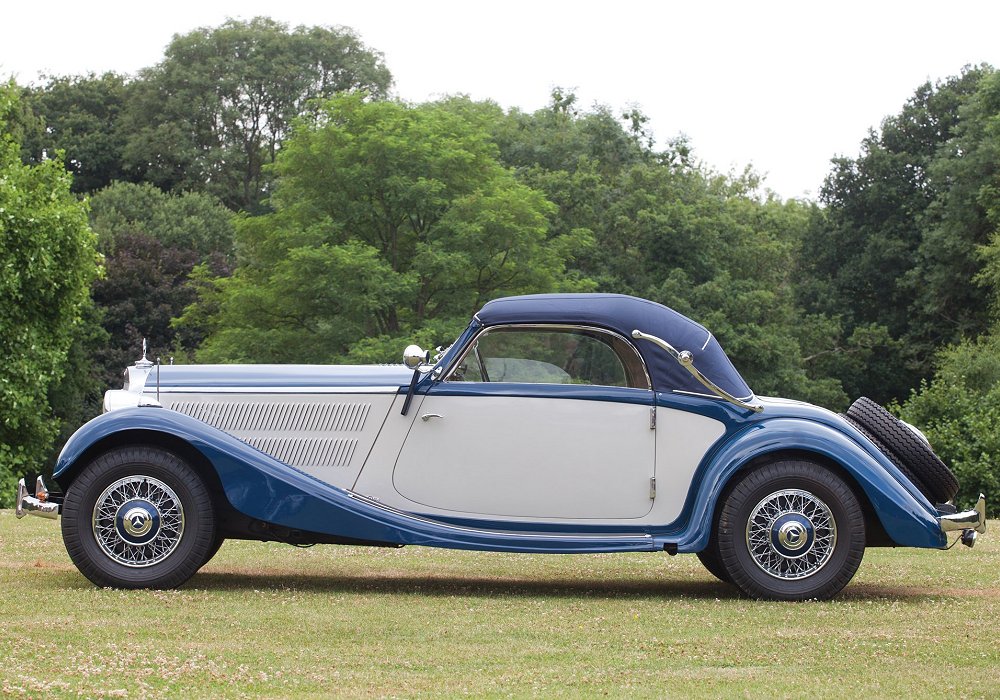
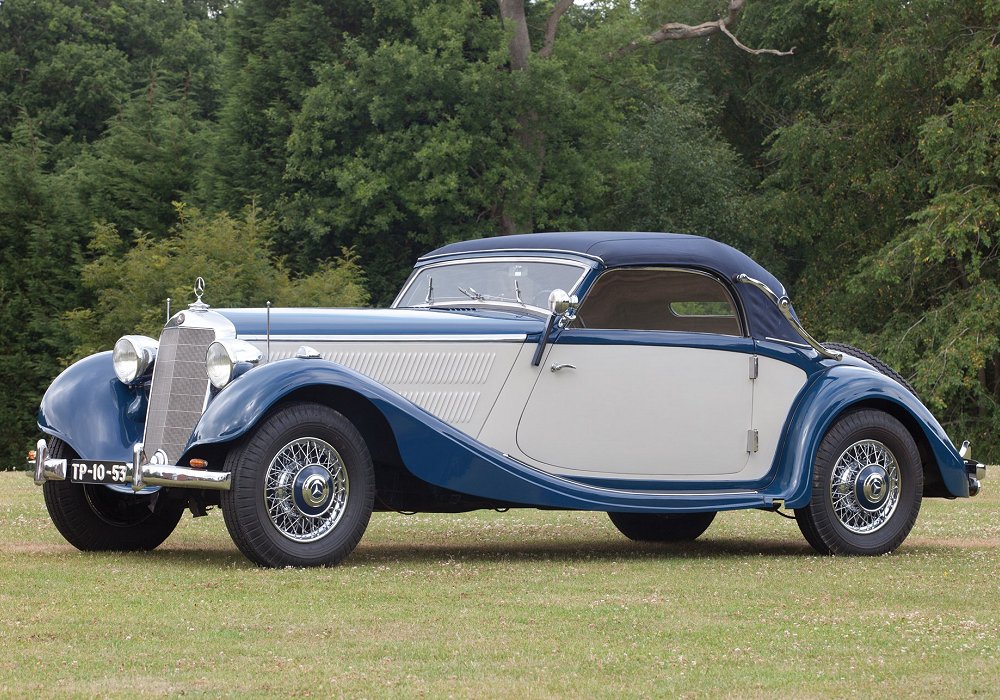
The Sindelfingen-built body was one of the most graceful designs of the late 1930s. The Cabriolet A’s proportions were visually perfect: a long bonnet, flowing front wings, low doors and a gently tapering rear deck that carried the folded roof. The lowered stance created by the short wheelbase and elegant body lines gave the car a subtly sporting character, enhanced further by its more potent engine. The folding roof was constructed from high-quality fabric and sat low and neat when lowered, preserving the car’s exquisite shape. Raised, it gave the car a dignified, formal appearance suitable for elegant urban driving.
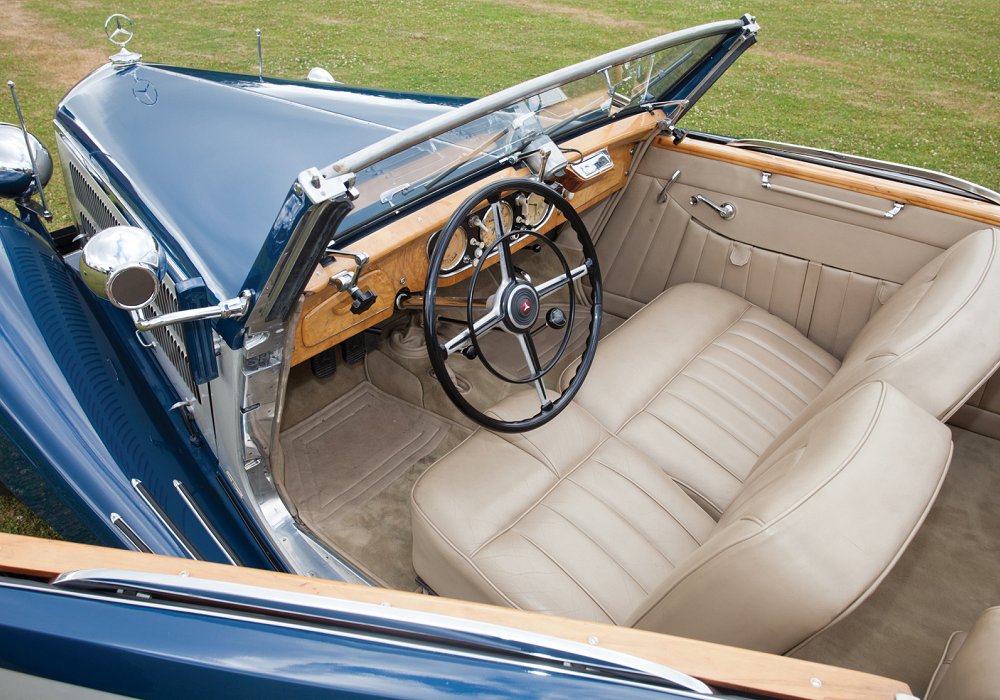
Inside, the 320 Cabriolet A 3.4 offered a beautifully crafted two-seat cabin that reflected Mercedes-Benz’s mastery of detail. Upholstery was typically finished in high-grade leather, with large, well-cushioned seats designed for long-distance comfort. The dashboard carried polished wood veneer or finely painted metal trim, depending on specification, and housed clear, elegantly styled instruments. Chrome detailing, high-quality switches and Sindelfingen craftsmanship ensured that every surface and control felt precise and luxurious. Though compact, the cabin was designed to feel intimate and exclusive, offering a level of refinement normally found in much larger cars.
On the road, the Cabriolet A 3.4 delivered the most rewarding driving experience of any open W142 two-seater. The enlarged engine provided smoother, more confident acceleration, allowing the car to maintain higher speeds effortlessly. The short wheelbase gave it a responsive, lively feel, while the advanced suspension smoothed out imperfections in the road surface. With the roof down, the car offered an ideal blend of speed, elegance and open-air enjoyment. With the roof raised, it remained quiet, refined and sheltered, making it suitable for year-round use.
The 320 Cabriolet A 3.4 was produced in limited numbers, as it was a specialist model aimed at affluent buyers seeking the finest combination of performance, craftsmanship and personal luxury. It sat above the standard Cabriolet A not only in mechanical specification but also in exclusivity, making it one of the rarest variants of the W142 family.
Today, the Mercedes-Benz 320 Cabriolet A 3.4 is regarded as one of the most desirable and collectible pre-war Mercedes-Benz models. Its exceptional proportions, smooth and powerful straight-six engine and superb Sindelfingen bodywork make it a benchmark example of 1930s German automotive elegance. Surviving examples are treasured for their rarity, their refined engineering and the purity of design that defines this pinnacle of the W142 Cabriolet lineage.