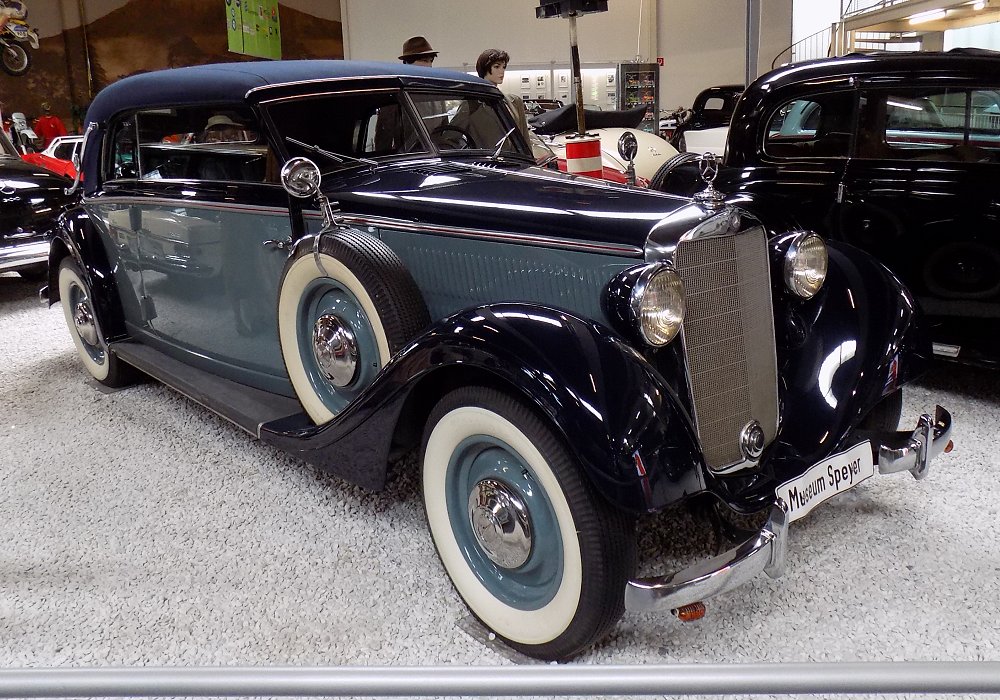
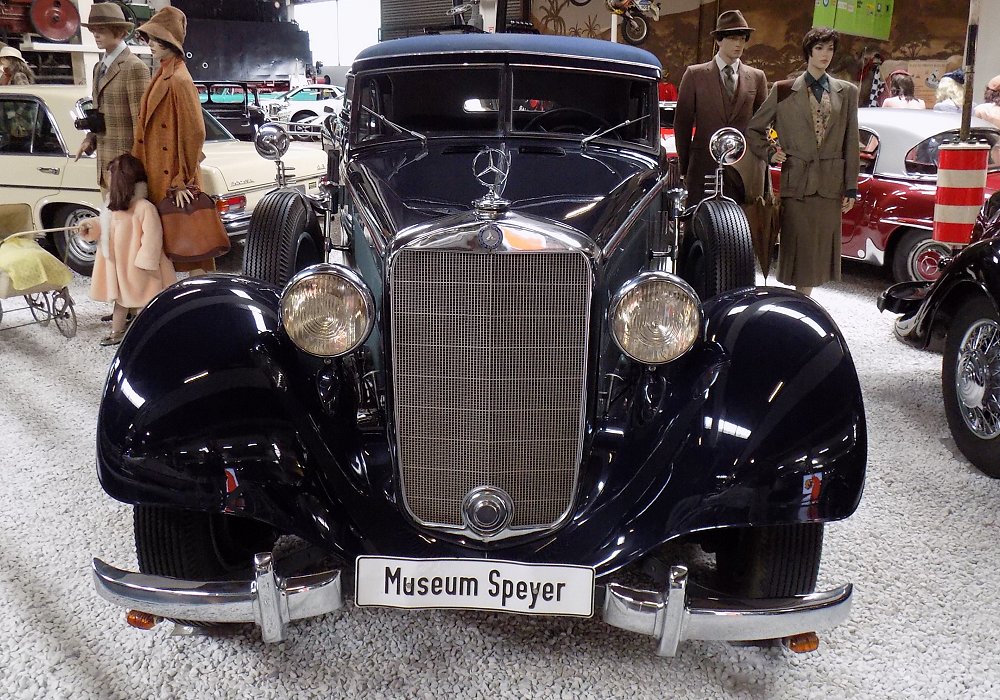
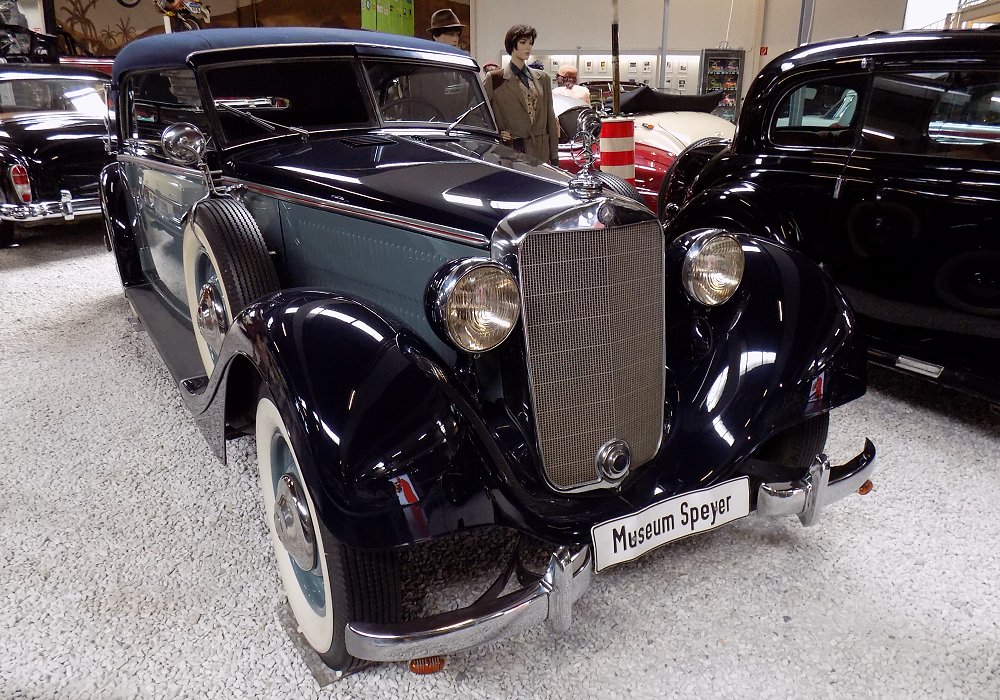
Description
The Mercedes-Benz 320 Cabriolet B was the refined four-seat open-top touring model of the W142 series, introduced in 1937 as part of Mercedes-Benz’s modernised upper-mid-range lineup. Positioned between the intimate two-seat Cabriolet A and the more formal, chauffeur-orientated Cabriolet D, the Cabriolet B offered an ideal balance of practicality, elegance and prestige. It was designed for private owners who wanted the romance of open-air motoring but required seating for four adults, making it one of the most versatile and desirable body styles in the 320 range.
Power came from the smooth 3.2-litre inline-six engine, delivering around 78 horsepower in early production and benefitting from improved carburation and refinements in later models. The engine’s defining qualities were its quietness, flexibility and abundant low-speed torque, giving the Cabriolet B a calm and effortless driving character. It was well suited to long-distance touring or relaxed city motoring, with the four-speed manual gearbox providing smooth shifts through synchromesh-equipped upper gears. The mechanical refinement of the six-cylinder engine gave the car a sense of sophistication that appealed strongly to its intended clientele.
The Cabriolet B was built on the shorter of the two wheelbases available for the W142, giving it a compact and balanced stance. The strong box-section chassis provided rigidity for the open body, while the suspension—independent front wheels with coil springs and a swing-axle rear layout—delivered a smooth, controlled ride. The hydraulic braking system offered reliable and confident stopping power, a significant improvement over earlier mechanical brakes. Overall, the chassis gave the Cabriolet B a composed, supple road presence that suited both spirited country driving and relaxed touring.
Sindelfingen’s craftsmanship was especially evident in the Cabriolet B’s bodywork. Its proportions were beautifully judged: a long bonnet flowing into deep front wings, compact but comfortably sized doors, and a cleanly sculpted rear deck supporting the folding roof. The four-seat configuration gave the car a slightly fuller profile than the two-seat Cabriolet A, yet it retained elegance and visual harmony. The high-quality fabric roof folded low and neatly, preserving the car’s graceful silhouette when open. When raised, the roof offered excellent weather protection and maintained the car’s dignified appearance.
Inside, the Cabriolet B offered a luxurious and well-appointed cabin for four occupants. The front seats were large and supportive, while the rear bench provided generous space for passengers, aided by the car’s balanced proportions. Upholstery was typically finished in fine leather or durable cloth, paired with polished wood veneers or neatly painted metal trim on the dashboard. Instruments were clearly arranged, and all fittings reflected the high standards of Sindelfingen workmanship. The open-top layout created a light, airy atmosphere that enhanced the pleasure of longer journeys.
On the road, the Mercedes-Benz 320 Cabriolet B delivered an exceptionally refined touring experience. The engine provided smooth and steady power, and the suspension absorbed road imperfections with composure. The shorter wheelbase gave the car a nimble feel compared with larger open Mercedes models of the era, while still providing the comfort expected of a luxury tourer. With the roof down, passengers enjoyed the full experience of open motoring; with the roof raised, the car remained quiet and sheltered enough for year-round use.
The Cabriolet B enjoyed strong appeal among affluent families, enthusiastic long-distance travellers and owners who valued both aesthetics and practicality. It offered more usability than the Cabriolet A while avoiding the formality of the larger Cabriolet D, making it one of the most balanced and versatile members of the W142 series.
Today, the Mercedes-Benz 320 Cabriolet B is highly prized among collectors for its elegance, craftsmanship and rarity. Surviving examples showcase the best qualities of late-1930s Mercedes engineering—smooth six-cylinder performance, advanced suspension, hydraulic brakes and beautifully executed coachwork. Its combination of usability, elegance and historical significance makes the 320 Cabriolet B one of the most sought-after open Mercedes models of the pre-war era.