Description
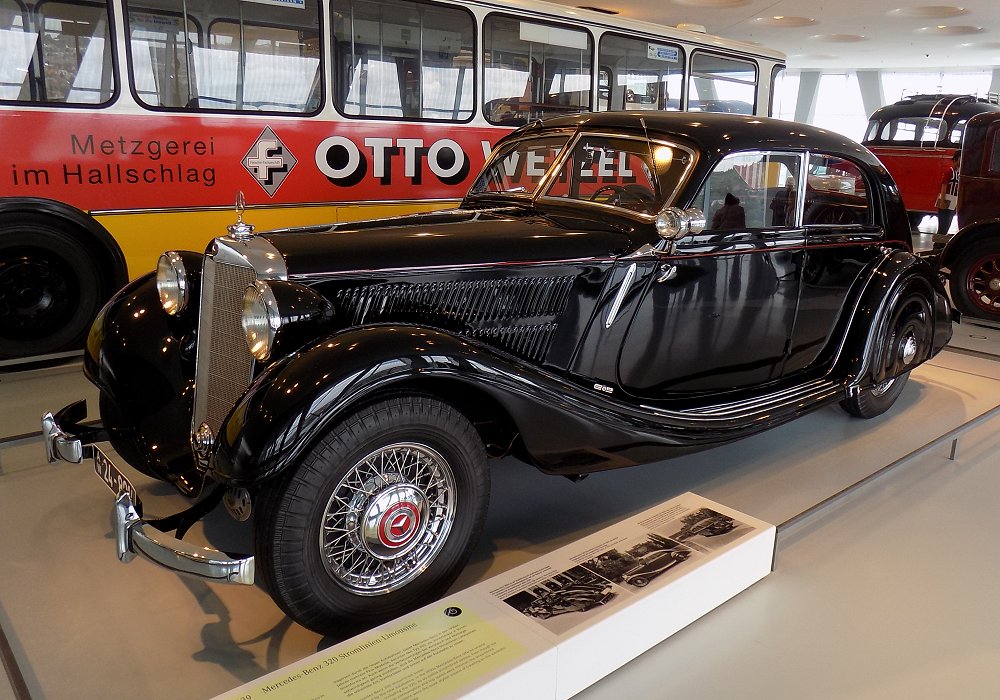
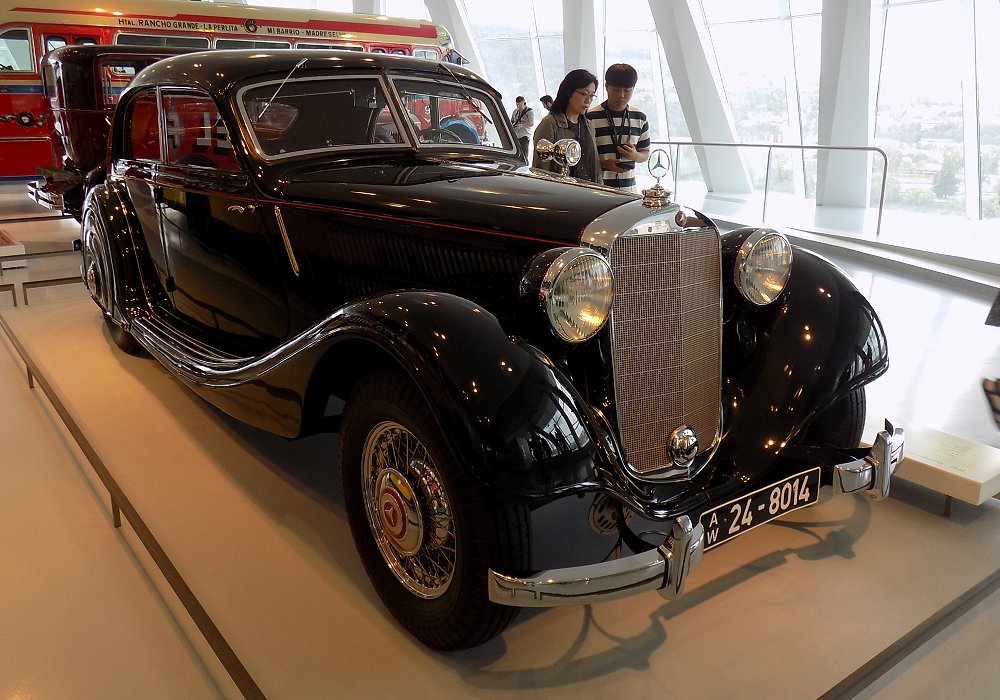
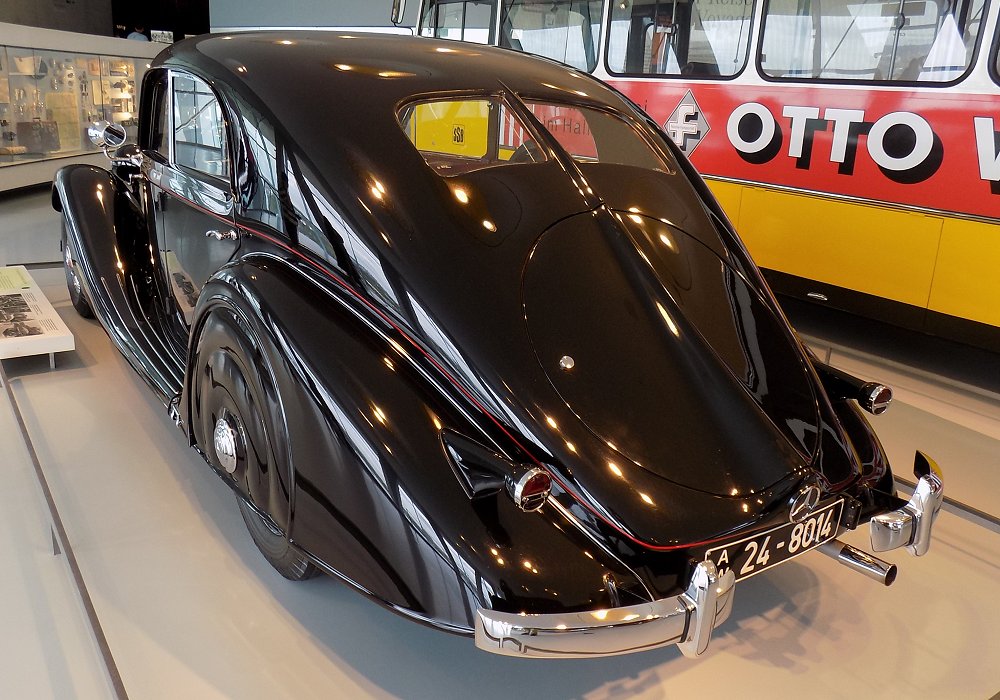
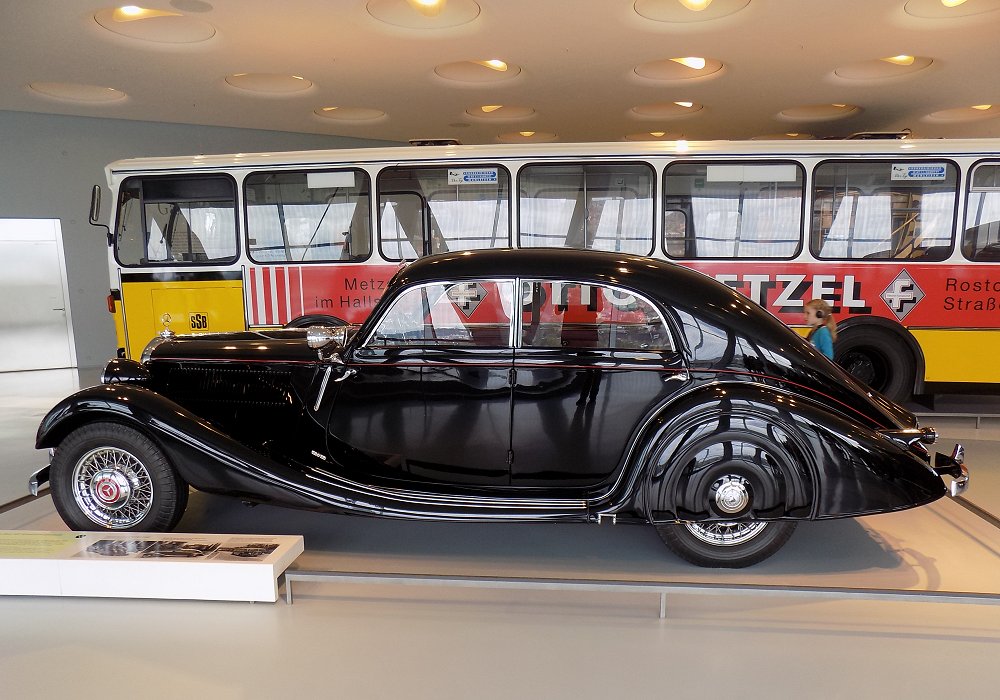
The Mercedes-Benz 320 Stromlinien Limousine 3.4 was the most aerodynamically advanced and visually striking variant of the late W142 series, created during an era when streamlining represented the cutting edge of automotive engineering. Developed on the long-wheelbase chassis and powered by the enlarged 3.4-litre straight-six, the Stromlinien Limousine combined scientific aerodynamic principles with traditional Sindelfingen craftsmanship to produce one of the most remarkable and forward-thinking Mercedes-Benz designs of the late 1930s. It stood apart from all other W142 models, not only in appearance but also in intention, representing a bold exploration of efficiency, modernity and futuristic design.
Power was supplied by the updated 3.4-litre inline-six, producing around 79–80 horsepower. Although modest by later standards, the engine delivered smooth torque and steady performance, and its character suited the streamlined bodywork, which was specifically engineered to reduce drag and improve cruising efficiency. The result was a car that could maintain higher speeds with less effort than its conventionally bodied counterparts. The four-speed gearbox, with synchromesh on the upper gears, allowed relaxed, seamless progress, reinforcing the car’s role as a long-distance touring machine rather than a formal limousine.
The Stromlinien Limousine retained the long-wheelbase W142 chassis, providing the space and stability needed for the sweeping, aerodynamic body. The box-section frame offered the strength required for the unique superstructure, and the independent front suspension with coil springs, combined with the swing-axle rear system, delivered a smooth and controlled ride. Hydraulic brakes on all four wheels provided reliable stopping ability, and the overall driving character was calm, steady and more efficient at speed thanks to the reduced aerodynamic drag. Mercedes engineers were well aware that streamlining benefited not only performance but also stability, and this model demonstrated both principles effectively.
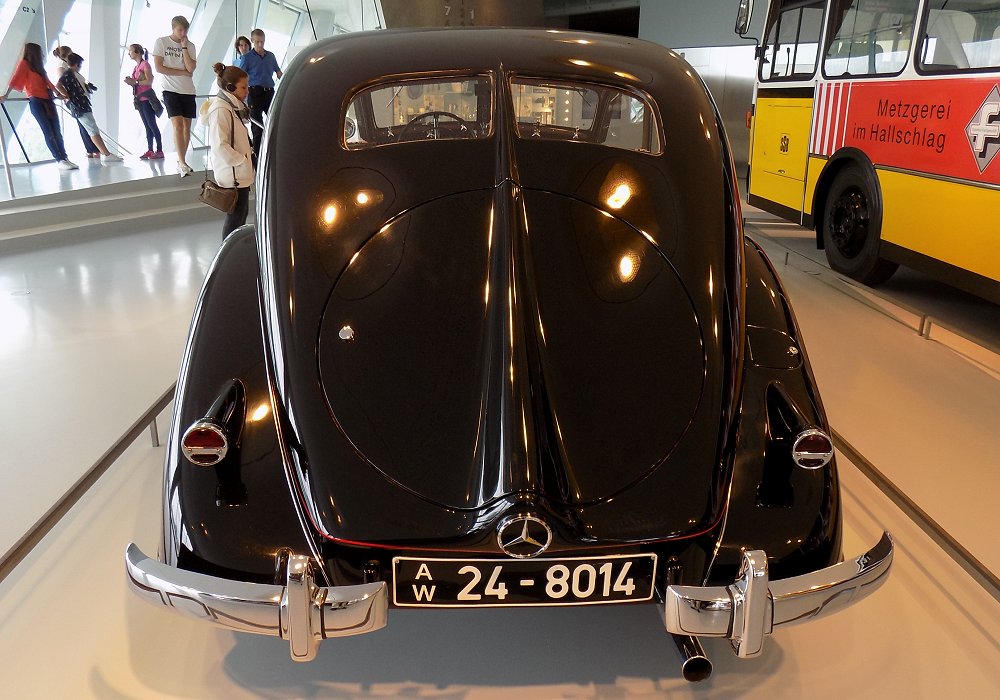
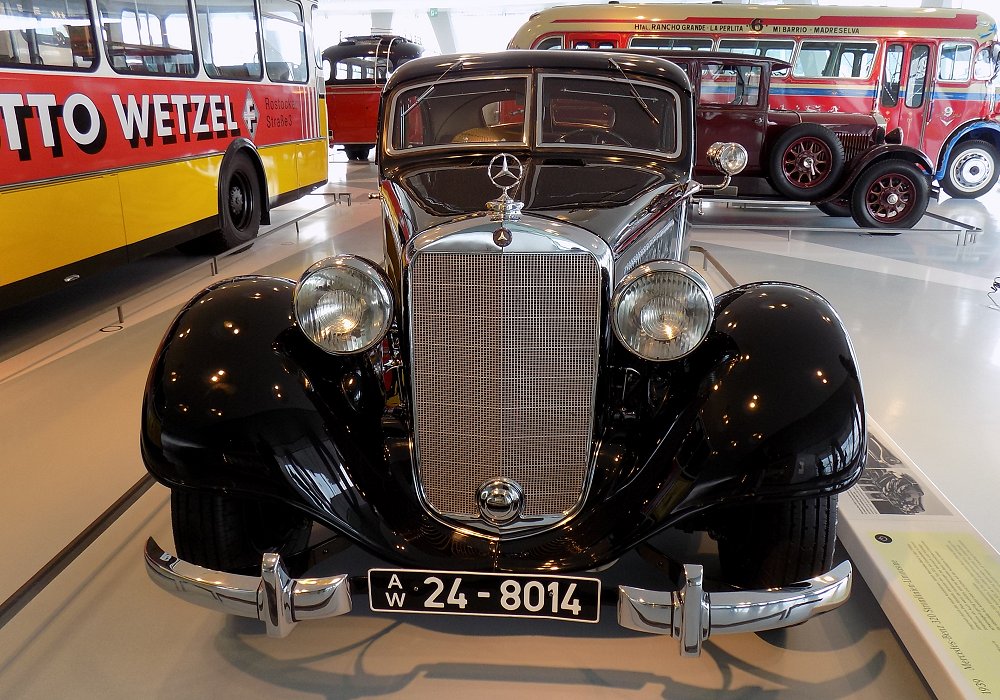
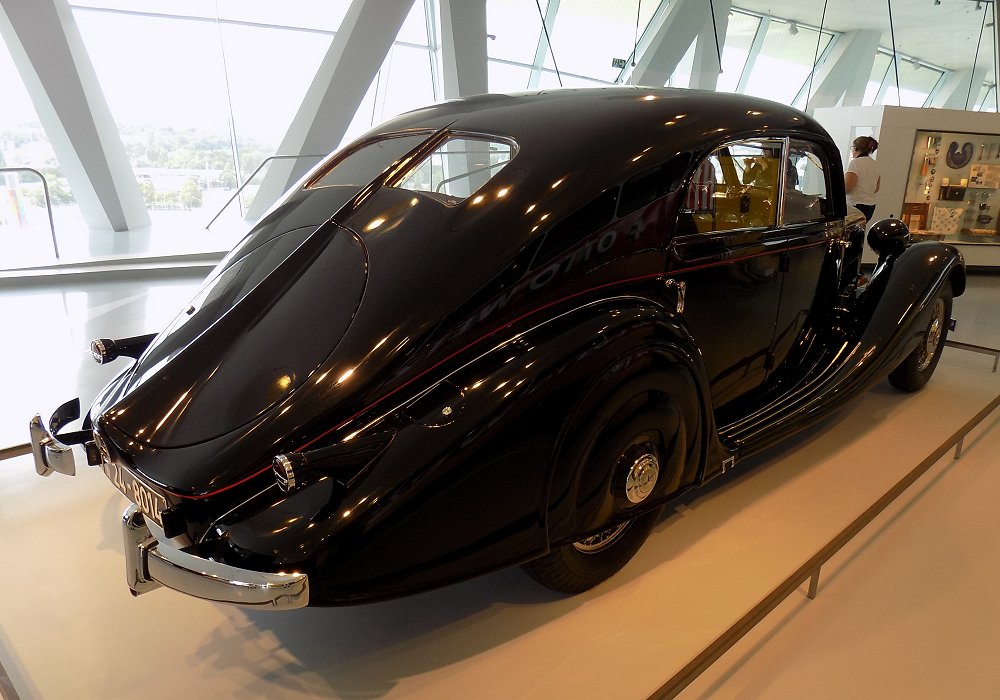
The bodywork of the Stromlinien Limousine was its most extraordinary feature. Almost entirely unique among Mercedes-Benz cars of the period, it embraced aerodynamic shapes inspired by contemporary aircraft and scientific design studies. The nose was rounded and smooth, eliminating the upright grille profile typical of the marque. Headlamps were integrated into the body rather than mounted externally. The front wings flowed seamlessly into the doors and rear section, while the roofline arched continuously into a long, tapered tail designed to reduce turbulence. The rear wheels were often partially or fully enclosed, and panel gaps were minimised to reduce resistance. The overall effect was a striking silhouette, futuristic and elegant, standing in stark contrast to the more traditional sedans and cabriolets of the W142 lineup.
The interior continued the theme of modernity while retaining Mercedes-Benz refinement. Seating was spacious thanks to the long wheelbase, with room for four to five passengers depending on configuration. Upholstery ranged from durable cloth to leather, and the interior surfaces featured polished wood or carefully finished metal trim. Instruments were arranged clearly and logically, but the atmosphere differed subtly from the traditional W142 models. The enclosed shape, flowing roof and reduced wind noise contributed to a quieter, more cocooned environment, enhancing the car’s long-distance touring character.
On the road, the 320 Stromlinien Limousine 3.4 felt smoother and more efficient than its conventional counterparts. The streamlined body reduced wind resistance, which allowed the car to cruise at higher speeds with less mechanical strain. Fuel consumption was improved, and stability at speed was noticeably enhanced. The enlarged 3.4-litre engine maximised the benefits of the aerodynamic body, delivering steady and refined performance. The suspension provided a comfortable ride, and the hydraulic brakes offered confidence and control. While the car was still primarily a luxury tourer, the aerodynamic design gave it an undeniably modern driving experience for its time.
The Stromlinien Limousine was produced in extremely limited numbers, likely only as special orders or experimental builds. Its development reflected Mercedes-Benz’s interest in aerodynamic research and its desire to demonstrate technical innovation. The outbreak of the Second World War curtailed further exploration of such body styles, making the few examples that existed all the more historically important.
Today, the Mercedes-Benz 320 Stromlinien Limousine 3.4 is regarded as one of the rarest and most visionary pre-war Mercedes-Benz automobiles. Few, if any, complete examples survive, and those that do are considered masterpieces of aerodynamic design and early automotive engineering. Its futuristic form, advanced mechanical refinement and unique place in Mercedes history make it one of the most intellectually fascinating and aesthetically compelling models from the late 1930s. It stands as a reminder of a moment when Mercedes-Benz explored the boundaries of design, efficiency and modernity, pushing the W142 platform into a new realm of innovation.