Description
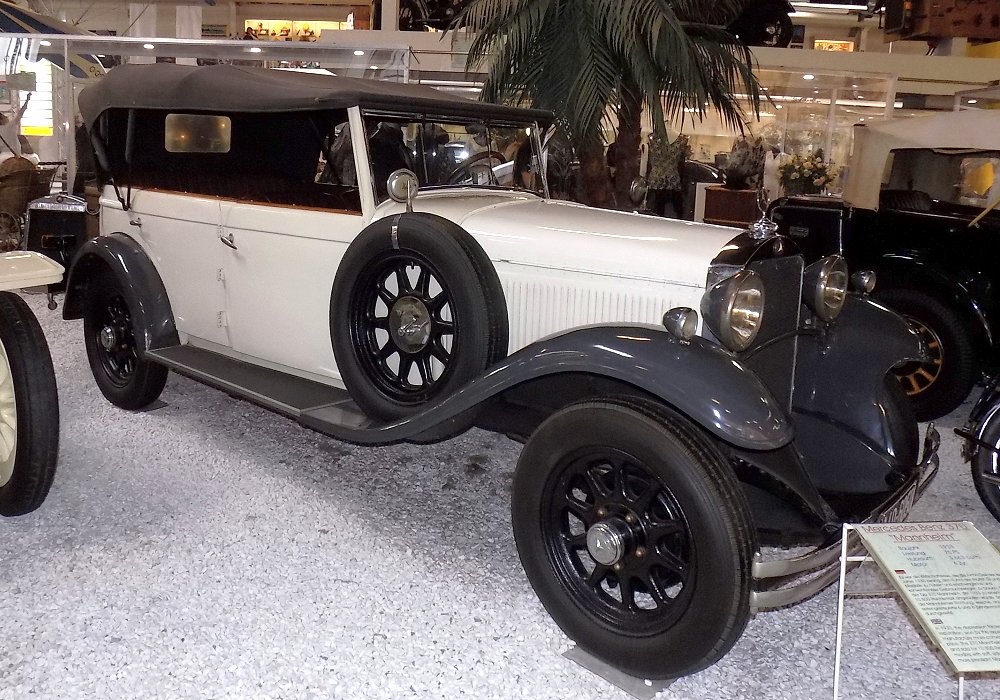
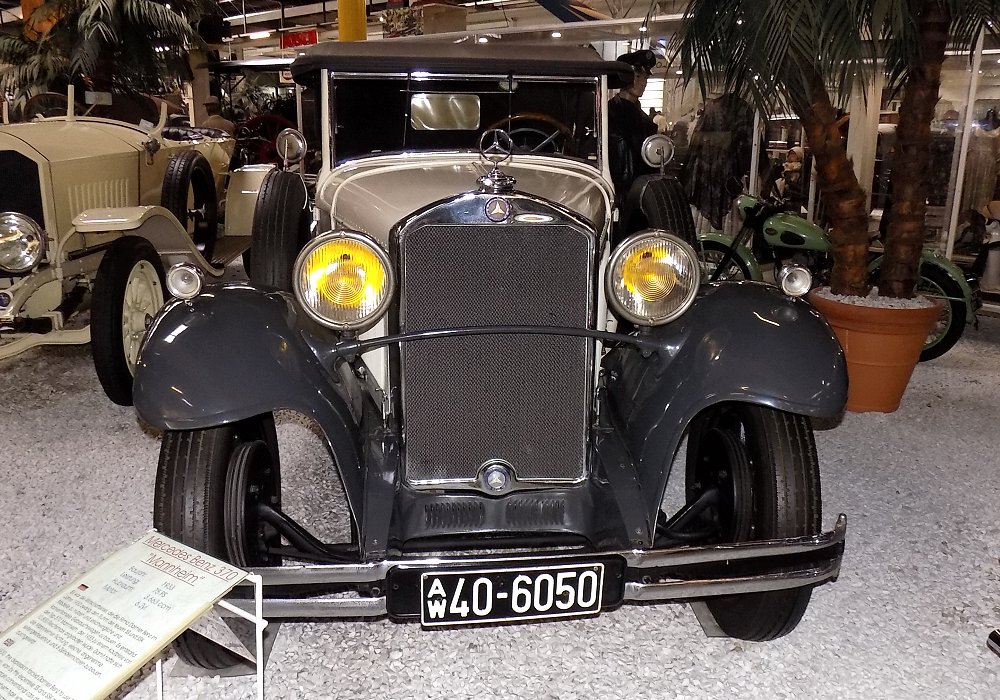
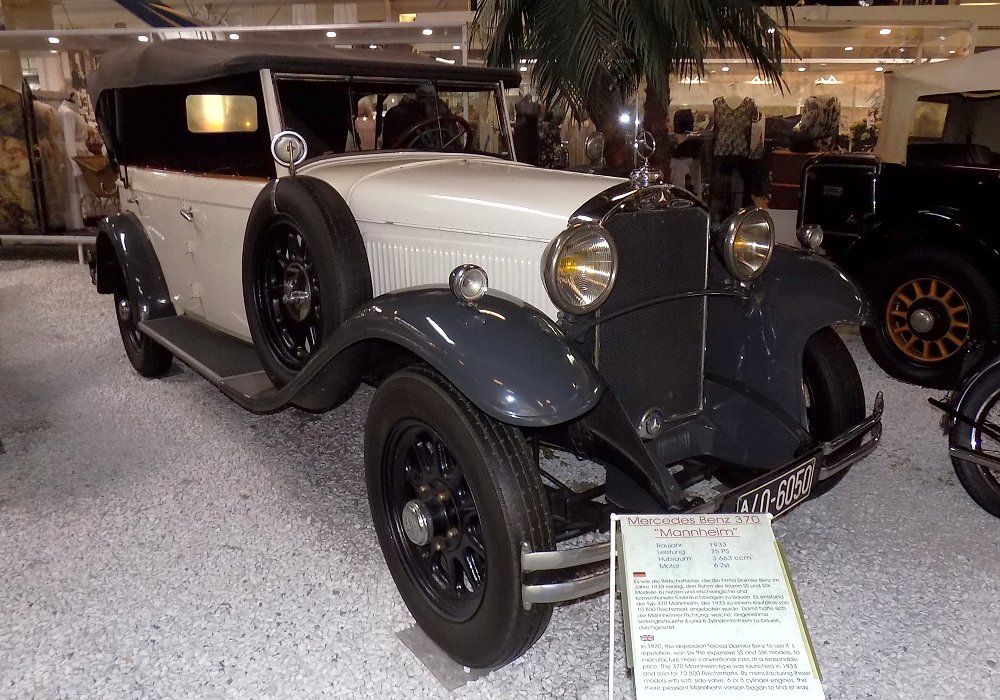
The Mercedes-Benz 370 Mannheim was introduced in 1931 as an evolution of the earlier 350 Mannheim, representing Mercedes-Benz’s continued refinement of its upper-middle-class six-cylinder models during the early 1930s. It arrived at a time when the company was incorporating new styling trends, improved mechanical technology and greater comfort into its passenger-car lineup. Positioned below the large Nürburg but above the smaller Stuttgart series, the 370 Mannheim provided an appealing combination of dignified presence, strong touring performance and reliable engineering.
Power was supplied by an enlarged 3.7-litre inline-six engine, producing around 74 horsepower depending on specification. The increase in displacement over the earlier 3.5-litre unit gave the car noticeably improved torque and a more effortless character in day-to-day driving. The engine was smooth, quiet and well matched to the car’s intended purpose as a refined touring and formal transport vehicle. A four-speed manual gearbox allowed the driver to make full use of the engine’s flexible torque curve, and though the car was not fast, it could maintain dignified cruising speeds that made long journeys comfortable and manageable.
The chassis retained the strong ladder-frame construction typical of Mercedes-Benz design in the early 1930s. Semi-elliptic leaf springs were used front and rear, providing a firm but controlled ride that worked well on the uneven road surfaces of the time. Drum brakes on all four wheels ensured reliable stopping power, though significant pedal effort was still required, as was normal for the era. Steering was deliberate but stable, and once underway the car offered reassuring handling and a sense of solidity that owners prized. The overall mechanical character was one of durability and long-term dependability.
The 370 Mannheim was offered in a variety of body styles, many produced by the Sindelfingen coachworks. These included formal Pullman limousines, elegant cabriolets, six-window saloons, and four-door tourers. The design reflected the transitional aesthetics of the early 1930s: upright radiator, tall windows, sweeping front wings and bodies that were beginning to show hints of streamlined form. Proportions were balanced and dignified, giving the car a stately appearance suitable for both private owners and institutional or chauffeur duties. In all configurations, the build quality was exceptionally high, with carefully aligned panels, durable materials and meticulous craftsmanship.
The interior of the 370 Mannheim reflected the comfort expectations of its class. Seating was deep and well cushioned, upholstered in high-grade cloth or leather depending on customer preference. The dashboard featured clear instruments, solid switchgear and either polished wood or painted metal trim. Door panels and interior fittings were constructed with long-term wear in mind, appealing to owners who intended to use the car as a reliable and capable touring machine. Rear-seat accommodation was especially generous in limousine and Pullman variants, making the model popular among professionals and organisations requiring formal transportation.
On the road, the 370 Mannheim offered smooth and dependable performance. The enlarged six-cylinder engine delivered a steady, relaxed flow of power, and the car’s considerable weight gave it a planted, confident feel. It was ideal for long-distance travel, where the quiet engine and comfortable ride made for unhurried, enjoyable progress. While it required deliberate steering and thoughtful braking, as all large cars of the era did, it rewarded careful driving with stability and an overall sense of mechanical integrity. Many owners appreciated its ability to carry passengers comfortably over long journeys without fatigue.
The 370 Mannheim played an important role in Mercedes-Benz’s early-1930s lineup. It offered a step above the Stuttgart in prestige and performance while remaining more practical and manageable than the flagship Nürburg series. It appealed to senior professionals, wealthy private owners and institutions that valued durability, space and refined engineering. Its various body styles allowed it to serve a wide range of purposes, from private touring to chauffeur-driven executive transport.
Today, the Mercedes-Benz 370 Mannheim is viewed as a significant model in the evolution of Mercedes-Benz’s pre-war six-cylinder tradition. Surviving examples highlight the craftsmanship, design stability and mechanical strength that defined Mercedes-Benz during this era. Its balanced proportions, smooth engine and dignified presence make it an important and collectible representative of early-1930s German luxury motoring.