Description
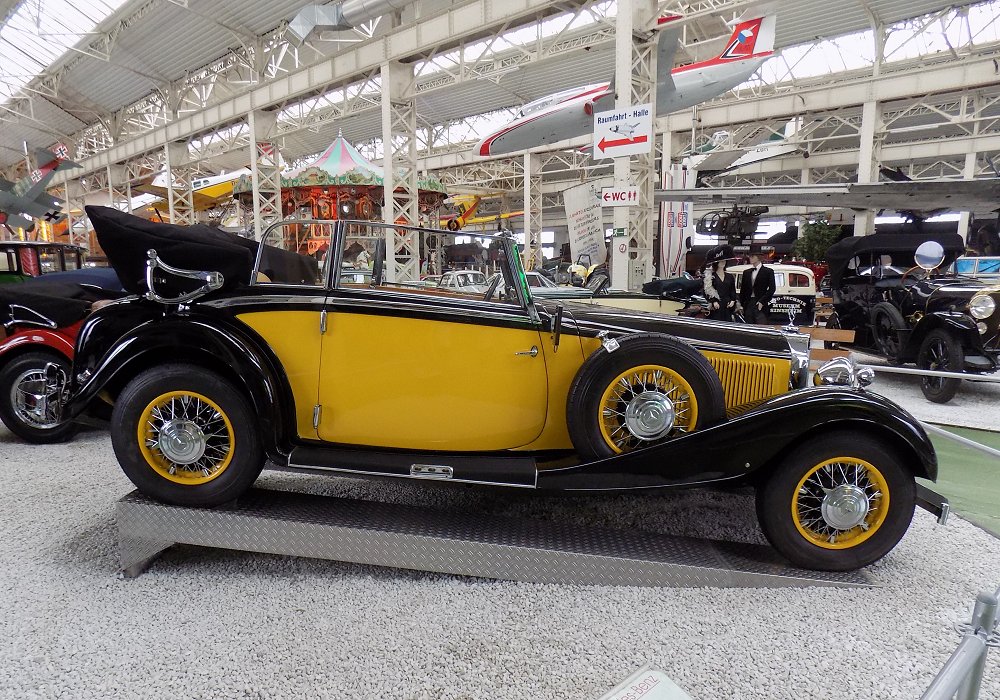
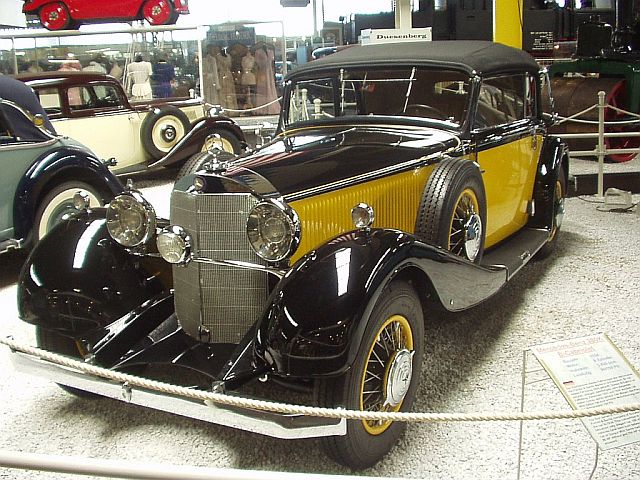
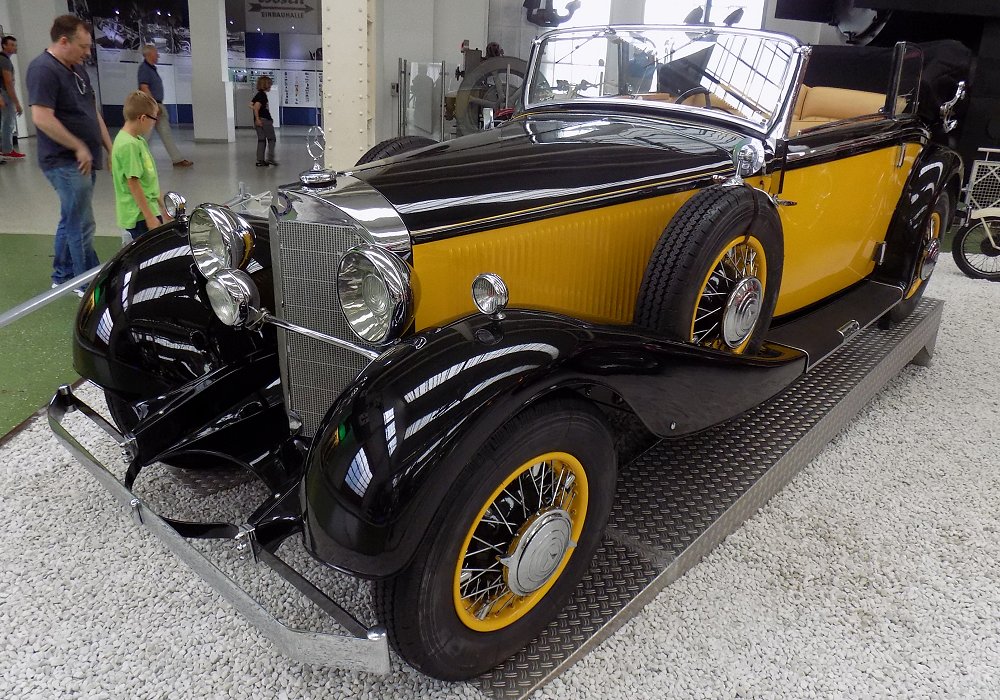
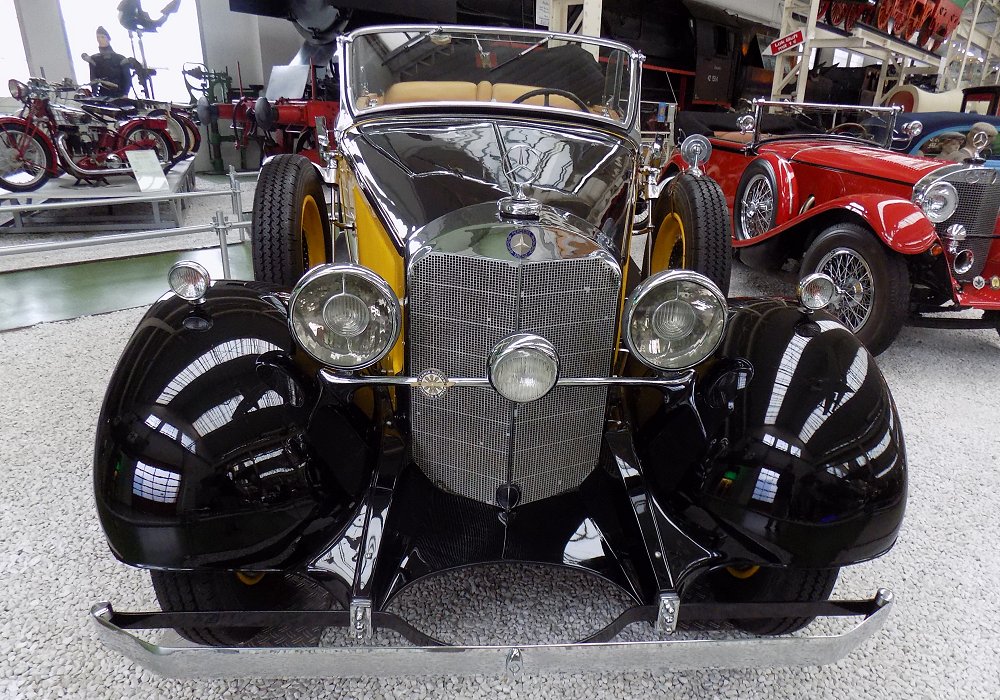
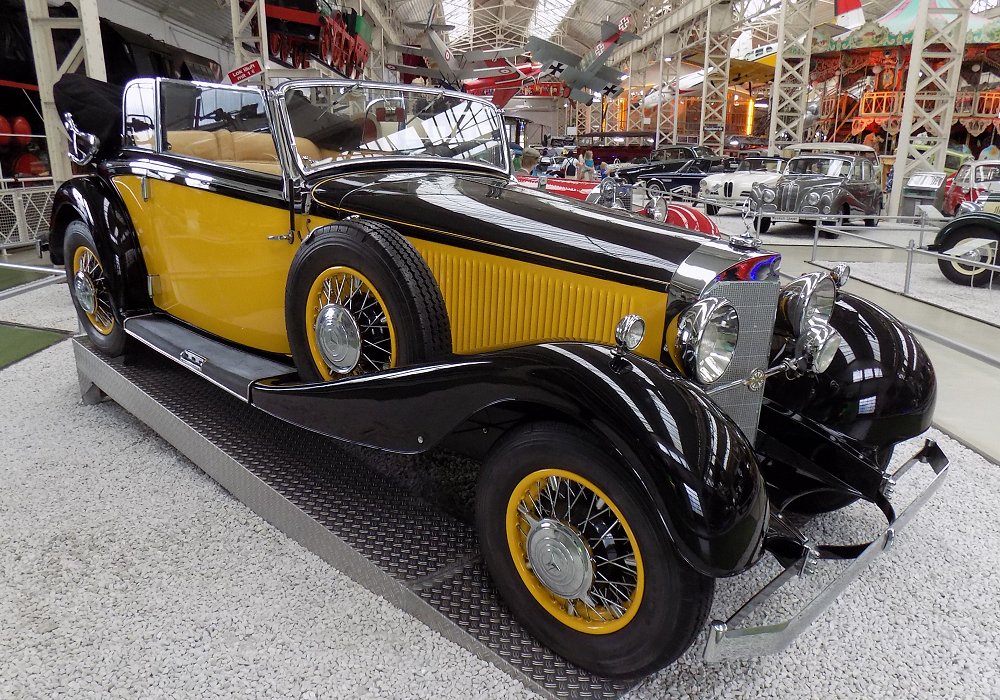
The Mercedes-Benz 380 Kompressor Cabriolet was one of the most technically advanced and visually dramatic open touring cars of the early 1930s, introduced in 1933 as part of Mercedes-Benz’s new low-chassis luxury generation. As the supercharged evolution of the standard 380, the Kompressor version combined elegant Sindelfingen coachwork with forced-induction performance, marking a decisive step toward the legendary supercharged prestige cars that would soon follow. It was designed for affluent owners who demanded refinement, presence and effortless power in equal measure.
Power came from a 3.8-litre inline-eight engine equipped with a mechanically driven Roots-type supercharger. In normal driving the engine operated naturally aspirated, but under full throttle the supercharger engaged, boosting output to approximately 140 horsepower. This dual-character arrangement delivered smooth, quiet running at part throttle and a dramatic surge of power when demanded. The straight-eight’s inherent balance and the added torque from supercharging gave the 380 Kompressor Cabriolet an ability to accelerate and cruise at speeds far beyond those of conventional luxury cars of the period. A four-speed manual gearbox transmitted power to the rear wheels, allowing the driver to exploit the engine’s flexibility and formidable mid-range performance.
A defining feature of the 380 Kompressor was its low-slung chassis. Mercedes-Benz adopted a newly developed frame that positioned the body lower between the axles, significantly reducing centre of gravity and improving both handling and visual proportions. The result was a car that felt more stable and planted at speed than earlier upright designs. Suspension used semi-elliptic leaf springs front and rear, carefully tuned to balance comfort with control, while hydraulic brakes on all four wheels provided strong and reliable stopping power. These features placed the 380 Kompressor among the most advanced luxury cars of its era.
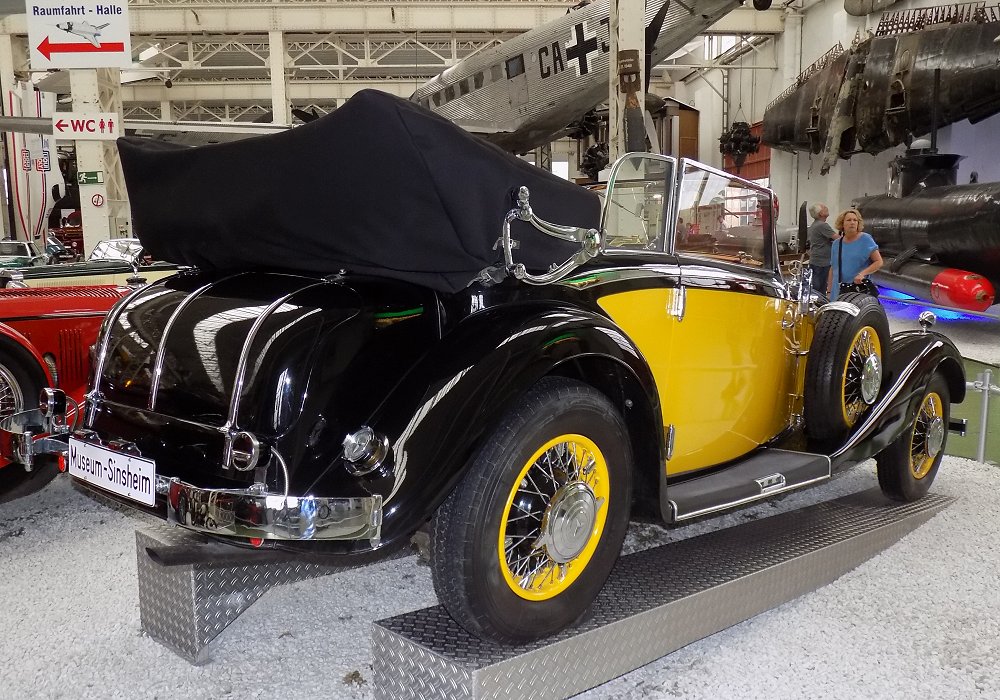
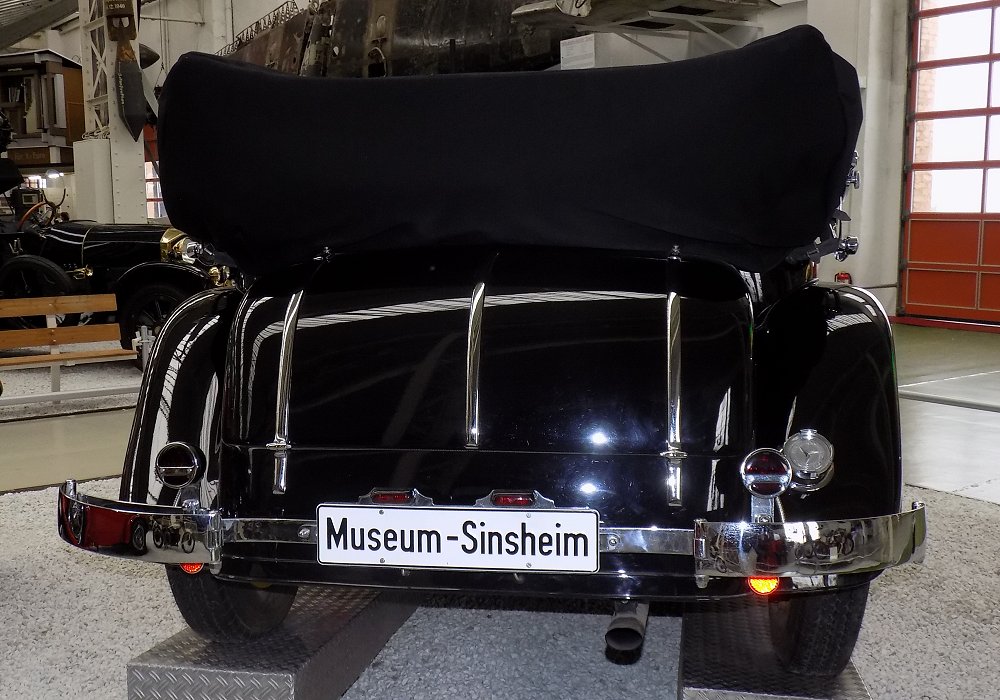
The cabriolet bodywork, crafted by the Sindelfingen coachworks, was offered in several configurations, including two-seat and four-seat variants depending on customer preference. Regardless of layout, the styling was unmistakably modern for the early 1930s. A long bonnet housed the supercharged straight-eight, flowing into deeply sculpted wings and a low, elegant passenger compartment. The folding fabric roof was engineered to sit low and tidy when lowered, preserving the car’s clean, flowing lines. With the roof raised, the Cabriolet retained a formal, prestigious presence; with it lowered, the car became a striking open tourer with undeniable authority.
Inside, the Mercedes-Benz 380 Kompressor Cabriolet offered an interior that matched its mechanical sophistication. Seating was generous and deeply cushioned, typically upholstered in fine leather. The dashboard featured a refined arrangement of instruments set into polished wood or carefully finished metal, providing the driver with clear information without excess ornamentation. Switchgear and fittings reflected Mercedes-Benz’s emphasis on precision engineering and durability. Despite its performance capabilities, the cabin remained quiet and refined, especially when the supercharger was not engaged.
On the road, the 380 Kompressor Cabriolet delivered a driving experience that few contemporaries could match. In relaxed touring, it behaved like a refined luxury car, smooth, composed and quiet. When the accelerator was pressed fully, the engagement of the supercharger transformed the car’s character, delivering powerful acceleration and a sense of effortless speed. The low chassis contributed to excellent stability, making high-speed travel more confident and controlled than in earlier large Mercedes models. The combination of forced induction, advanced chassis design and luxury coachwork created a uniquely compelling grand touring experience.
The 380 Kompressor occupied a crucial position in Mercedes-Benz history. It was one of the first models to fully integrate supercharging with a modern low-frame chassis, setting the template for the iconic 500 K and 540 K that followed. Production numbers were limited, as the car was expensive and complex to build, and it was quickly overshadowed by even more powerful successors.
Today, the Mercedes-Benz 380 Kompressor Cabriolet is regarded as a landmark pre-war automobile. It represents the moment when Mercedes-Benz fused advanced engineering, supercharged performance and elegant open-body design into a coherent and highly influential package. Surviving examples are extremely rare and highly prized, valued for their historical importance, dramatic presence and their role as a direct precursor to some of the most celebrated supercharged Mercedes models of the 1930s.