


Description
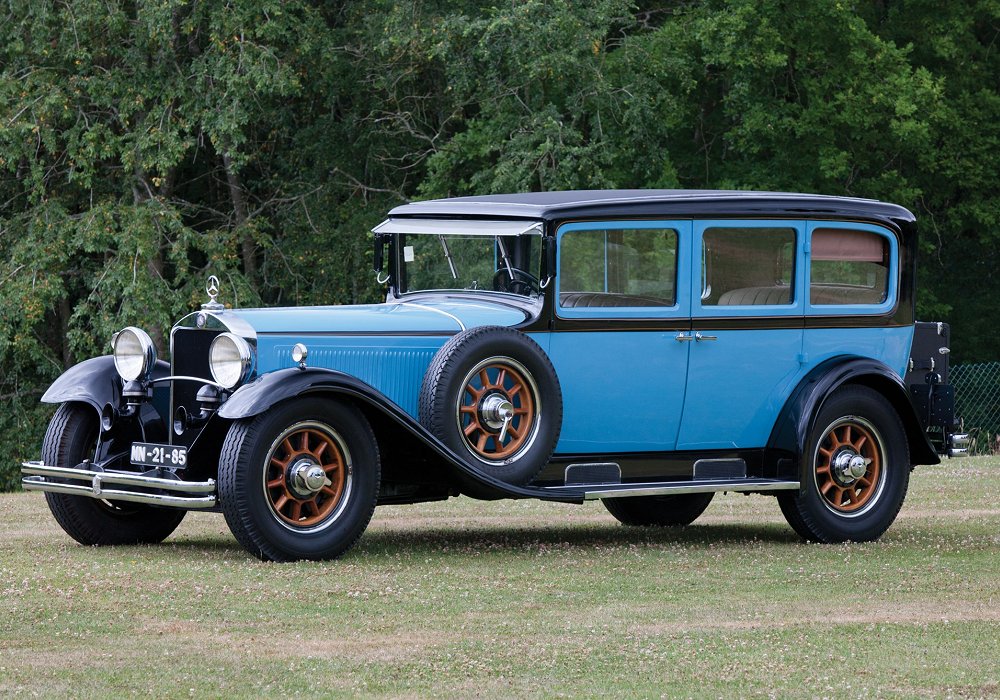
The Mercedes-Benz 460 K Nürburg was a refined, shorter-wheelbase evolution of the original 460 Nürburg, offering improved manoeuvrability and a more agile character while retaining the dignity and refinement expected of Mercedes’ flagship straight-eight luxury line. Introduced in the early 1930s, the 460 K formed part of the continuous development of the Nürburg series, which had debuted in 1928 as Mercedes-Benz’s first model built specifically around an eight-cylinder engine. The Nürburg line represented the company’s answer to the large, smooth and imposing straight-eight luxury cars coming from the United States and from European marques such as Horch and Minerva.
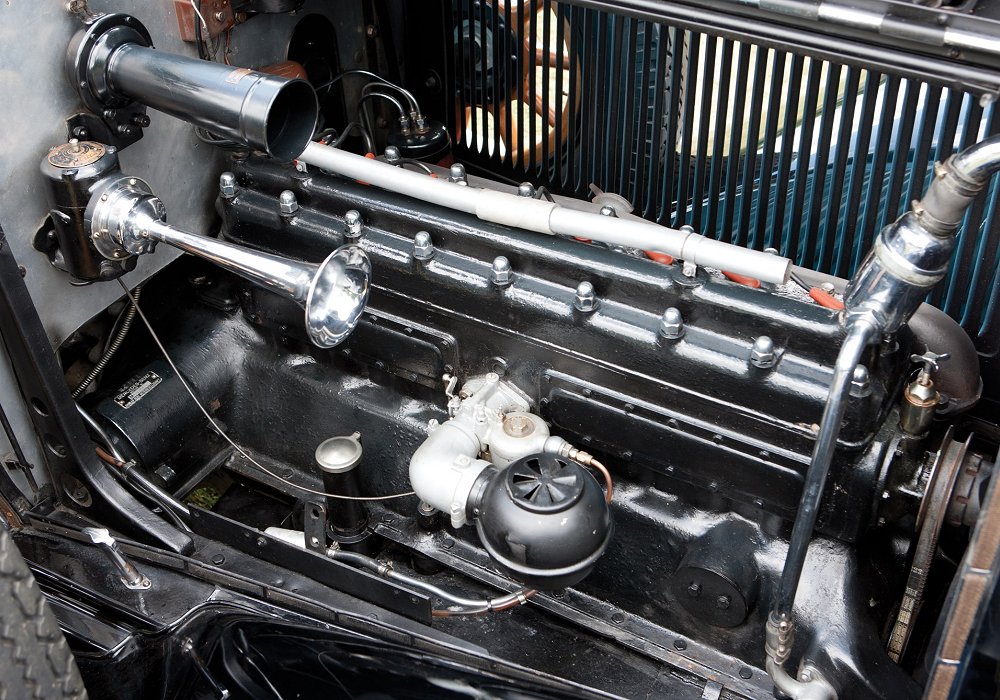
At the heart of the 460 K stood the familiar 4.6-litre inline-eight, an engine designed for refinement and stamina rather than outright performance. Producing around 80–90 horsepower depending on specification, it delivered strong low-speed torque and exceptionally smooth running thanks to the inherent even-firing characteristics of the straight-eight layout. Coupled to a robust four-speed manual gearbox, the engine offered quiet, steady progress and the ability to maintain comfortable cruising speeds of around 100–110 km/h. Although not a sporting powerplant, it was perfectly suited to the heavy, formal body styles typical of the Nürburg range.
The addition of the K designation, standing for Kurz (short), signified a reduced wheelbase compared with the standard 460. This change gave the Nürburg 460 K a noticeably different driving character. The shorter chassis improved turning radius, agility and general responsiveness, especially in urban environments or on narrower European roads. Despite the size reduction, the ladder-frame structure remained exceptionally strong, maintaining the Nürburg reputation for durability and stability on long-distance journeys. Semi-elliptic leaf springs at both axles provided a well-controlled ride, firm enough to support heavy coachwork yet comfortable for long hours of touring. Large mechanical drum brakes on all four wheels offered reliable stopping power for a car of this size and mass.
The 460 K Nürburg could be ordered with a variety of factory bodies from Mercedes’ Sindelfingen coachworks, as well as with special coachbuilt bodies commissioned by private customers. Typical styles included formal Pullman limousines, four-door saloons, cabriolets and landaulets. The shorter chassis often suited the more stylish and manoeuvrable body forms such as the four-seat Cabriolet B or Cabriolet C, where its proportions produced a more balanced and elegant silhouette. The tall, upright radiator, long bonnet and sweeping wings maintained the classic Mercedes luxury aesthetic of the early 1930s, emphasising prestige and presence.
Inside, the Nürburg 460 K continued the series’ tradition of high-quality craftsmanship. Interiors were trimmed in fine upholstery—leather or wool broadcloth depending on customer choices—supported by polished wood dashboards and substantial door panels. The instrument cluster presented a clean arrangement of essential gauges including speedometer, oil pressure, fuel level and temperature. The seating was spacious and upright, imparting a formal, almost stately atmosphere that made the Nürburg particularly popular among professional drivers, government services and owners seeking refined long-distance comfort.
On the road, the Mercedes-Benz 460 K Nürburg delivered quiet authority. The straight-eight engine operated with calm smoothness, and the shorter chassis gave the car a more responsive feel than the long-wheelbase version. It was not a car designed for speed or sporting agility, but for secure, comfortable and dignified progress. Long-distance stability was excellent, and the model’s substantial build quality meant that even rougher or uneven surfaces could be managed with ease. The combination of smooth power delivery, reliable braking and solid handling made the 460 K a reassuring travel companion.
Historically, the 460 K Nürburg played an important role in Mercedes-Benz’s early 1930s portfolio. It helped solidify the company’s reputation for building sophisticated straight-eight luxury cars at a time when international competition in the upper-class segment was particularly strong. Though less flamboyant than the supercharged S-Series and less technologically advanced than later Mercedes models, the 460 K Nürburg represented a mature, polished expression of pre-war Mercedes engineering.
Today, the Mercedes-Benz 460 K Nürburg is appreciated for its imposing presence, mechanical refinement and elegance. Surviving examples are rare, often preserved as formal limousines or stylish cabriolets. Collectors value the model for its historical significance as one of Mercedes’ earliest eight-cylinder luxury cars and for the unmistakable charm of its refined pre-war craftsmanship.