Description
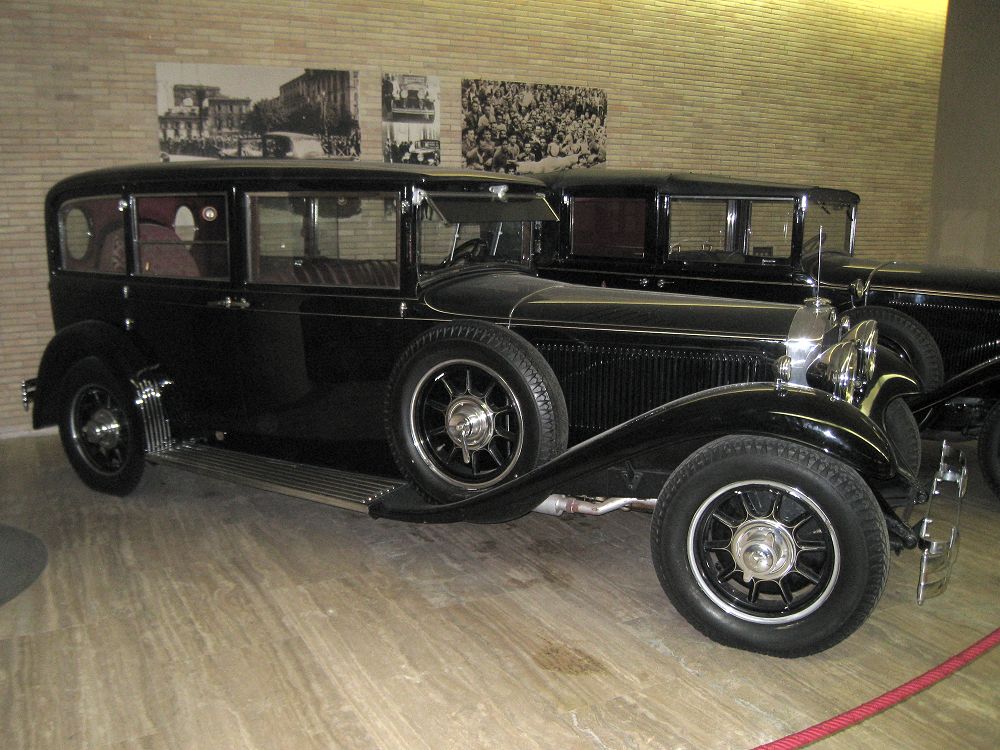
The Mercedes-Benz 460 Nürburg was introduced in 1928 as Mercedes’ first production model designed specifically around an eight-cylinder engine, marking an important step in the company’s move into the upper-luxury segment. Named after the historic Nürburg Castle near the Nürburgring, the model was conceived as a refined, long-distance touring car that could compete directly with the large straight-eight luxury vehicles emerging from America and Europe at the time. It offered prestige, comfort and engineering sophistication in a more formal and substantial package than the company’s six-cylinder Mannheim or Stuttgart models.
At its heart, the 460 Nürburg carried a 4.6-litre inline-eight engine, one of the earliest straight-eight units from Mercedes-Benz. Producing around 80–90 horsepower depending on specification, the engine was not intended for high performance but instead for quiet, smooth and uninterrupted power delivery. The inherent balance of the eight-cylinder layout gave the Nürburg a level of refinement that set it apart from mid-market cars. Paired with a robust four-speed gearbox, the engine provided steady acceleration and comfortable cruising, with typical top speeds between 100 and 110 km/h—impressive for a large, heavy luxury vehicle of the late 1920s.
The chassis was a substantial ladder-frame construction engineered to support the weight and length of the straight-eight powerplant and the large bodies typically mounted to it. Early versions used solid axles with semi-elliptic leaf springs, giving durable but predictable handling. Mercedes refined the frame and suspension over time, improving ride quality and stability. Large mechanical drum brakes on all four wheels offered reliable stopping power, essential for a car of such mass. Steering effort was considerable at low speeds, but once the car was moving it became stable, composed and reassuring—qualities valued by both chauffeurs and private owners.
The Nürburg was offered primarily as a stately saloon or limousine, and the majority of examples were bodied by Mercedes’ own Sindelfingen coachbuilding works. These bodies featured a tall, upright radiator, a long and dignified bonnet, sweeping wings and generous accommodation for passengers. The styling was conservative and imposing, reflecting the luxury tastes of the late 1920s and early 1930s. Weather protection was excellent, and many cars featured division windows, rear jump seats or optional luxury fittings for formal use. The model could also be ordered as a touring car, cabriolet or landaulet, and a number of specialist coachbuilders created bespoke bodies for discerning clients.
Inside, the 460 Nürburg was designed around comfort and formality. The interior featured broad, upright seating, often trimmed in high-quality cloth or leather depending on customer preference. Polished wood trim, elegant door hardware and thick carpeting created a sense of craftsmanship and prestige. The dashboard carried precise Mercedes instrumentation arranged clearly before the driver. Rear passengers, in particular, enjoyed significant space and refinement, making the Nürburg a preferred choice for chauffeured use and official duties.
On the road, the car delivered exactly the qualities expected of a high-end luxury machine. The eight-cylinder engine produced smooth, unhurried power, ideal for long-distance touring. The long wheelbase and robust suspension absorbed rough surfaces with ease, while the car’s weight and solid construction gave it a stately, unflappable character. Although not designed for sporting performance, the Nürburg conveyed assurance and dignity at any speed within its capabilities.
The 460 Nürburg played a crucial role in Mercedes’ development during the late 1920s. It demonstrated that the company could produce large, sophisticated luxury cars equal to their international competitors, and it helped establish the eight-cylinder configuration as a viable option for Mercedes-Benz. While overshadowed today by the more dramatic supercharged S-Series sports models, the Nürburg was a key pillar of Mercedes’ early prestige offerings.
Today, the Mercedes-Benz 460 Nürburg is valued by collectors for its imposing presence, historical importance and refined engineering. Surviving examples are rare, particularly in well-preserved or correctly restored form, and they remain impressive reminders of an era when craftsmanship, comfort and mechanical stability defined the luxury automobile.