Description
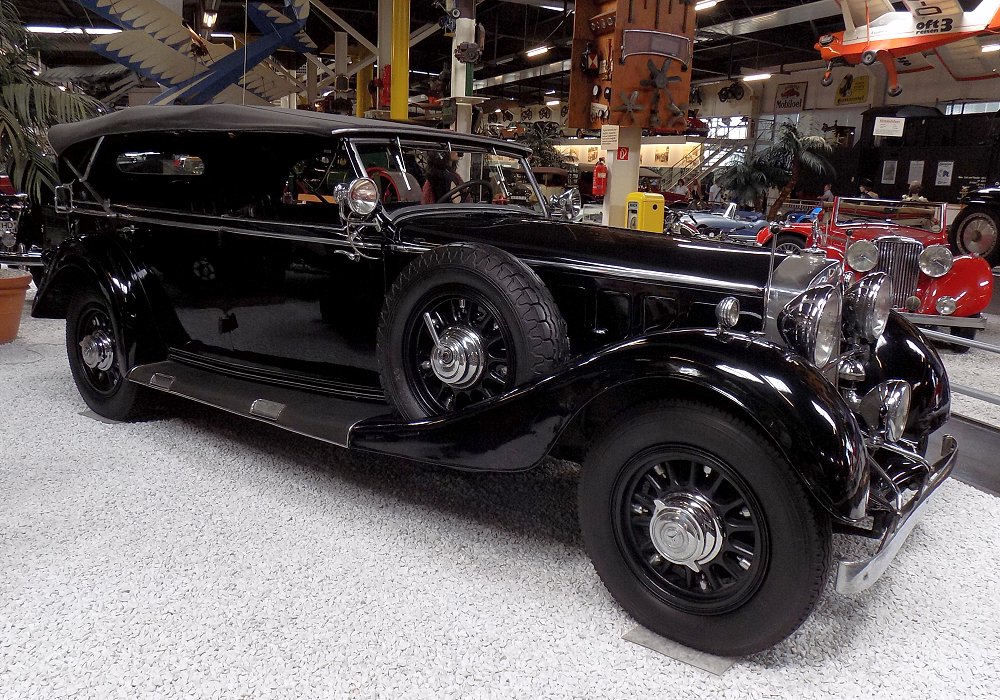
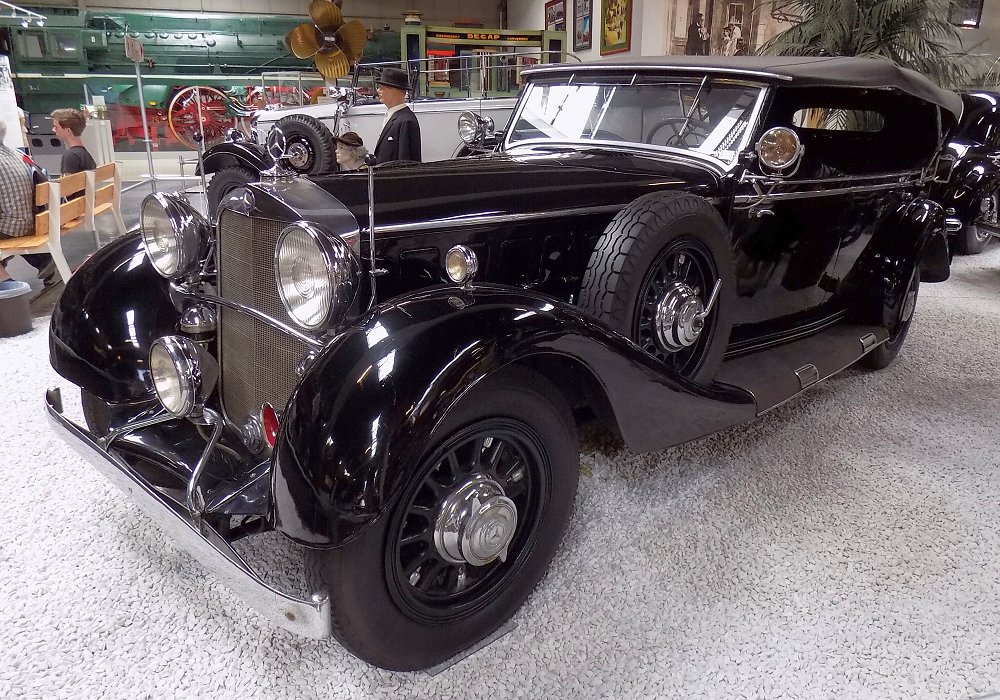
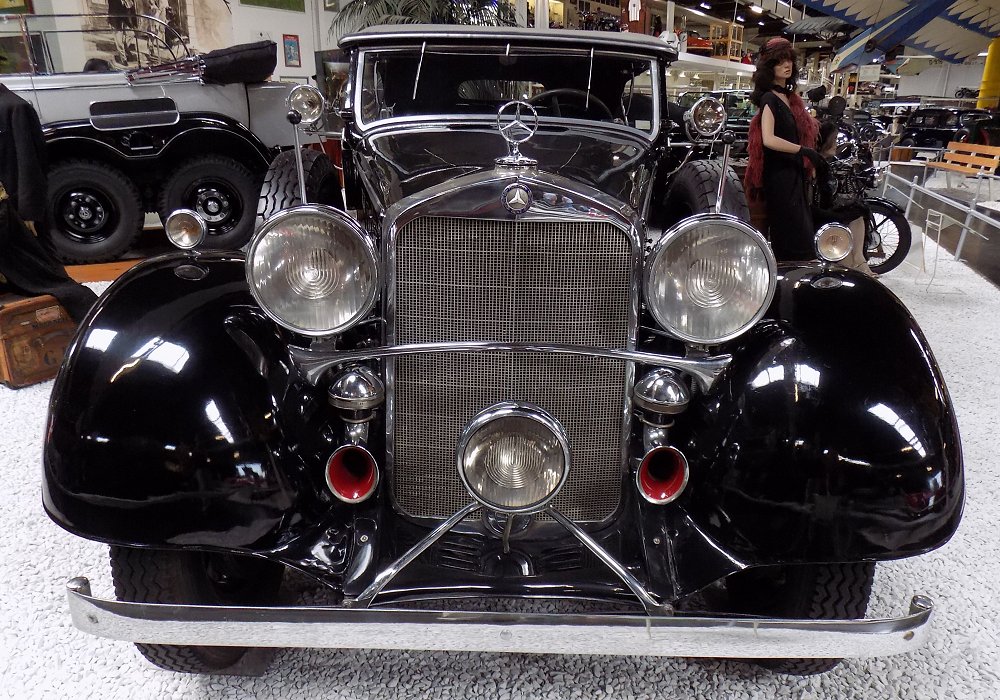
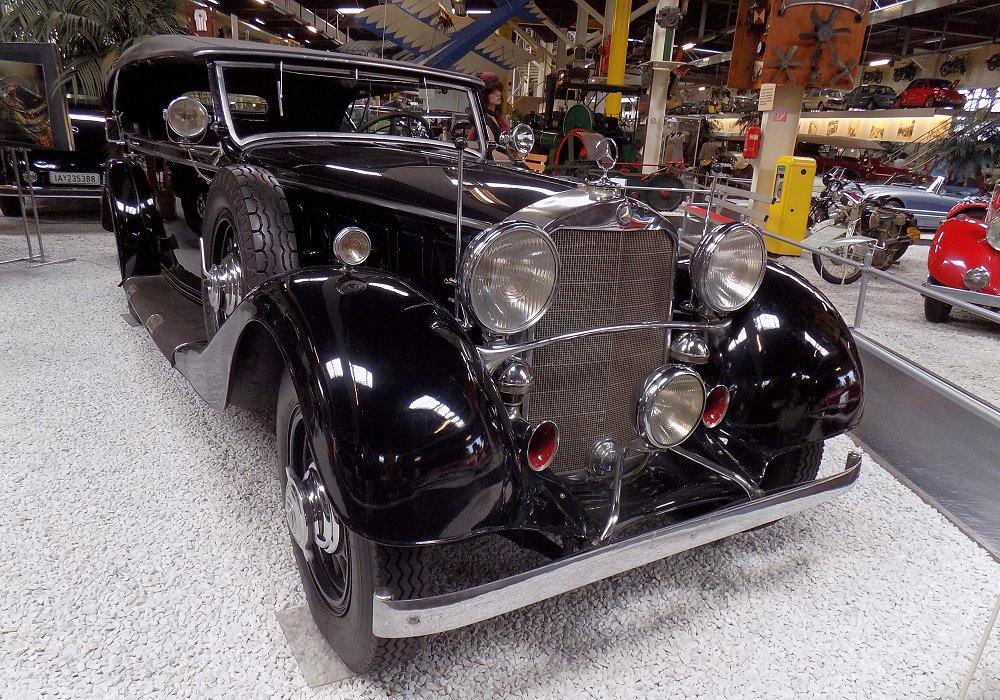
The Mercedes-Benz 500 Nürburg Cabriolet was one of the most elegant and prestigious open-body variants offered on Mercedes’ flagship straight-eight luxury chassis of the early 1930s. Positioned above the earlier 460 models, the 500 Nürburg represented Mercedes-Benz’s mature entry into the world of large, formal luxury automobiles, competing with the stately eight-cylinder offerings from Horch, Minerva, Packard and Cadillac. In Cabriolet form, the 500 Nürburg combined the engineering solidity of a full-size touring car with the graceful presence of an open, handcrafted body, giving it a rare blend of dignity and leisure.
Power came from the refined 4.9-litre inline-eight engine, an enlarged development of the earlier Nürburg straight-eight. Producing around 100 horsepower, it delivered quiet, flexible and near-vibrationless power—qualities that defined the Nürburg character. The straight-eight configuration ensured a remarkably smooth firing sequence, allowing the large car to move with refined calm rather than urgency. Coupled to a four-speed manual gearbox, the engine offered steady acceleration and a typical cruising capability of around 100–110 km/h. Its purpose was dignified long-distance travel rather than performance, and it excelled at delivering effortless, untroubled motoring.
The chassis was a very substantial ladder-frame construction engineered to support heavy, luxurious bodywork and the long bonnet required by the eight-cylinder engine. The long wheelbase provided superb straight-line stability, and semi-elliptic leaf springs at both axles gave a controlled, well-damped ride suited to long hours of touring. Mechanical drum brakes on all four wheels provided dependable stopping power for a car of this scale. The steering was weighty at low speeds but became steady and predictable on the move, making the car well suited to both chauffeur use and private driving.
The Cabriolet bodies for the 500 Nürburg were produced primarily by Mercedes’ Sindelfingen coachworks, though some private buyers commissioned outside custom coachbuilders. Several Cabriolet configurations existed, typically designated Cabriolet A, B or C, each offering different seating arrangements and roof styles. Regardless of configuration, the overall impression was one of stately elegance. The tall radiator, sweeping front wings, long bonnet and cleanly sculpted rear deck were complemented by a beautifully made folding fabric roof. With the top down, the Nürburg Cabriolet presented a majestic open profile; with the roof raised, it retained the formal gravitas of a luxury closed car.
Inside, the cabin reflected the same high craftsmanship seen throughout the Nürburg series. Seats were generously proportioned and upholstered in either fine leather or high-quality wool cloth, depending on the customer’s wishes. Polished wood trim, thick carpets and finely finished door panels created an atmosphere of traditional Mercedes luxury. The instrument panel in front of the driver featured precise gauges for speed, oil pressure, fuel, temperature and charging—clear, mechanical and elegant. The cabin was spacious, with a commanding seating position that offered excellent outward visibility, particularly beneficial in open-top motoring.
On the road, the 500 Nürburg Cabriolet delivered smooth, authoritative progress. The straight-eight engine supplied effortless torque, allowing the car to glide along with minimal vibration. The long wheelbase provided a floating, unhurried motion that absorbed rough surfaces with dignified composure. The Cabriolet body added a sense of occasion to every journey, making the car ideal for touring, leisurely countryside travel or formal use where an open roof added visual impact. While not designed for sporting agility, the 500 Nürburg always conveyed stability, refinement and quiet confidence.
Historically, the 500 Nürburg played a significant role in Mercedes-Benz’s early-1930s luxury strategy. It gave the company a high-prestige eight-cylinder platform capable of supporting formal limousines, touring saloons and elegant cabriolets at a time when luxury motoring still depended heavily on craftsmanship and coachbuilder collaboration. Though overshadowed today by the dramatic supercharged S-Series of the same era, the Nürburg was a central pillar of Mercedes’ reputation for engineering excellence and refined dignity.
Today, the Mercedes-Benz 500 Nürburg Cabriolet is highly prized among collectors of pre-war luxury automobiles. Its rarity, its imposing yet elegant presence and its association with traditional Mercedes craftsmanship make it a standout example of early straight-eight prestige motoring. Well-preserved examples remain impressive machines, offering a richly atmospheric driving experience and a direct connection to the golden age of handcrafted luxury touring cars.