Description
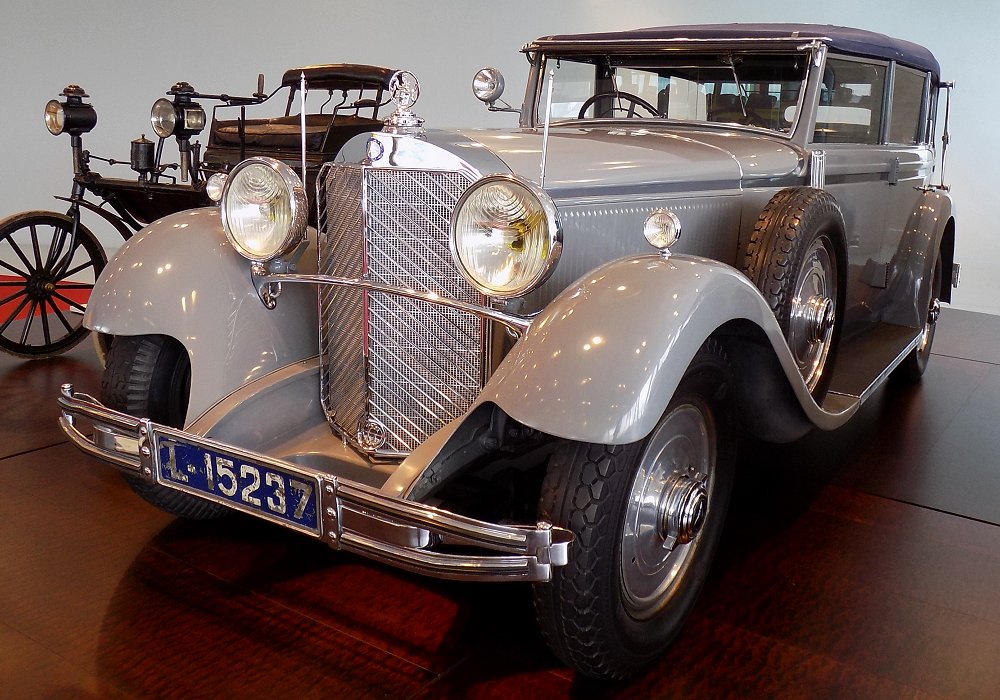
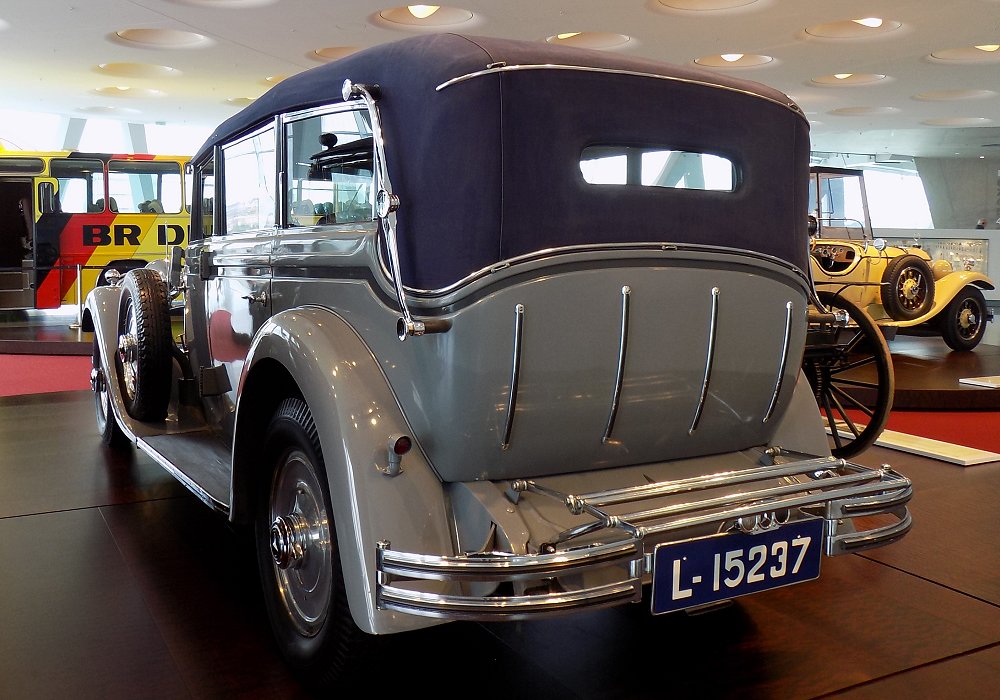
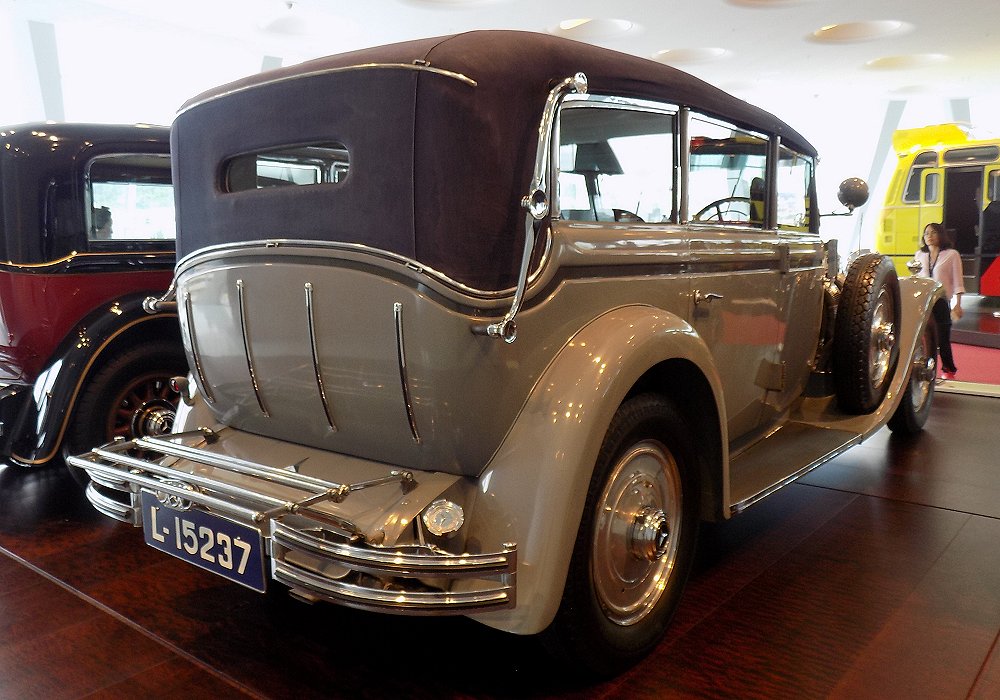
The Mercedes-Benz 770 Cabriolet F was one of the most imposing and symbolically charged automobiles of the pre-war era, representing the ultimate expression of Mercedes-Benz engineering, luxury and state authority. Introduced as part of the later 770 series known internally as the W150, the Cabriolet F combined immense supercharged power with an open ceremonial body designed specifically for official, military and state use. It was not a private luxury car in the conventional sense, but a purpose-built vehicle intended to project dominance, prestige and technological supremacy.
Power came from a colossal 7.7-litre inline-eight engine equipped with a Roots-type supercharger. In normal driving conditions the engine operated without boost, delivering smooth, quiet and effortless progress despite the vehicle’s enormous size and weight. When the accelerator was fully depressed, the supercharger engaged automatically, raising output to approximately 230 horsepower in later specification and providing extraordinary torque. This allowed the Cabriolet F to accelerate decisively and maintain high speeds even when fully laden, an essential requirement for its operational and security roles. Power was transmitted through a four-speed manual gearbox, reinforced to handle the immense torque produced by the supercharged engine.
The W150 chassis was a massive and heavily reinforced ladder-frame design developed specifically for the 770 series. It featured a very long wheelbase, providing exceptional stability and allowing for expansive bodywork and passenger accommodation. Suspension consisted of semi-elliptic leaf springs front and rear, engineered to support extreme weight while maintaining composure over rough or uneven surfaces. Hydraulic brakes on all four wheels were fitted, offering significantly improved stopping power compared with earlier versions and reflecting the increasing performance and mass of the vehicle. The overall driving character prioritised stability, durability and authority rather than agility.
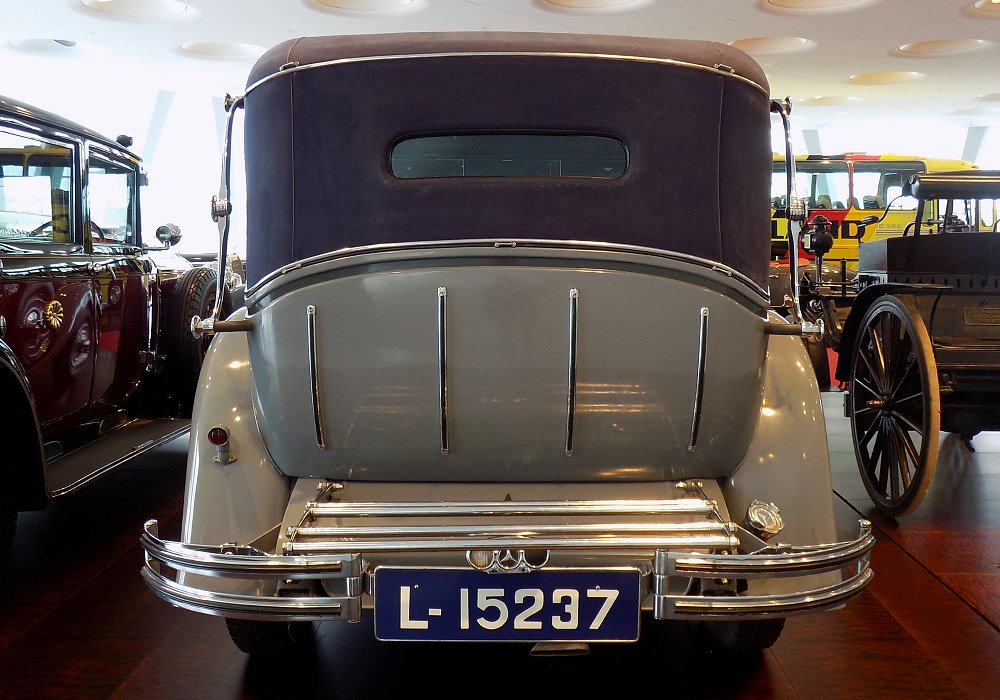
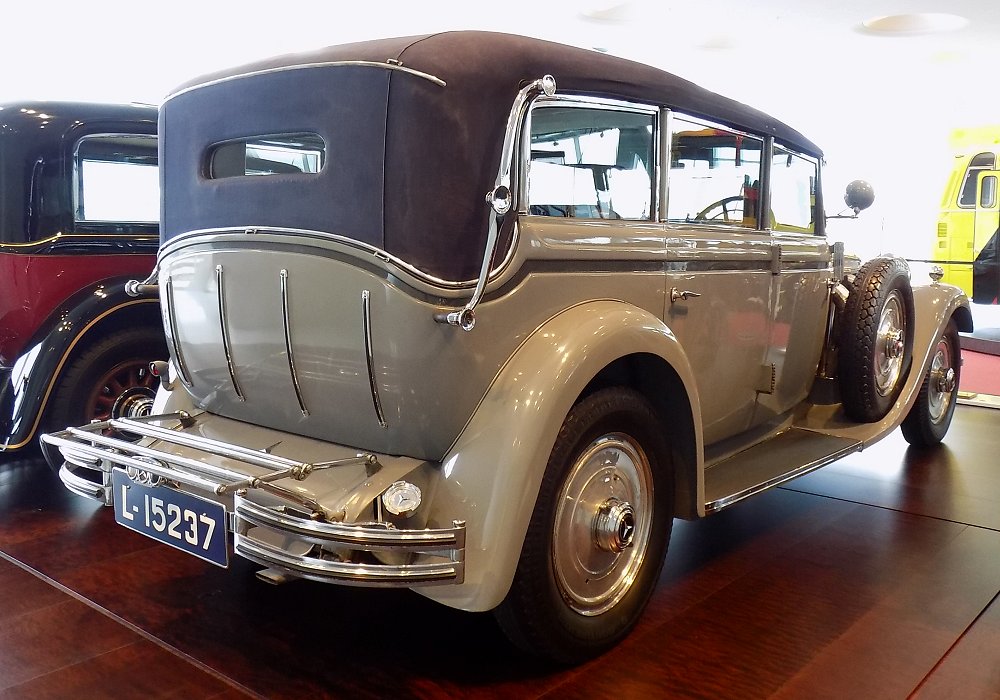
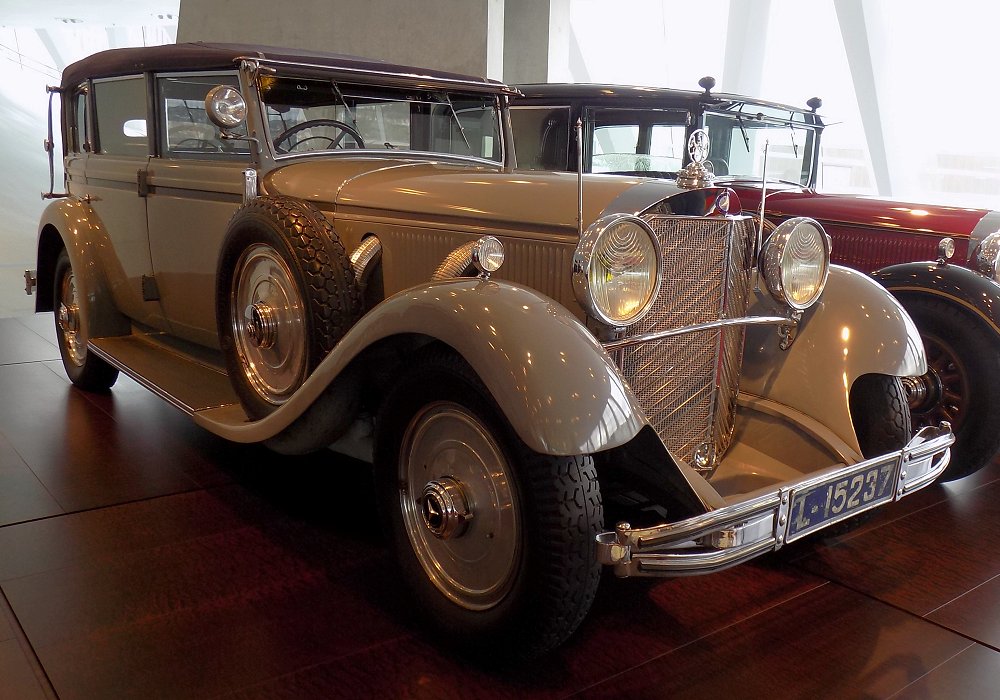
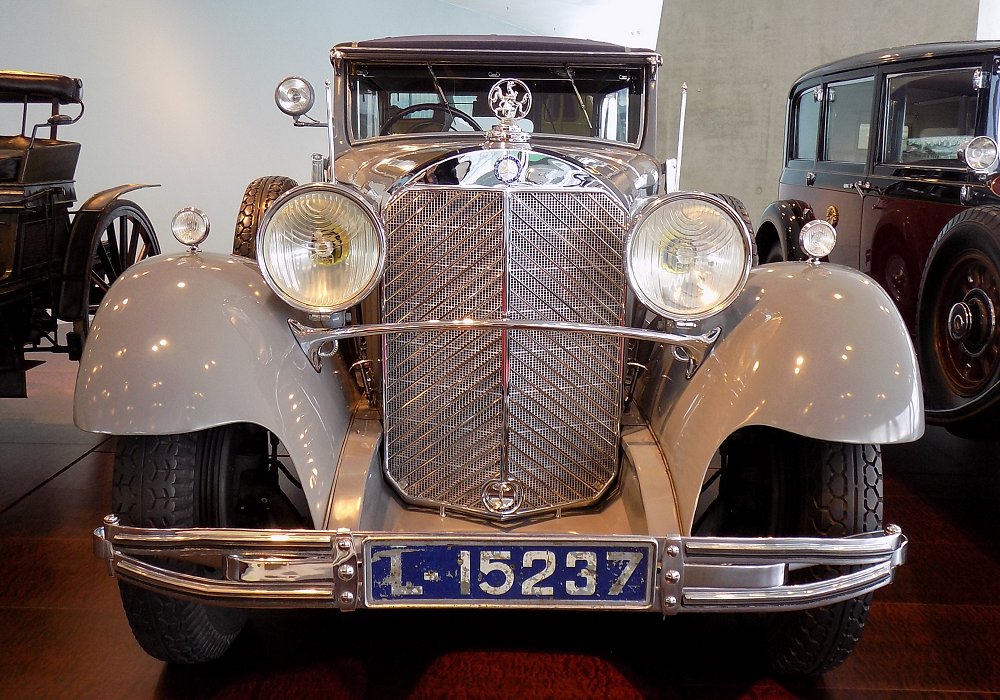
The Cabriolet F body was an open four-door configuration designed primarily for ceremonial appearances, military inspections and official processions. Built by the Sindelfingen coachworks, the design featured a towering bonnet, upright windscreen and expansive open passenger compartment. The “F” designation indicated the largest and most formal cabriolet body type, with three rows of seating in some configurations and extensive space for standing passengers. A folding fabric roof was fitted, allowing the car to be enclosed when required, though it was most often used with the roof lowered to maximise visibility during public appearances.
In many cases, the Cabriolet F was equipped with additional protective features. Some examples incorporated armour plating, bullet-resistant glass panels or reinforced body structures, significantly increasing weight but enhancing survivability. These modifications further emphasised the car’s role as a state vehicle rather than a luxury conveyance. Exterior fittings such as flag holders, hand grips and bespoke seating arrangements were often specified according to official requirements.
Inside, the Mercedes-Benz 770 Cabriolet F offered an interior that balanced luxury with functional robustness. Seating was typically upholstered in high-quality leather, designed to accommodate occupants in formal dress or military uniform. The interior layout prioritised visibility and accessibility rather than comfort alone, particularly in the rear compartment. The dashboard featured clear, utilitarian instrumentation focused on reliability and ease of monitoring, while controls were engineered for durability under demanding conditions. Despite its utilitarian intent, craftsmanship remained of the highest standard, consistent with Mercedes-Benz’s flagship status.
On the road, the 770 Cabriolet F delivered a driving experience unlike any other civilian automobile of its time. The immense engine allowed the vehicle to move with effortless authority, and the supercharger provided a reserve of power unmatched by any contemporary production car. The long wheelbase and massive chassis produced a stately, almost unstoppable sense of momentum. While the vehicle required skilled handling due to its size and weight, it excelled in its intended role, projecting power, confidence and mechanical dominance.
The Mercedes-Benz 770 Cabriolet F became most closely associated with the leadership of Nazi Germany, where it was used extensively by Adolf Hitler and other senior officials. This association has profoundly shaped the car’s historical legacy, making it both a technical marvel and a potent symbol of totalitarian power. As a result, surviving examples are primarily housed in museums, where they are presented within a broader historical and ethical context rather than celebrated purely as luxury automobiles.
Production of the W150 770 series ended in 1943, with very few Cabriolet F examples built due to their complexity, cost and specialised purpose. Surviving vehicles are exceptionally rare and tightly controlled due to their historical significance.
Today, the Mercedes-Benz 770 Cabriolet F is regarded as one of the most extreme and consequential automobiles ever produced. It stands at the intersection of engineering excellence, political history and moral reflection. As an object of study, it demonstrates the absolute limits of pre-war automotive engineering; as a historical artifact, it serves as a reminder of how technological achievement can be intertwined with power, propaganda and the darker chapters of human history.