Description
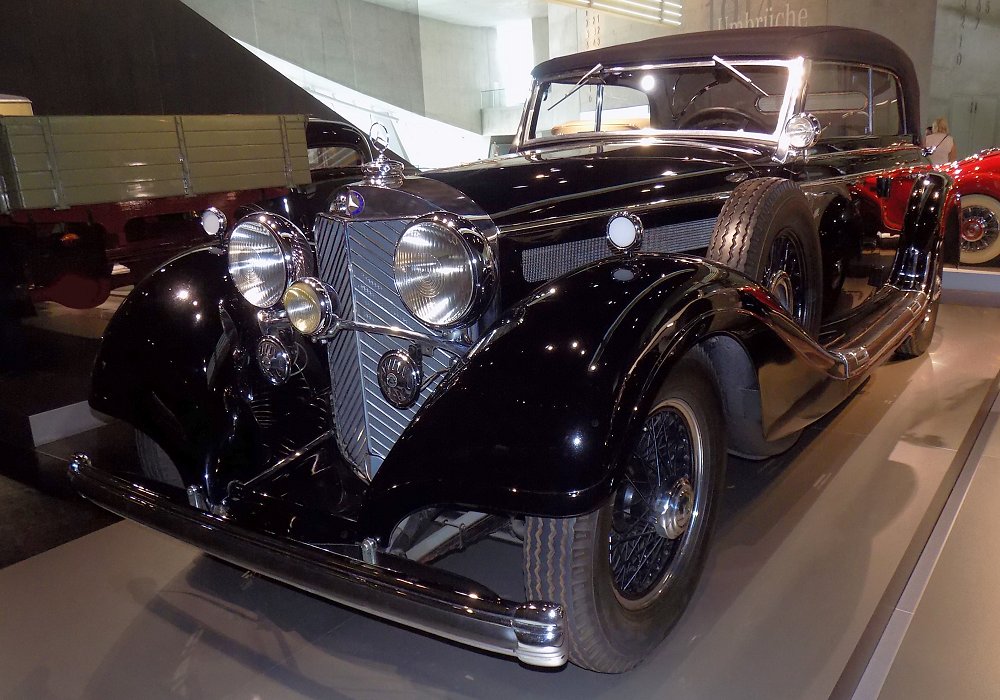
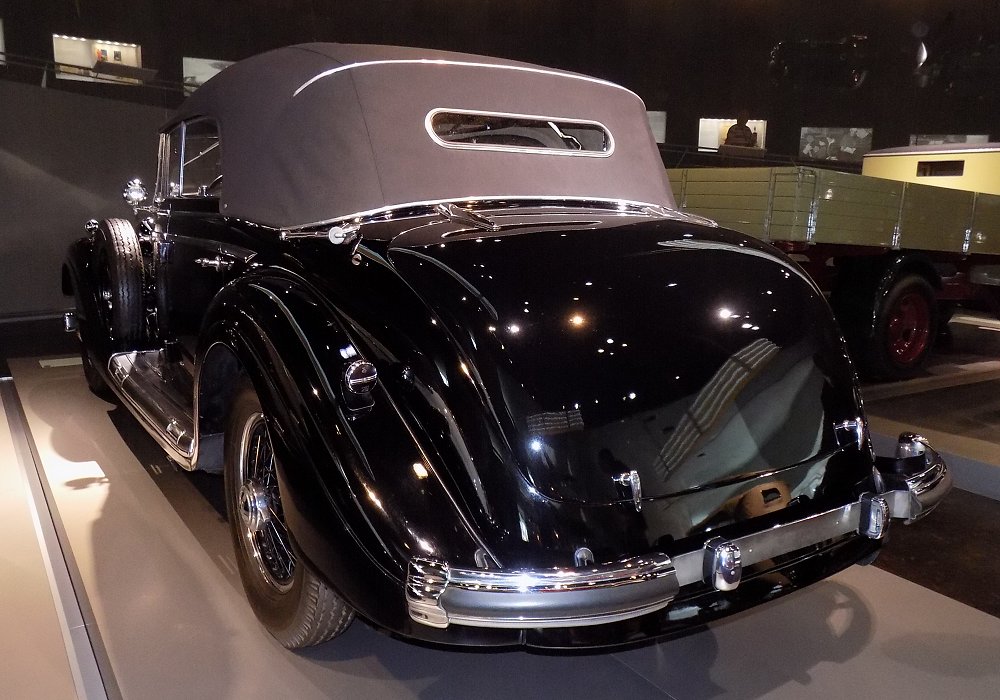
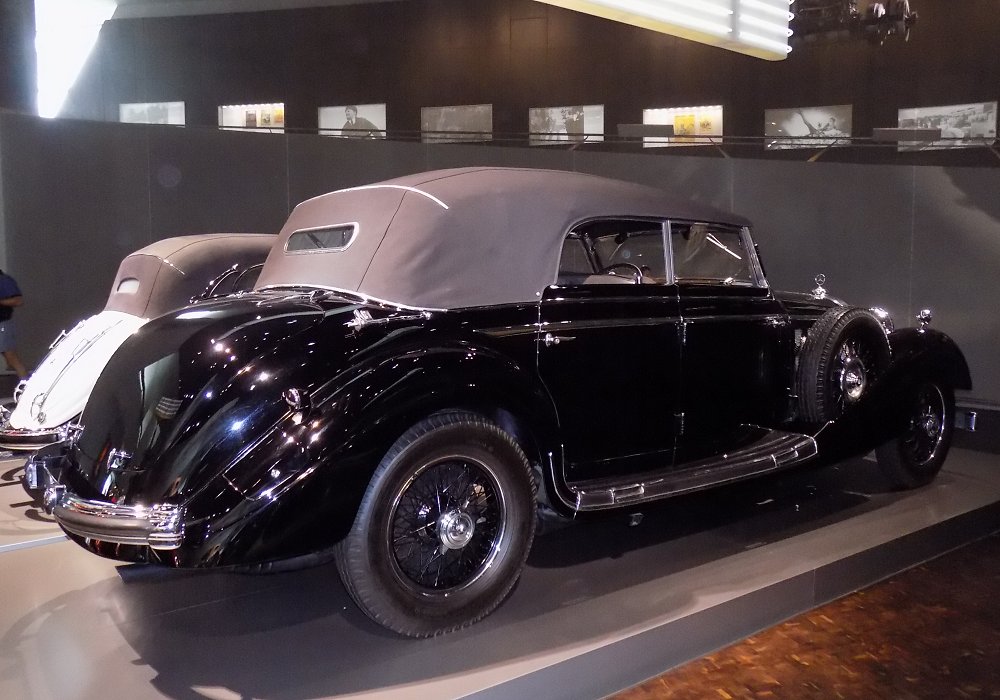
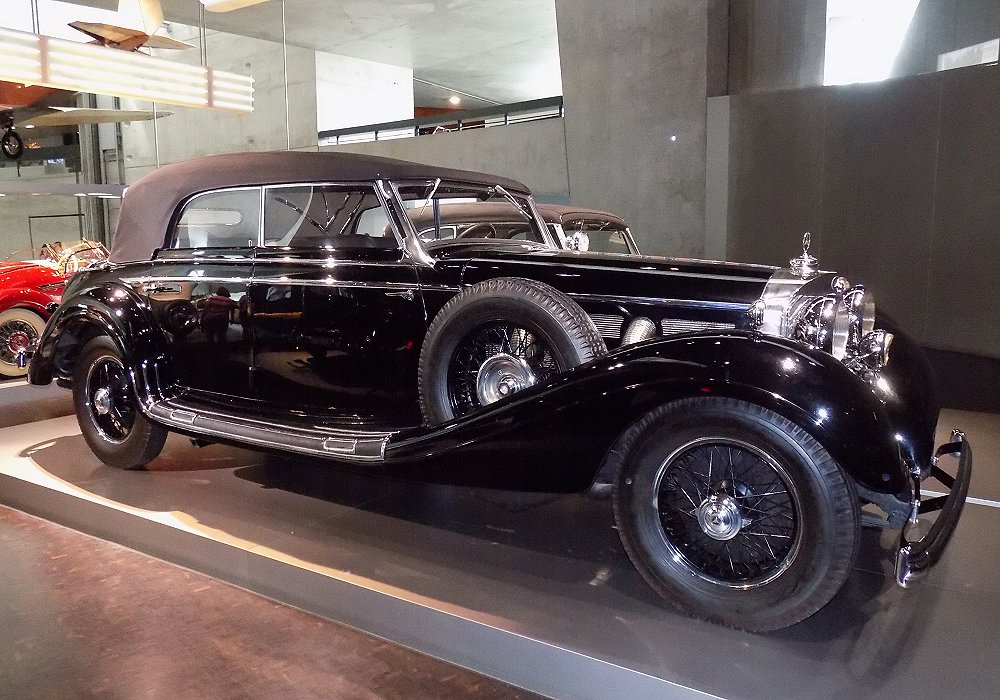
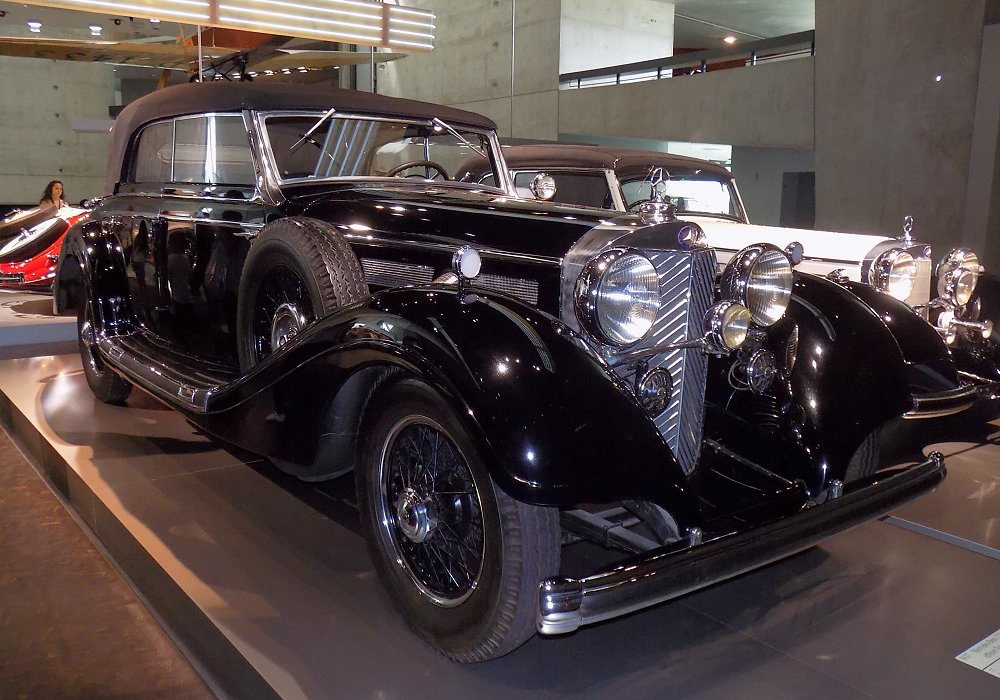
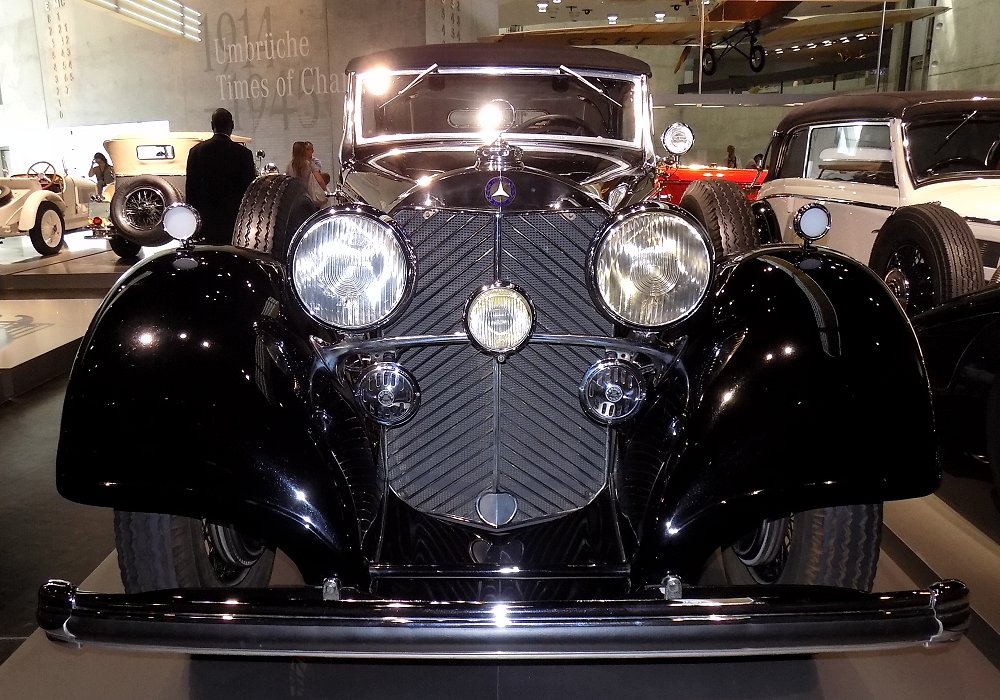
The Mercedes-Benz 770 Kompressor Tourenwagen was one of the most imposing and powerful open touring cars of the pre-war era, representing the pinnacle of Mercedes-Benz luxury, authority and mechanical ambition. Introduced in 1930 and known internally as the W07, the 770 was conceived as a flagship automobile for heads of state, royalty and the highest levels of government. In Tourenwagen form, it combined the immense presence of the 770 with an open body suited to ceremonial duties, parades and grand touring, making it one of the most recognisable and symbolically powerful cars of its time.
Power came from a massive 7.7-litre inline-eight engine fitted with a Roots-type supercharger. In normal driving the engine operated without boost, delivering smooth, almost silent progress despite the car’s enormous size and weight. When the accelerator was fully depressed, the supercharger engaged, increasing output to around 150 horsepower in early form and delivering vast reserves of torque. This allowed the Tourenwagen to accelerate with surprising authority and maintain high cruising speeds effortlessly. The four-speed manual gearbox was designed to handle the immense torque, and the engine’s flexibility meant the car could move smoothly even at very low speeds, an important characteristic for ceremonial use.
The chassis of the 770 was a massive ladder-frame construction engineered to support the heavy engine, large body and demanding operational roles. Semi-elliptic leaf springs were used front and rear, providing a ride quality that prioritised stability and load-bearing capability over agility. Mechanical brakes on all four wheels were fitted on early versions, with later refinements improving braking effectiveness. The long wheelbase contributed to exceptional straight-line stability and a smooth, stately ride, reinforcing the car’s commanding road presence.
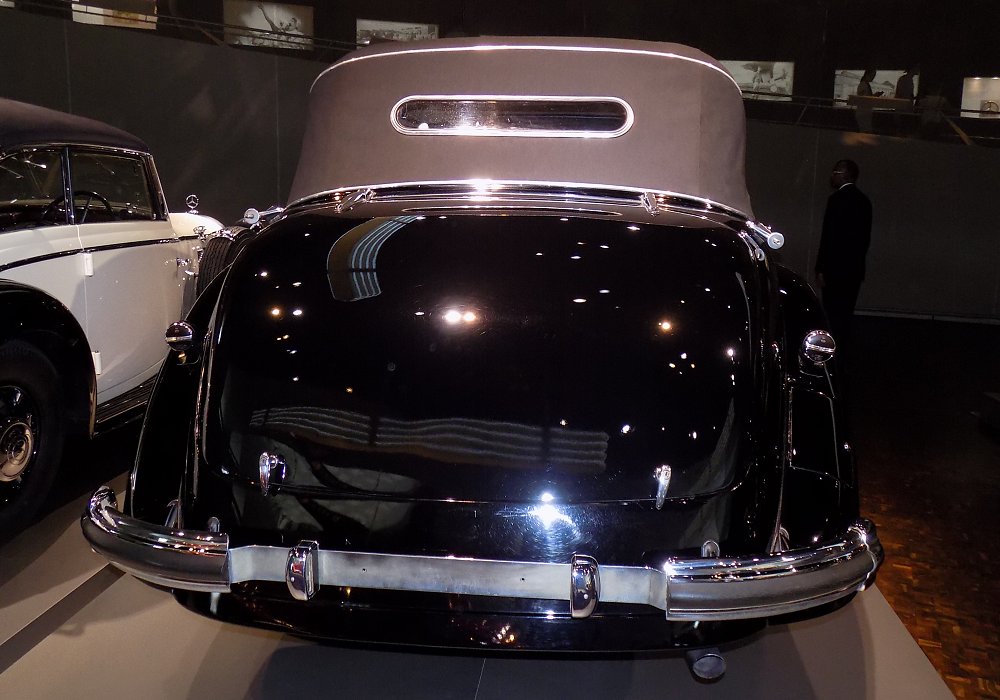
The Tourenwagen body was an open touring configuration, typically featuring four doors and generous seating for passengers. Built primarily by the Sindelfingen coachworks, the design emphasised dignity and authority rather than sporting flair. The long bonnet dominated the profile, flowing into upright body sides and sweeping wings. The open passenger compartment was often fitted with a folding fabric roof, allowing the car to be used in all weather conditions while still serving its ceremonial role. In many cases, additional fittings such as handholds, flags or special seating arrangements were specified to suit official duties.
Inside, the Mercedes-Benz 770 Kompressor Tourenwagen offered an interior that balanced luxury with durability. Seating was generous and upright, often upholstered in fine leather, with ample space for passengers wearing formal or military attire. The dashboard featured clear, functional instrumentation designed for reliability and ease of use rather than ornamentation. While not lavish in the manner of bespoke private limousines, the interior conveyed solidity, quality and authority, reflecting the car’s intended role as a state vehicle.
On the road, the 770 Tourenwagen delivered a driving experience defined by effortlessness and command. The enormous engine allowed the car to move without strain regardless of load, and the long chassis smoothed out road imperfections with a stately, almost locomotive-like composure. The supercharger provided an additional reserve of power when required, particularly useful on inclines or during rapid acceleration for security purposes. Although the car demanded skill and anticipation from its driver due to its size and braking limitations, it rewarded smooth driving with unmatched presence and stability.
The Mercedes-Benz 770 Kompressor Tourenwagen quickly became associated with political power and state authority, particularly during the 1930s. It was used extensively by government officials and heads of state, most infamously within Nazi Germany, where it became a highly visible symbol of regime power. This association has cast a complex historical shadow over the model, making it both an object of technical admiration and historical reflection.
Production of the W07 770 continued until 1938, when it was replaced by the larger and more powerful W150 series. Only a limited number of Tourenwagen bodies were produced, as most customers opted for closed limousines or Pullman configurations. Surviving examples are rare and closely held, often residing in museums or significant private collections.
Today, the Mercedes-Benz 770 Kompressor Tourenwagen is regarded as one of the most significant automobiles of the pre-war period. It stands as a testament to Mercedes-Benz’s ability to engineer vehicles of extraordinary scale, power and presence, while also serving as a reminder of the political and historical context in which such machines were used. As an artifact of automotive history, it remains unmatched in its combination of mechanical authority, ceremonial function and symbolic weight.