Description
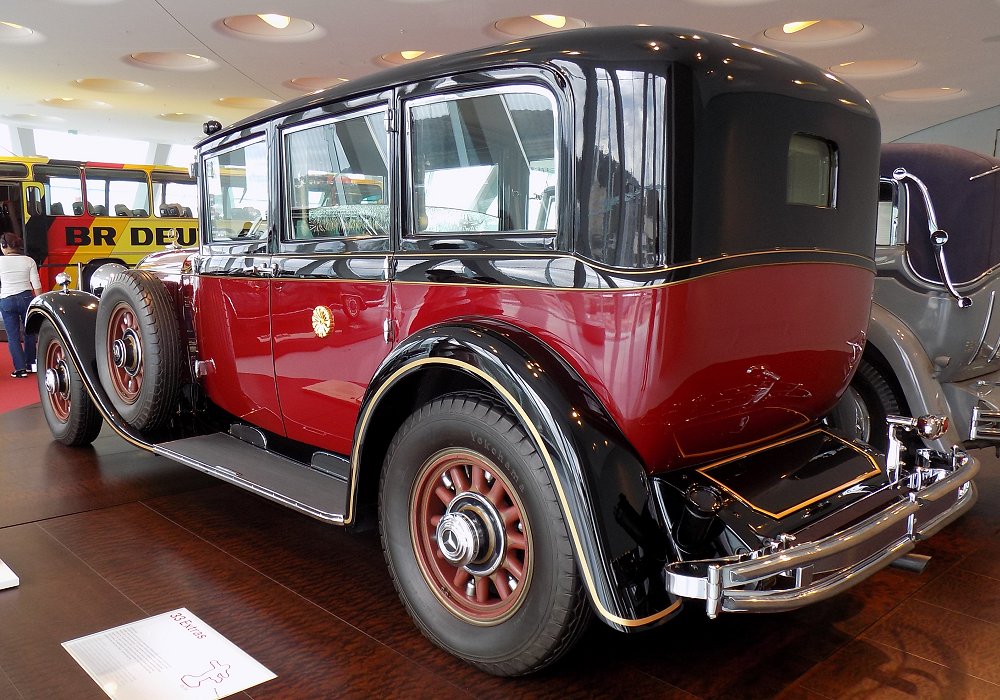
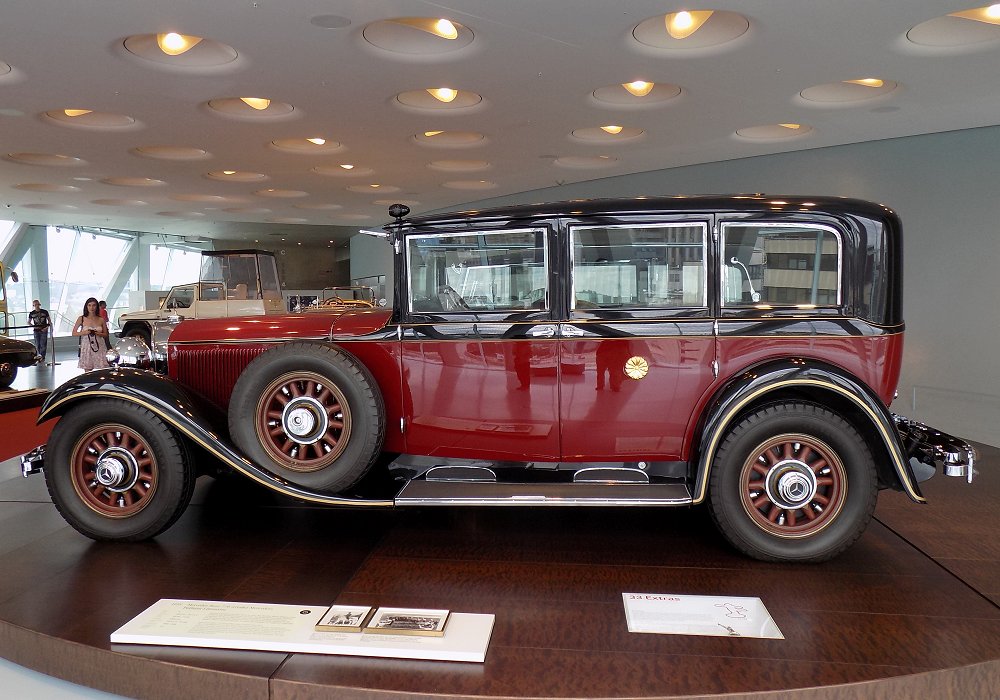
The Mercedes-Benz 770 Pullman Limousine was the ultimate closed-body expression of Mercedes-Benz power, luxury and authority in the pre-war period, serving as the most formal and prestigious variant of the company’s flagship 770 series. Produced in two generations, the W07 from 1930 and the later, more advanced W150 from 1938, the Pullman Limousine was conceived as a state and diplomatic vehicle rather than a private luxury car. It combined immense supercharged performance with an opulent, highly formal interior, creating one of the most imposing automobiles ever placed on public roads.
Power came from a colossal 7.7-litre inline-eight engine equipped with a Roots-type supercharger. In normal operation the engine ran without boost, delivering remarkably smooth and quiet progress despite the vehicle’s enormous mass. When full throttle was applied, the supercharger engaged automatically, increasing output to around 150 horsepower in the earlier W07 cars and approximately 230 horsepower in the later W150 specification. More important than peak power was the immense torque, which allowed the Pullman Limousine to accelerate and cruise effortlessly even when heavily laden or armoured. A four-speed manual gearbox, engineered to withstand extreme loads, transmitted power to the rear wheels with calm authority.
The chassis of the 770 Pullman Limousine was a massive, purpose-built ladder-frame design. The wheelbase was exceptionally long, particularly in Pullman form, providing the space required for a large, luxurious rear compartment and, in some cases, additional seating. Suspension used heavy-duty semi-elliptic leaf springs front and rear, prioritising stability, load capacity and durability over agility. Hydraulic brakes were fitted, especially on the later W150 models, providing far greater stopping power than earlier mechanical systems and reflecting the increasing performance and weight of the vehicle. The driving character was stately and deliberate, emphasising control and composure rather than responsiveness.
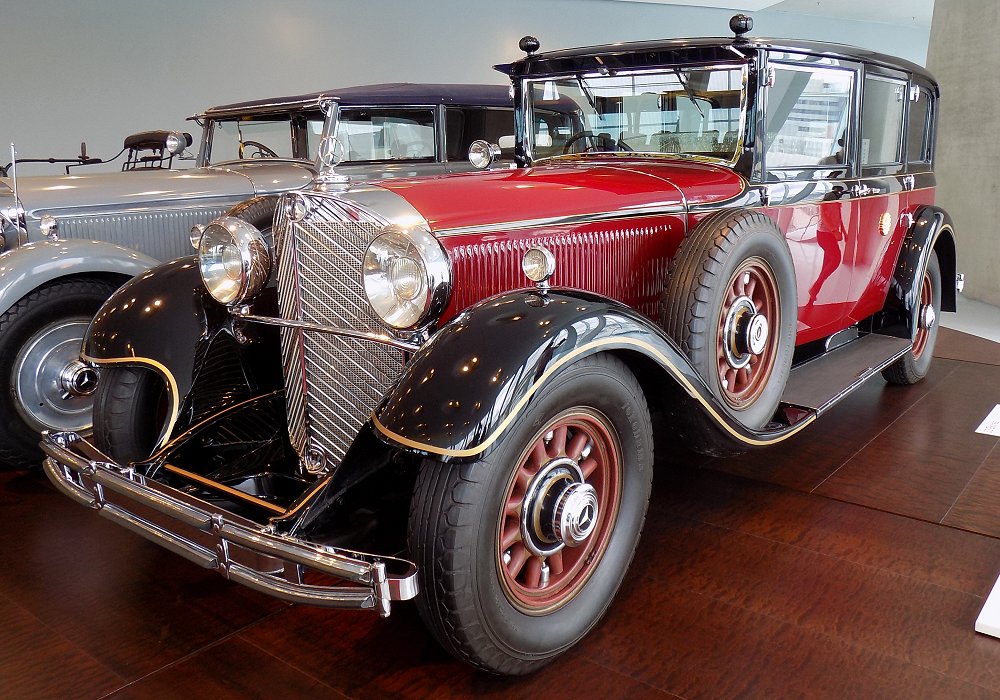
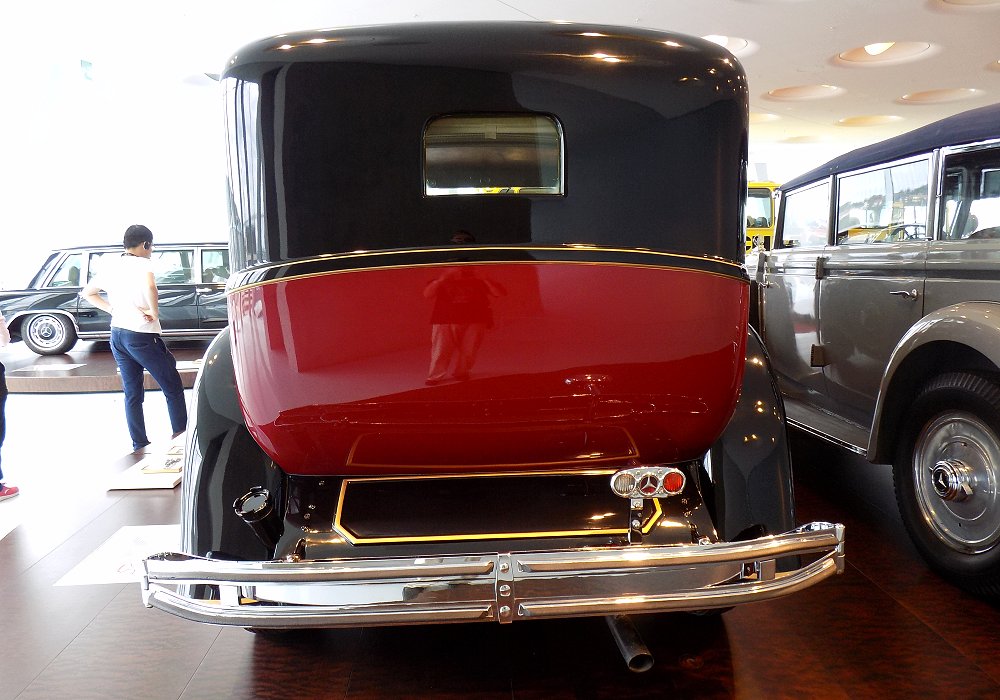
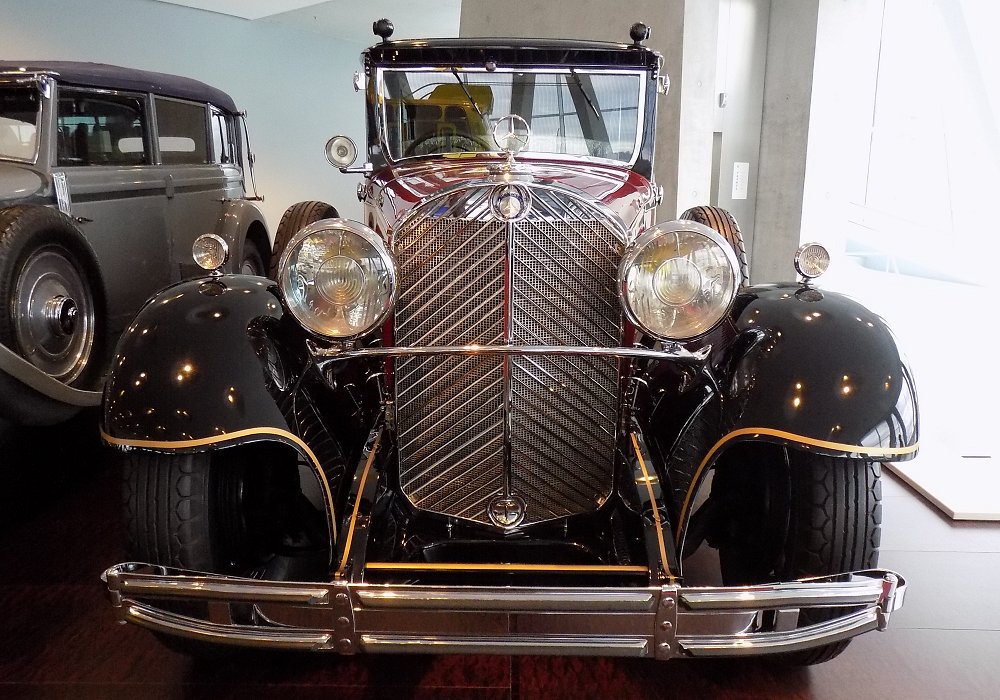
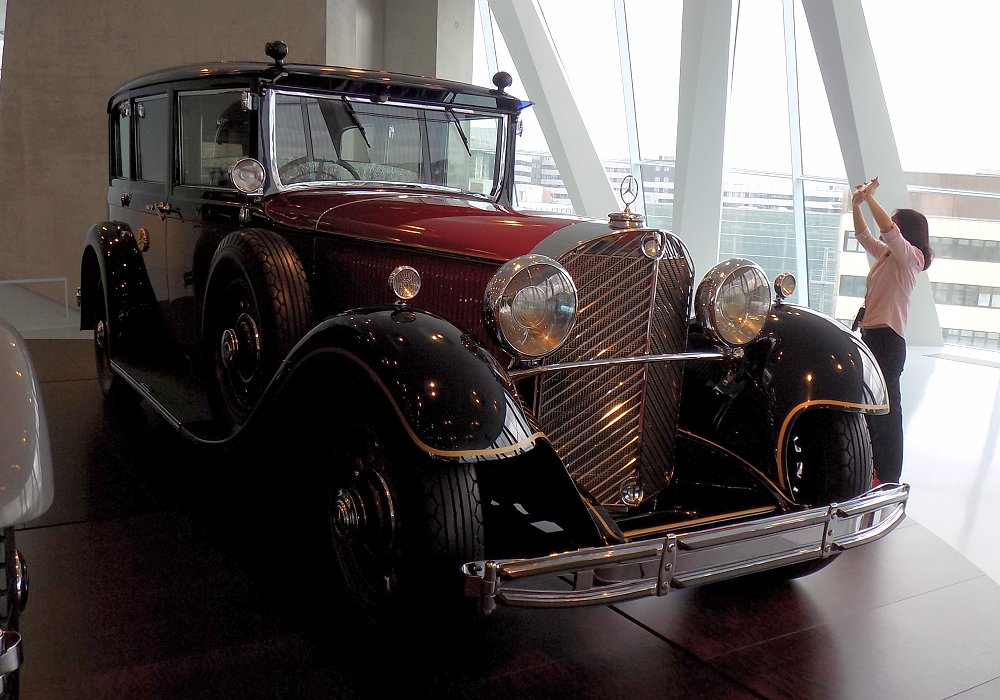
The Pullman Limousine body was constructed primarily by the Sindelfingen coachworks and was defined by its sheer scale and formal presence. The design featured an extraordinarily long bonnet, tall radiator grille, sweeping front wings and a high, elongated passenger compartment. Large doors allowed dignified entry and exit, while the extended rear body accommodated luxurious seating arrangements. Compared with open variants, the Pullman Limousine conveyed absolute authority and discretion, making it the preferred choice for heads of state, senior officials and diplomatic services. Many examples were built with subtle external detailing, reinforcing their serious and official nature rather than ostentatious display.
Inside, the Mercedes-Benz 770 Pullman Limousine offered an interior of exceptional space, comfort and craftsmanship. The rear compartment was the focal point, designed to transport the most important occupants in near-total isolation from the outside world. Seating was typically upholstered in fine leather or high-quality cloth, with deep cushions and generous legroom. Many cars were fitted with dividing partitions between the chauffeur’s compartment and the rear cabin, often with speaking tubes or electric communication systems. Fold-down jump seats, footrests, bespoke storage compartments and tailored fittings were common. The chauffeur’s area was more utilitarian but still finished to a high standard, with clear instrumentation and robust controls designed for professional use.
In many cases, the 770 Pullman Limousine was equipped with armour plating and bullet-resistant glass, particularly in the later W150 generation. These modifications dramatically increased the vehicle’s weight but did not compromise its performance thanks to the supercharged engine. Such features underscored the car’s role as a vehicle of state security rather than conventional luxury motoring. Externally, armoured versions were often visually indistinguishable from standard cars, adding to their aura of quiet power.
On the road, the 770 Pullman Limousine delivered a driving experience defined by effortlessness and authority. The massive engine allowed the car to move with calm inevitability, unaffected by gradients or load. The long wheelbase and heavy construction smoothed out road imperfections, producing a gliding, almost locomotive-like ride. While the size and weight required careful anticipation from the driver, especially when braking, the car rewarded smooth inputs with unmatched stability and composure.
The Mercedes-Benz 770 Pullman Limousine became inextricably linked with political power in the 1930s and early 1940s. It was used extensively by heads of state and senior officials, most notably within Nazi Germany, where it served as a highly visible symbol of regime authority. This association has shaped its historical legacy, making it a vehicle of immense technical interest but also one that carries significant historical and ethical weight.
Production numbers for the 770 Pullman Limousine were extremely low due to the car’s complexity, cost and specialised purpose. Many surviving examples are preserved in museums rather than private collections, where they are presented as historical artefacts rather than luxury automobiles.
Today, the Mercedes-Benz 770 Pullman Limousine is regarded as one of the most formidable and significant automobiles ever built. It represents the absolute peak of pre-war Mercedes-Benz engineering in terms of scale, power and authority. As both a technical achievement and a historical object, it stands as a powerful reminder of how automotive excellence can be intertwined with the political realities of its time.