Description
The Mercedes-Benz G4 was one of the most extraordinary and unconventional vehicles produced by Mercedes-Benz in the pre-war period, designed not as a luxury car in the traditional sense but as a high-mobility prestige vehicle for state and military leadership. Introduced in 1934 under the internal designation W31, the G4 was a large six-wheeled off-road touring vehicle that combined elements of military engineering with ceremonial presence. It was conceived to operate over rough terrain while transporting senior officials in comfort and safety, making it one of the earliest examples of a purpose-built high-status all-terrain vehicle.
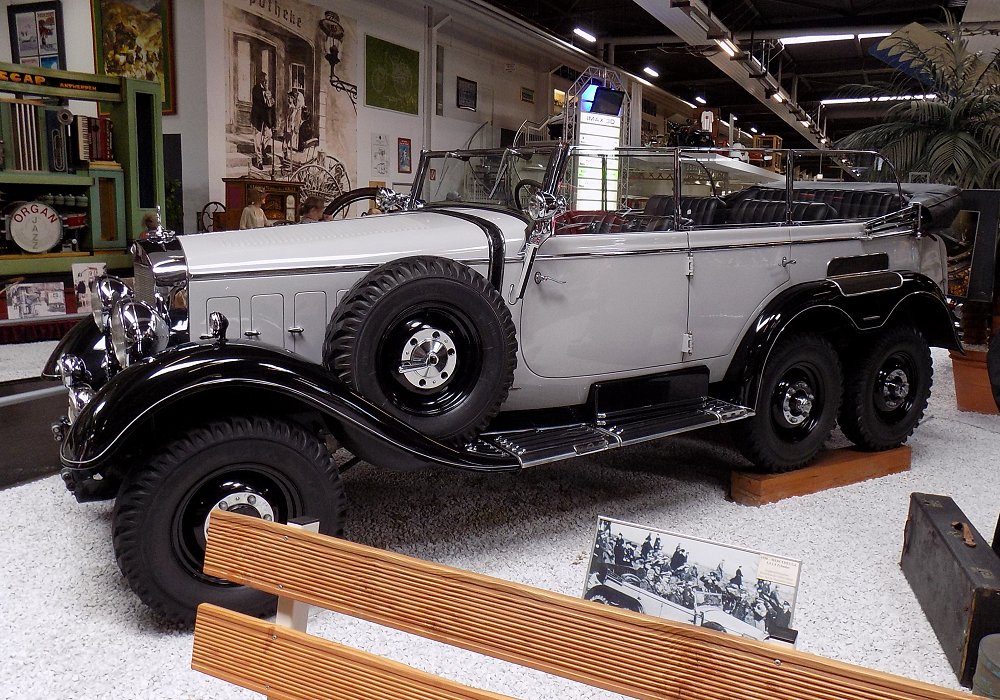
Power was supplied by a large inline-eight petrol engine, initially of 5.0 litres and later increased to 5.4 litres, closely related to the engines used in contemporary Mercedes luxury models. Output varied by specification, generally ranging from around 100 to 115 horsepower. While these figures were modest relative to the vehicle’s size and weight, the engine was tuned for torque and smoothness rather than speed. Power was delivered through a four-speed manual gearbox combined with a complex drivetrain that drove both rear axles, giving the G4 its distinctive three-axle, six-wheel layout. The front axle was steerable, while the twin rear axles provided traction over loose or uneven ground.
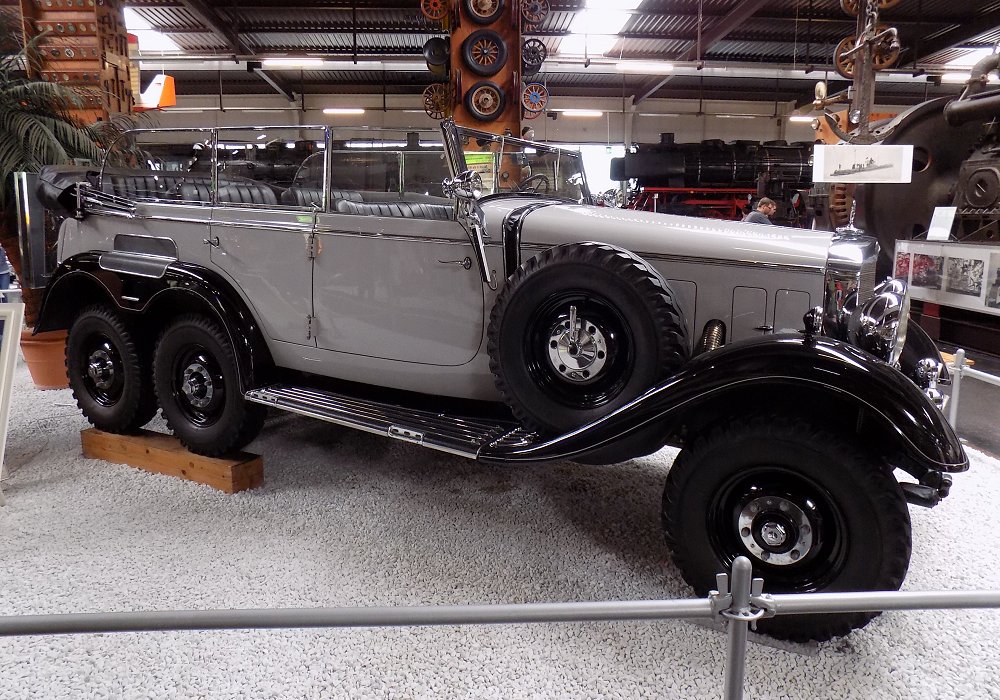
The chassis of the G4 was massive and purpose-built, featuring a strong ladder-frame construction designed to cope with extreme loads and harsh operating conditions. The vehicle used independent suspension at the front and rigid rear axles supported by leaf springs, allowing it to traverse terrain that would have been impassable for conventional luxury cars. Large wheels, generous ground clearance and robust mechanical components gave the G4 genuine off-road capability, although its sheer size and weight limited agility. It was not designed for speed, but for steady, controlled progress over difficult surfaces.
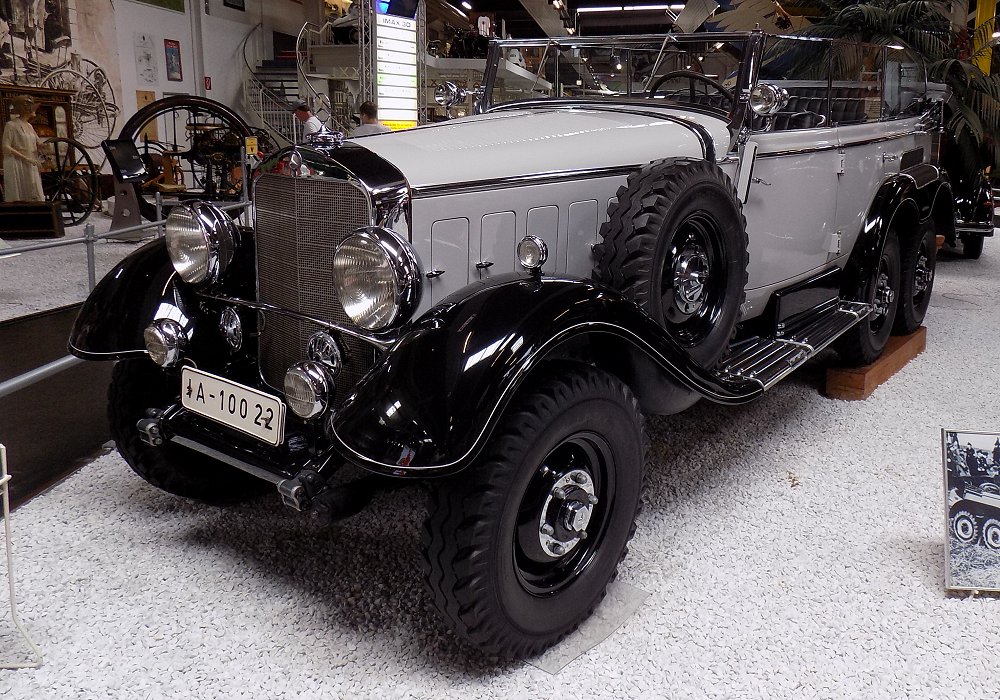
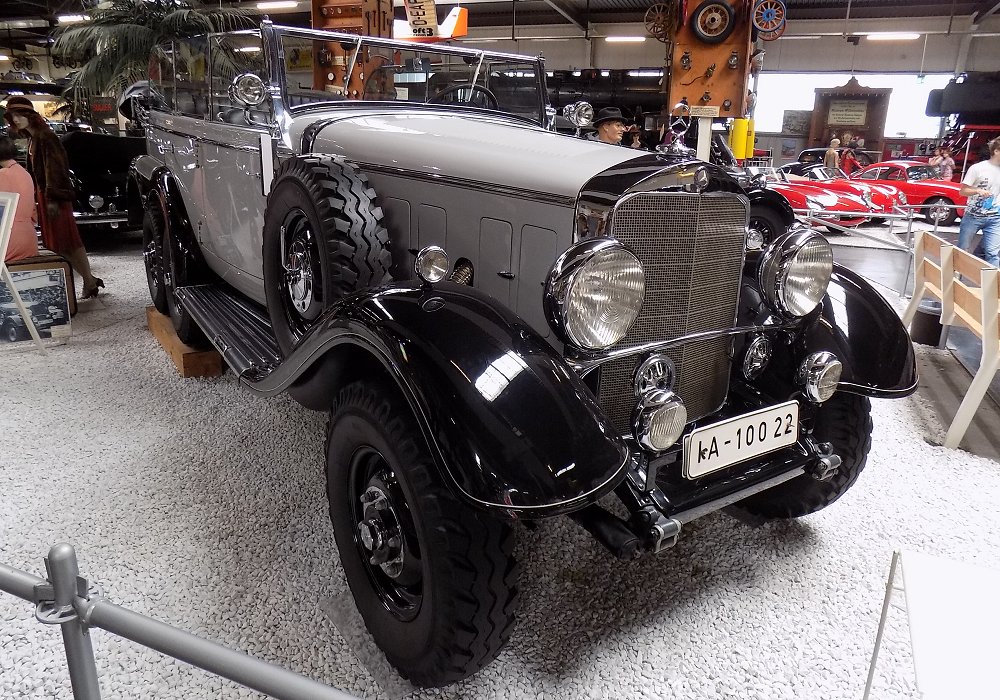
The bodywork of the Mercedes-Benz G4 was imposing and unmistakable. Typically configured as an open touring vehicle, it featured four doors and a spacious passenger compartment with multiple rows of seating. The upright windscreen, tall body sides and exposed rear wheels gave it a utilitarian yet authoritative appearance. A folding fabric roof could be raised when required, but the G4 was often used with the roof down to allow maximum visibility during inspections and public appearances. Running boards were wide and substantial, and external fittings such as handholds and mounts were often included to suit official use.
Inside, the G4 combined practicality with a level of luxury appropriate to its role. Seating was generous and typically upholstered in leather, designed to accommodate occupants in military or formal dress. The interior layout prioritised visibility and ease of access rather than opulence, but materials and workmanship remained of high quality. The dashboard featured clear, functional instrumentation, and controls were designed for reliability and ease of operation in demanding conditions. Despite its rugged purpose, the G4 still reflected Mercedes-Benz standards of engineering and finish.
On the road and off it, the Mercedes-Benz G4 delivered a unique driving experience. Its size and weight required careful handling, particularly on paved roads, but its multi-axle drivetrain allowed it to move confidently over sand, mud, snow and rough ground. The engine’s smooth torque delivery made low-speed manoeuvring manageable, and the vehicle’s stability was enhanced by its long wheelbase and wide track. While far from agile, the G4 excelled in its intended role as a slow-moving but unstoppable transport platform for high-ranking occupants.
The Mercedes-Benz G4 became closely associated with the leadership of Nazi Germany and was used extensively by Adolf Hitler and senior officials during inspections and public appearances. This association has profoundly shaped the vehicle’s historical legacy, making it a powerful symbol of regime authority and propaganda. As a result, the G4 is viewed today not merely as an unusual automotive achievement, but as an artefact deeply embedded in the political and moral history of the 1930s.
Production of the G4 was extremely limited, with only a small number of examples built between 1934 and 1939. Each was effectively hand-built and tailored to official requirements, making the model rare even by pre-war standards. Very few survive today, and those that do are typically preserved in museums rather than private collections due to their historical significance.
Today, the Mercedes-Benz G4 is regarded as one of the most distinctive and controversial vehicles ever produced by Mercedes-Benz. Technically, it stands as an early exploration of large-scale off-road vehicle design combined with prestige transport. Historically, it serves as a reminder of how advanced engineering can be employed in the service of power and spectacle. As such, the G4 occupies a unique and complex place in both automotive history and the wider narrative of the pre-war era.